How you can use strategic prompt engineering to increase your marketing results by 300%
Why AI marketing prompts fail and produce unwanted results
Most marketers use AI like a better Google Assistant: “Write me a product description for my CRM.”
The result?
Generic, interchangeable texts that don't convince anyone.
The problem:Standard prompts produce standard results.
The solution:Framework-based prompt engineering with professional techniques.
In this article you will not only get to know our 10 most proven marketing frameworks, but also the professional techniques.
Part 1: The 10 Marketing Power Frameworks
Content marketing frameworks
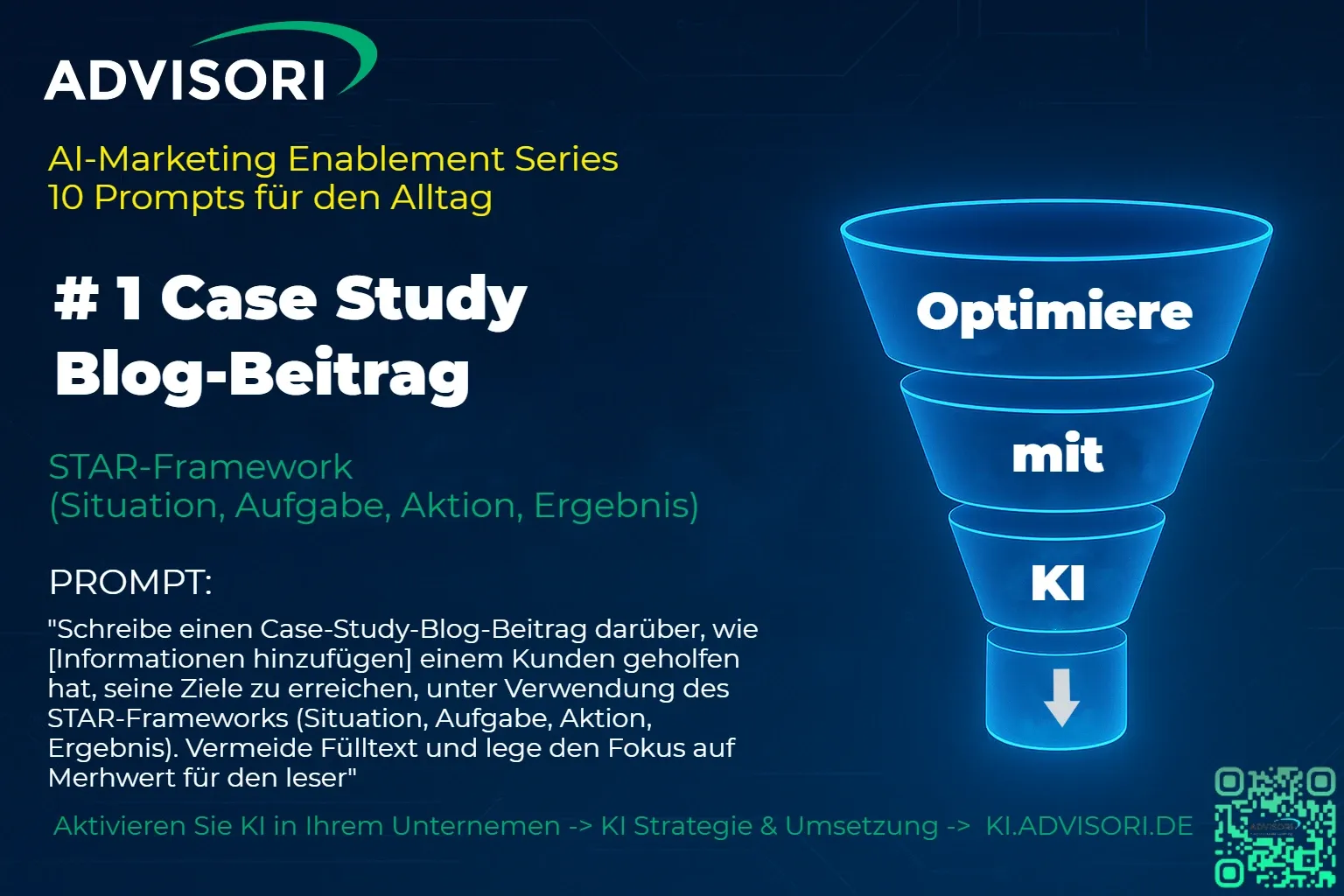
1. Case Study Blog Post (STAR Framework)
Prompt:"Write a case study blog post about how [add information] helped a client achieve their goals using the STAR (Situation, Task, Action, Result) framework."
Why it works:The STAR framework structures success stories logically and makes them comprehensible. LinkedIn studies show: Case studies receive 300% more engagement than standard posts.
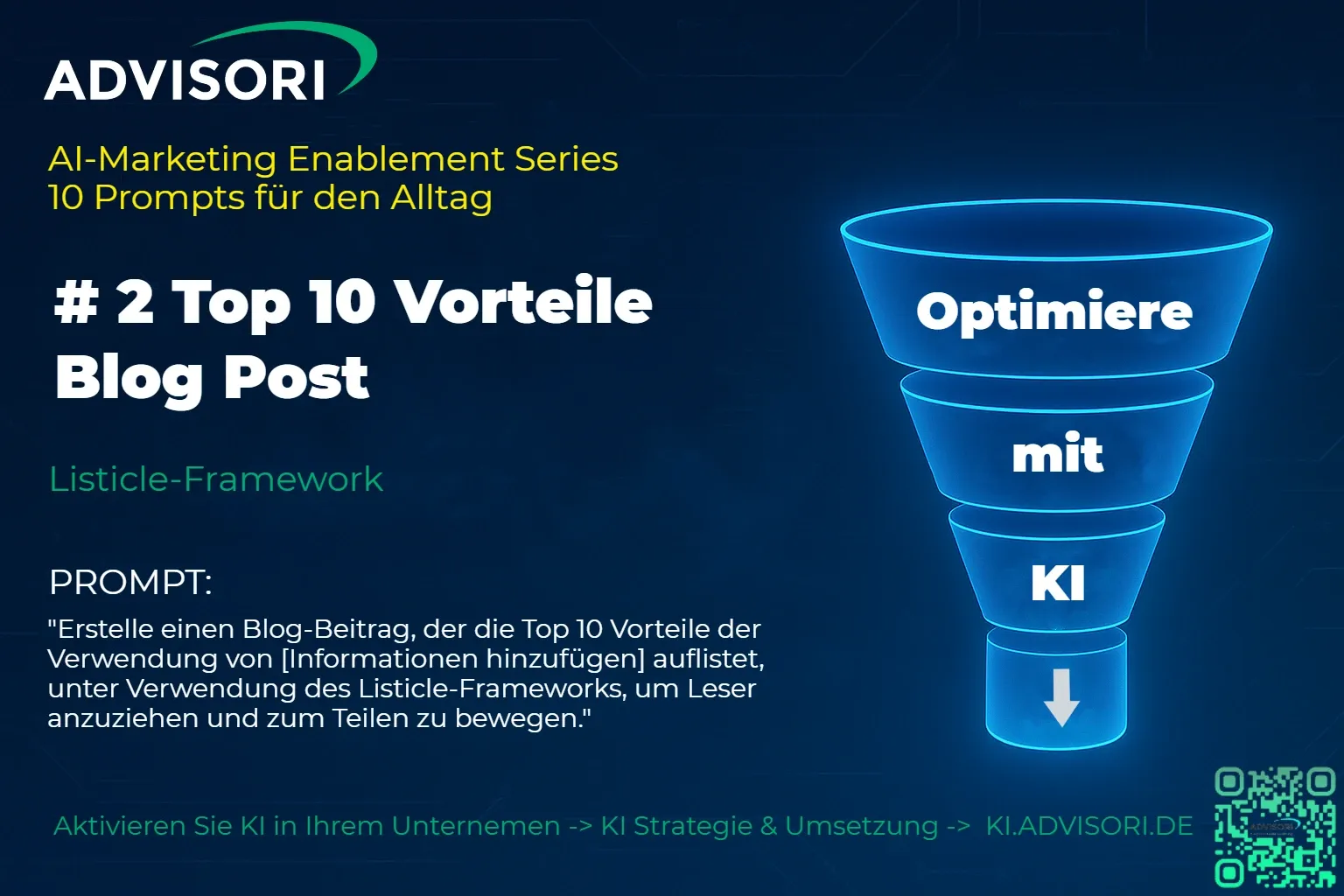
2. Top 10 Benefits (Listicle Framework)
Prompt:"Create a blog post that lists the top 10 benefits of using [add information], using the listicle framework to attract readers and encourage sharing."
Pro tip:Listicles generate 2x more shares than standard articles because they are scannable and shareable.
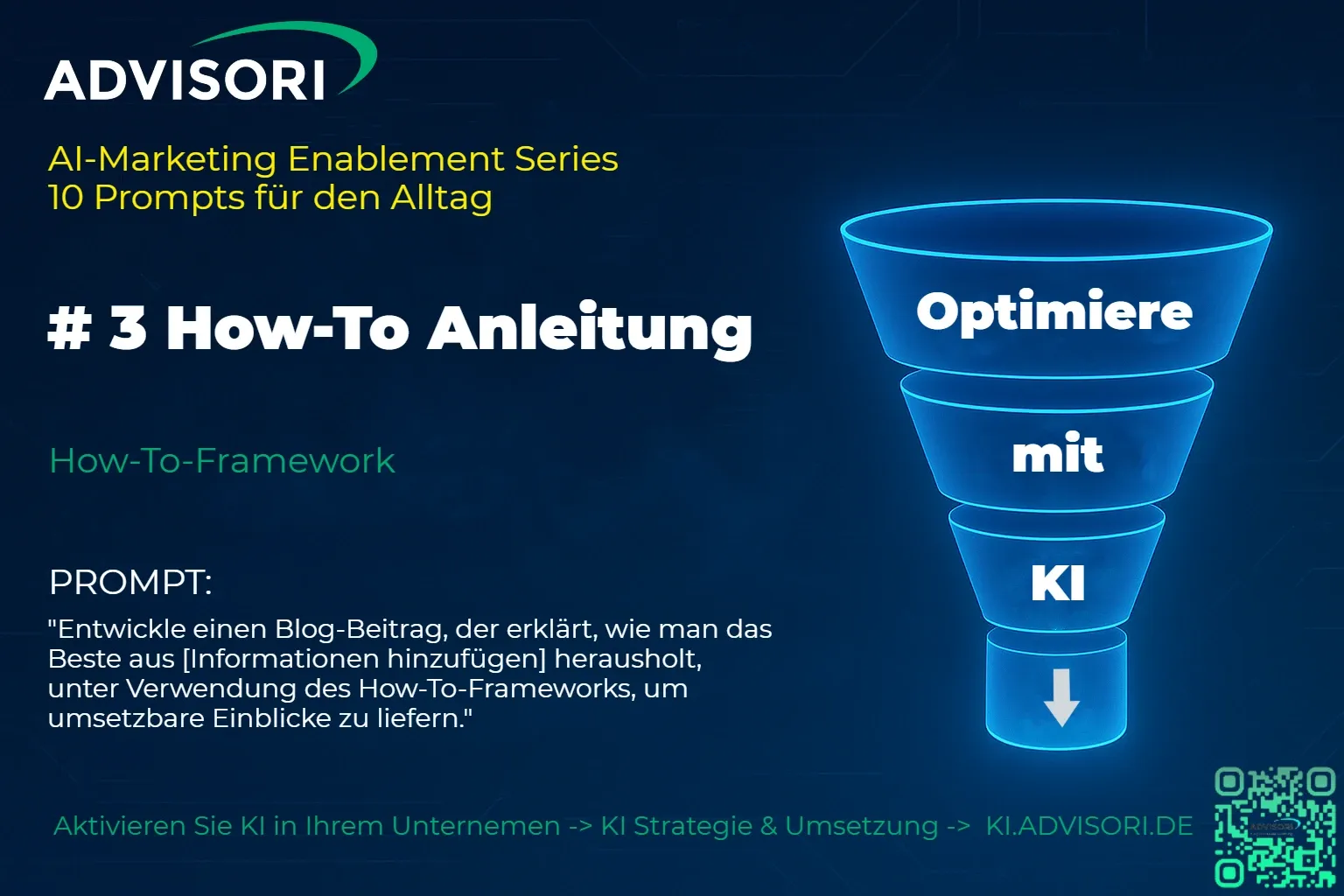
3. How-To Instructions (How-To Framework)
Prompt:"Develop a blog post that explains how to get the most out of [add information] using the How-To framework to provide actionable insights."
Social proof frameworks
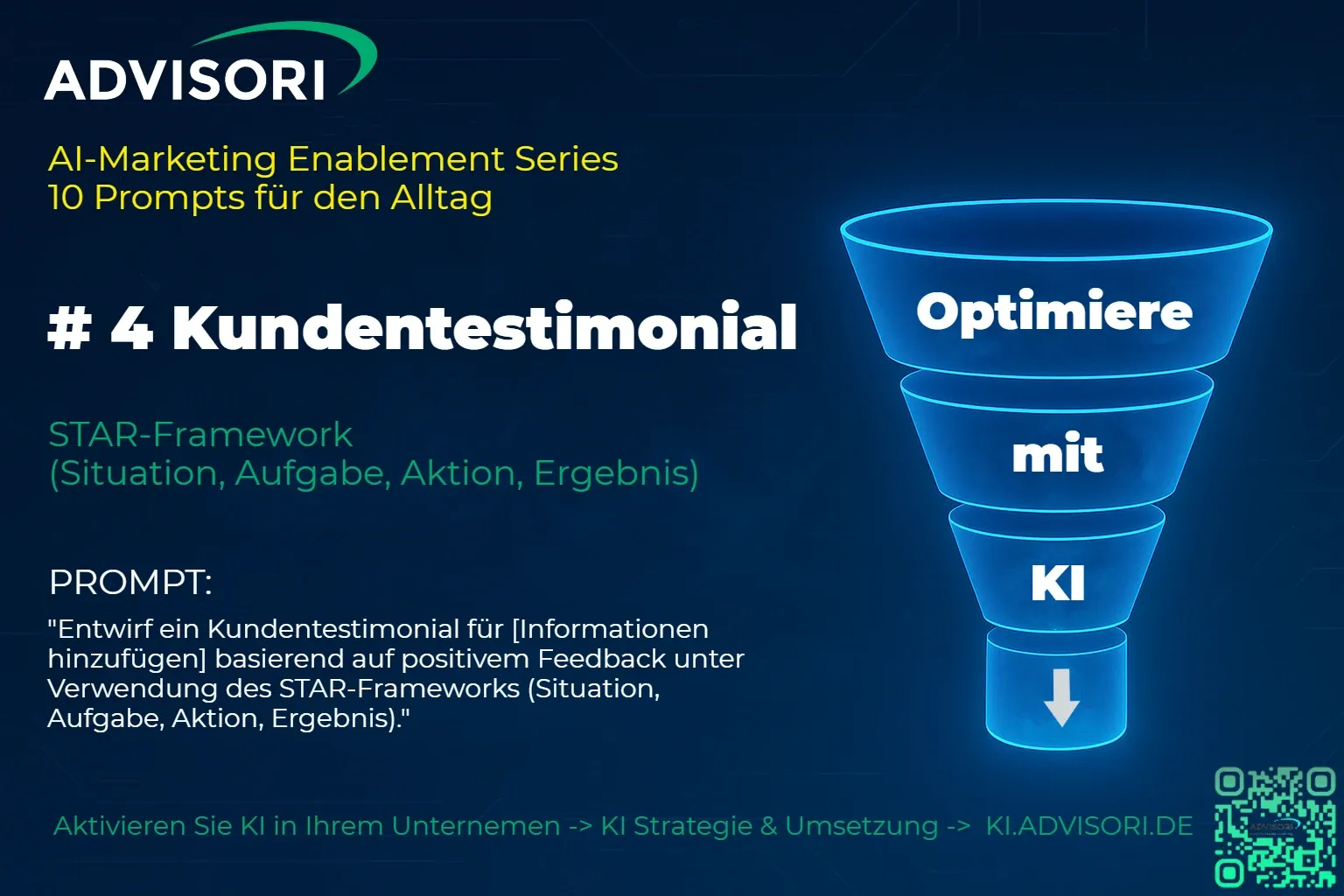
4. Customer Testimonial (STAR Framework)
Prompt:"Design a customer testimonial for [add information] based on positive feedback using the STAR (Situation, Task, Action, Result) framework."
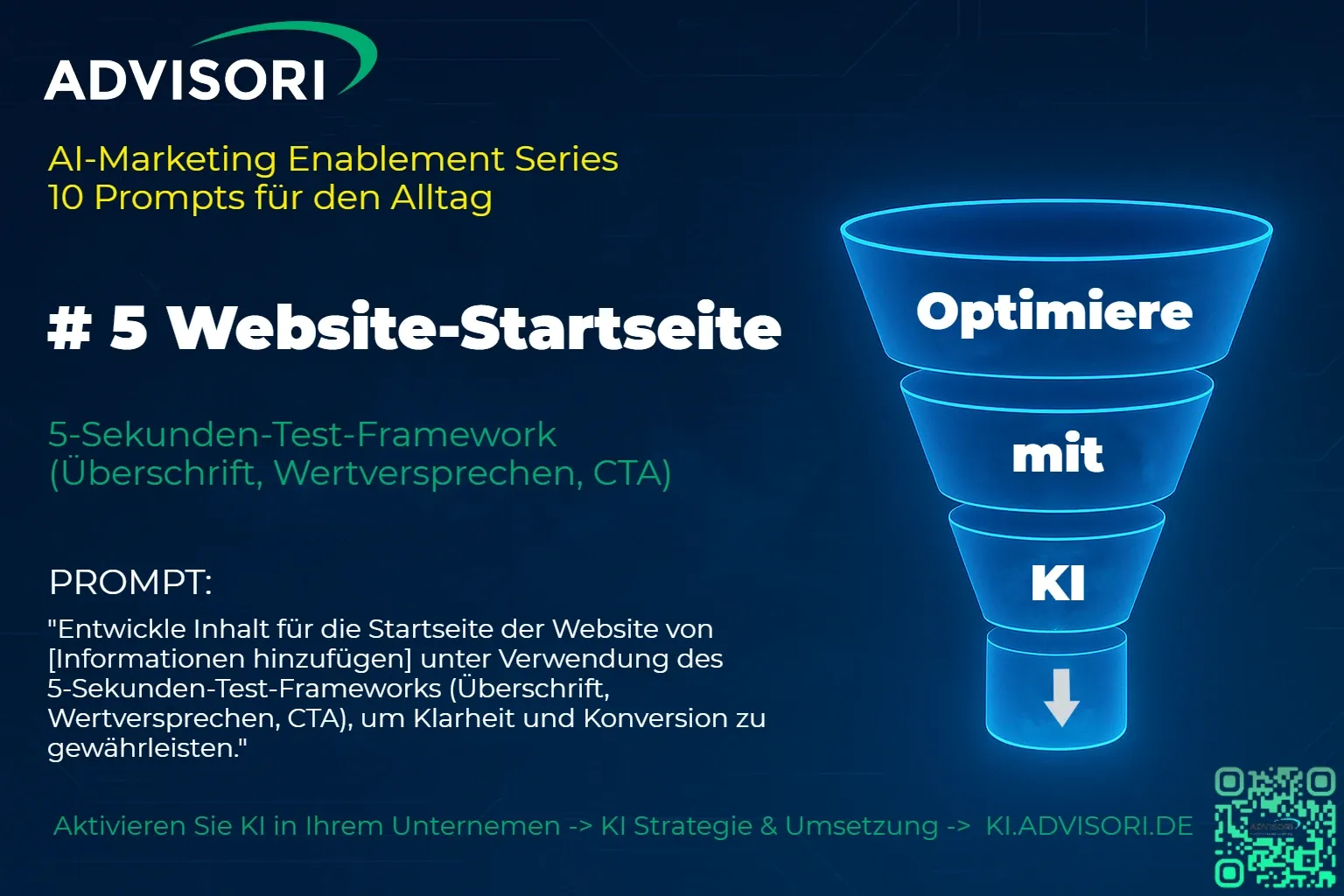
5. Twitter Thread (HERO Framework)
Prompt:"Write a Twitter thread about [add information] using the HERO (Hook, Empathy, Response, Overcome) framework to capture attention and encourage engagement."
Conversion-optimized frameworks
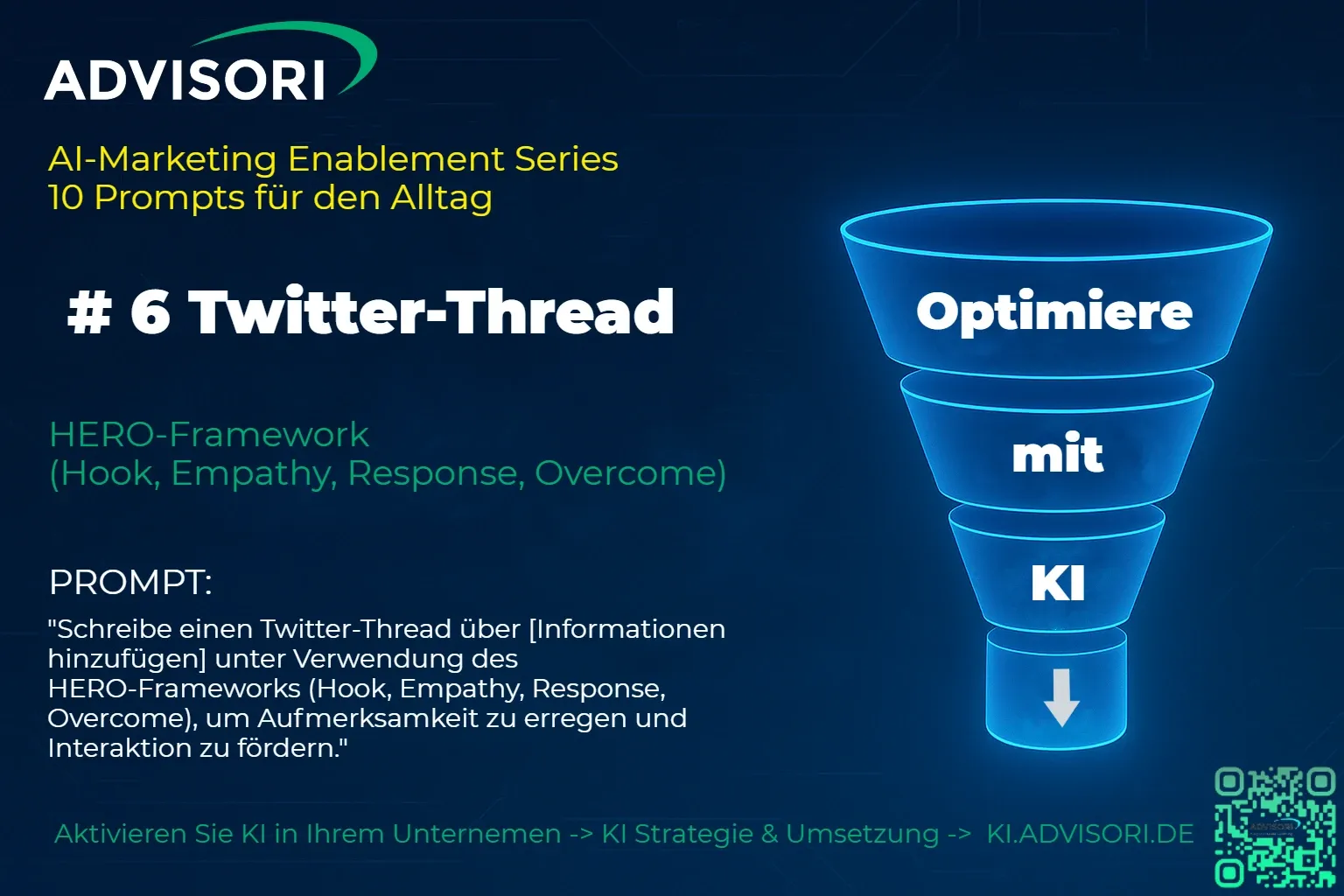
6. Website Home Page (5 Second Test Framework)
Prompt:“Develop content for the home page of [Add Information] using the 5 Second Test framework (Headline, Value Proposition, CTA) to ensure clarity and conversion.”
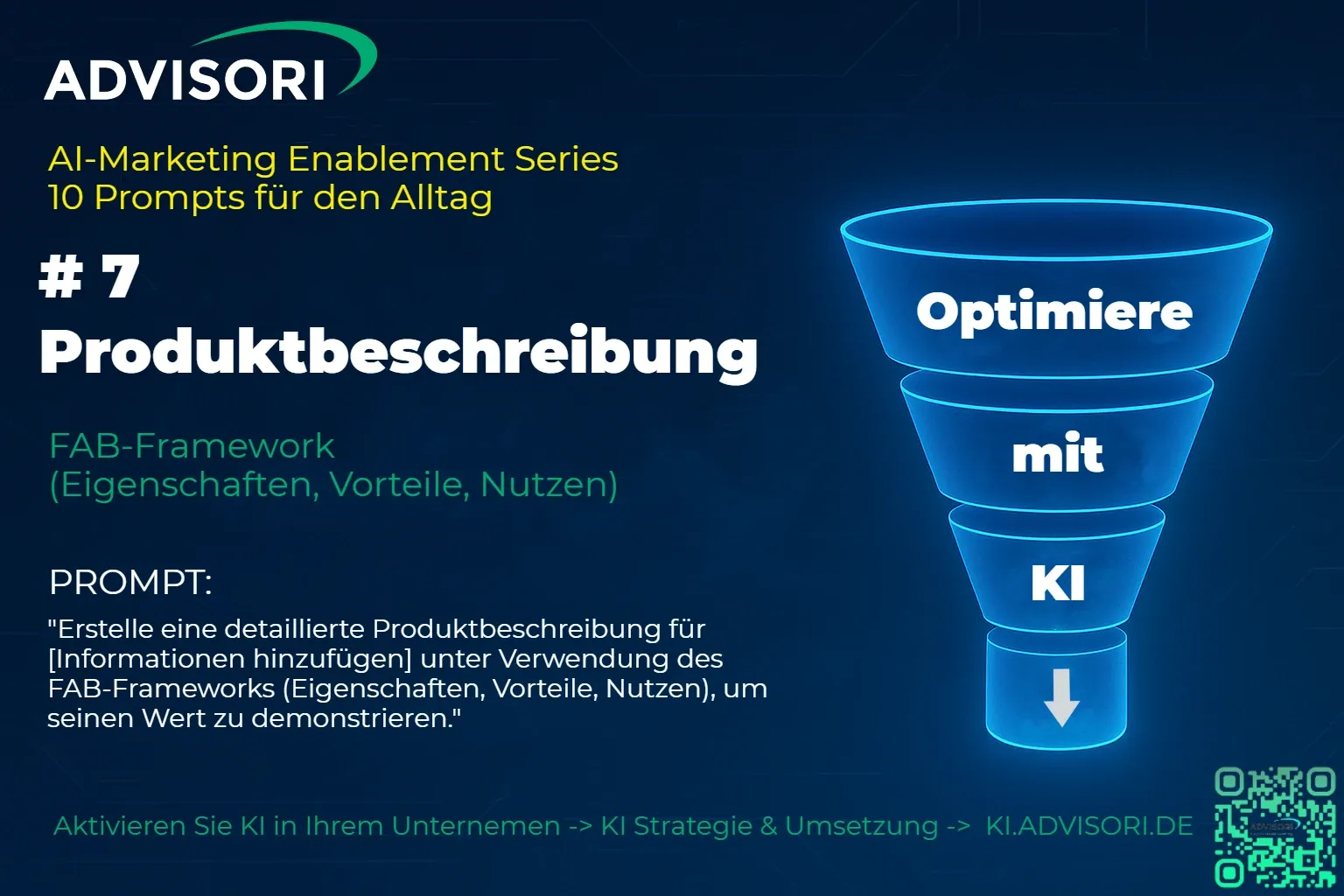
7. Product description (FAB framework)
Prompt:"Create a detailed product description for [add information] using the FAB (features, benefits, benefits) framework to demonstrate its value."
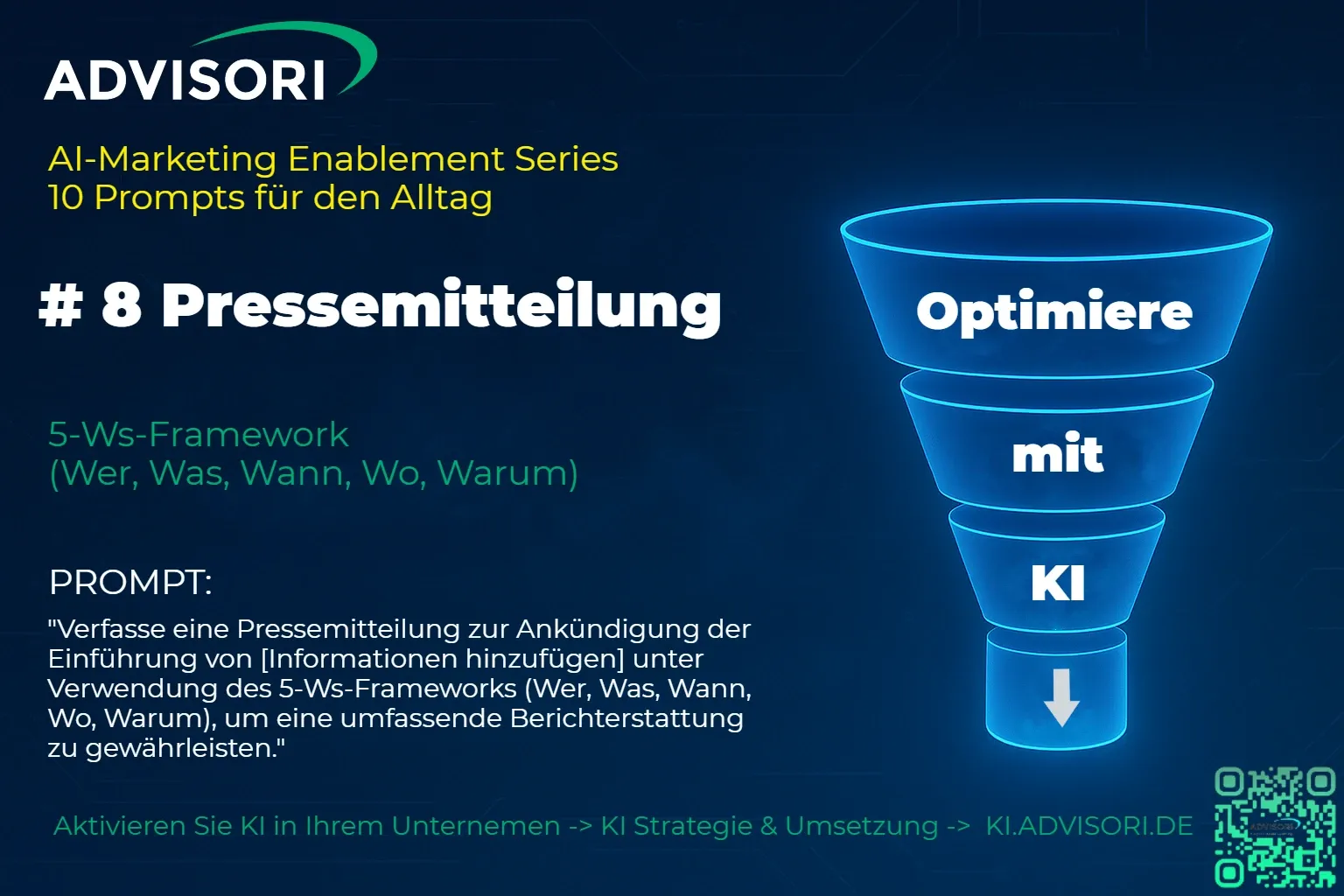
8. Press Release (5-Ws Framework)
Prompt:"Write a press release announcing the launch of [add information] using the 5Ws (Who, What, When, Where, Why) framework to ensure comprehensive coverage."
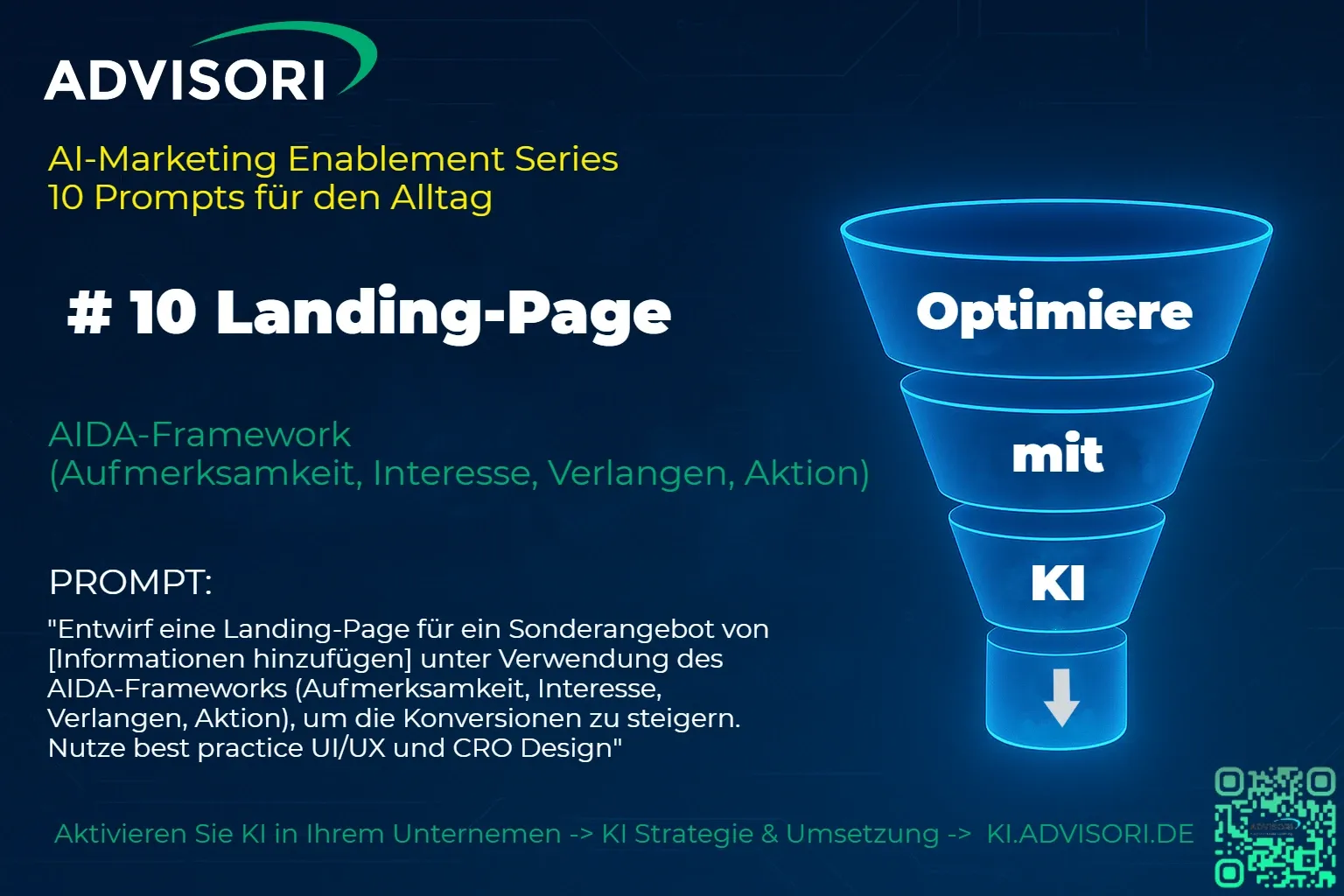
9. Landing page (AIDA framework)
Prompt:“Design a landing page for a special offer from [Add Information] using the AIDA (Attention, Interest, Desire, Action) framework to increase conversions.”
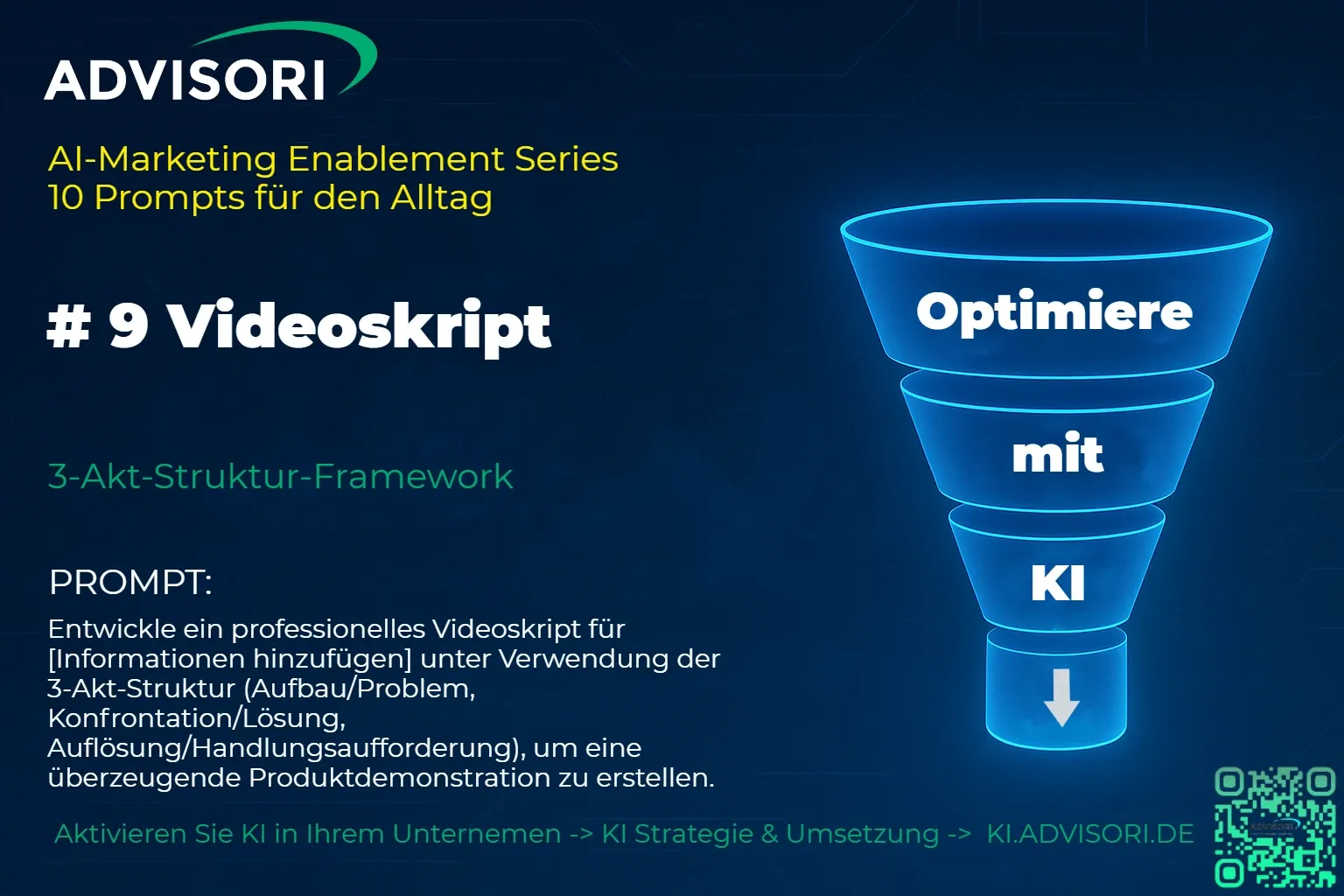
10. Video Script (3-Act Structure Framework)
Prompt:"Develop a professional video script for [add information] using the 3-act structure (Setup/Problem, Confrontation/Resolution, Resolution/Call to Action) to create a compelling product demonstration."
Part 2: Pro Techniques for Maximum Prompt Effectiveness
Expert tip:
Use Ki to create PROMPTs according to “best practice”.
The CTTR formula: Context, Task, Tone, Restrictions
Define context
Bad:"Write an email."Better:"You are the Marketing Director of a B2B SaaS company with 500+ employees. Write an email..."
Pro example:
Context: You are the CMO of a cybersecurity startup that targets enterprise customers. Our product costs €50,000/year and competes with established players like CrowdStrike.
Specify the task
Bad:“Write content.”Better:“Create an 800-word email sequence with 3 emails for lead nurturing…”
Determine tone (tonality).
Options:
- Professional but approachable
- Technically expert
- Friendly and advisory
- Urgent and convincing
- Inspiring and visionary
Example:"Tone: Professional but approachable, like an experienced consultant who explains complex topics simply."
Define restrictions
Critical:LLMs need to explicitly know what NOT to do.
Examples:
- “Do NOT use exaggerations or superlatives”
- “Do NOT mention competitors by name”
- “Do NOT use technical terms without explanation”
- “DON’T write generic phrases like ‘leader in the industry’”
Prompt iterations: The key to perfection
Iteration 1: Base Prompt
Write a product description for our CRM system.
Iteration 2: Add framework
Write a product description for our CRM system using the FAB (Features, Advantages, Benefits) framework.
Iteration 3: Expand context
You are the marketing manager of a B2B SaaS company. Write a product description for our CRM system with automated lead tracking using the FAB framework. Target group: Sales managers in companies with 50-500 employees.
Iteration 4: Tones and Restrictions
You are the marketing manager of a B2B SaaS company. Write a product description for our CRM system with automated lead tracking using the FAB framework. Target group: Sales managers in companies with 50-500 employees Tone: Professional but approachable, focus on ROI and efficiency Length: 200-250 words DO NOT use: - Superlatives like "best", "revolutionary", "unique" - Technical terms without explanation - Generic phrases like "leading solution"
Advanced Prompting: Role-Based Instructions
Multi-Persona Approach
You are a team of three experts: 1. Sales Manager (focus on conversion) 2. UX Designer (focus on user experience) 3. Data Analyst (focus on measurable results) Discuss together and then create a landing page for [product].
Expert escalation
First create a standard draft. Then revise it from the perspective of a senior marketing director with 15 years of experience in B2B SaaS marketing.
Part 3: The Game Changer - Best Practice Integration
The expert hack: “Use best practice UI/UX and CRO methods”
The secret:By simply attaching “Use best practice UI/UX and CRO methods” to each prompt, you dramatically increase the skill level of the LLM.
Before vs. After Example:
Standard prompt:
Create a landing page for our marketing tool.
Result:Generic landing page with standard elements.
Optimized prompt:
Create a landing page for our marketing tool. Use best practice UI/UX and CRO methods.
Result:Landing page with:
- Above-the-fold optimization
- Social proof placement
- Scarcity elements
- Optimized CTA buttons
- Trust signals
- Mobile-first design
- A/B testing recommendations
Why does this work?
LLMs have access to enormous amounts of data about best marketing practices. By explicitly requesting to use this, you activate:
- UI/UX Best Practices:Heatmap optimization, visual hierarchy, cognitive load reduction
- CRO methods:Conversion funnel optimization, A/B testing strategies, behavioral psychology
- Industry standards:Accessibility, mobile responsiveness, loading speed considerations
Power combinations:
"Use best practice UI/UX, CRO and behavioral psychology methods" "Use best practice content marketing, SEO and user engagement strategies" "Use best practice sales psychology, objection handling and closing techniques"
Framework stacking for maximum impact
Example: Multi-Framework Approach
Create an email campaign with: - AIDA framework for structure - PAS framework for problem identification - Social proof integration - Use best practice email marketing and CRO methods Target group: B2B decision-makers in medium-sized companies Tone: Trustworthy and expert Focus: ROI and increased efficiency
Part 4: Common Prompt Mistakes and How to Avoid Them
Mistake 1: Instructions that are too vague
Bad:"Do it better"Better:"Increase conversion rates with stronger CTAs and more social proof"
Error 2: Missing Context
Bad:"Write a post"Better:“Write a LinkedIn post for B2B audiences about productivity software”
Mistake 3: No restrictions
Problem:LLM uses clichés and exaggerationsSolution:Explicitly define what should be avoided
Mistake 4: Prompts that are too complex
Problem:One prompt for 10 different tasksSolution:Break it down into specific, focused prompts
Part 5: Measurable results and ROI
Our benchmark studies show:
- +127% engagementfor framework-based social media posts
- +89% conversion ratewith optimized landing page prompts
- +156% open ratefor email campaigns with CTTR formula
- +203% lead qualitywith CRO-optimized content pieces
A/B testing recommendations:
- Standard prompt vs. framework prompttest
- With vs. without “best practice” additioncompare
- Different tonalitiescontrast
- Context levels vary(minimal vs. detailed)
Your path to becoming a prompt engineering professional
The combination of proven marketing frameworks, strategic prompt architecture and best practice integration transforms you from an AI user to an AI marketing expert.
Your next steps:
- TestingAll 10 frameworks with your products
- ImplementEnter the CTTR formula into your standard prompts
- ExperimentYou with the "Best Practice" integration
- MeasureGet the results and iterate
About ADVISORI:
As a leading AI strategy consultancy, we support companies in successfully implementing and scaling artificial intelligence. Our prompt engineering expertise is based on hundreds of successful projects and continuous research.
Contact:Want to take your AI marketing strategy to the next level? Contact us for a free initial consultation.
Next step: Free initial consultation
Would you like to address these issues strategically? Our experts will be happy to advise you - without obligation and in a practical manner.Arrange an initial consultation now →
Next step: Free initial consultation
Would you like to address these issues strategically? Our experts will be happy to advise you - without obligation and in a practical manner.Arrange an initial consultation now →
Next step: Free initial consultation
Would you like to address these issues strategically? Our experts will be happy to advise you - without obligation and in a practical manner.Arrange an initial consultation now →

Sovereign AI · ADVISORI
Frontier AI on European infrastructure
Frontier performance, entirely in Europe and under European law: as local language models in your infrastructure or orchestrated through Synthara AI Studio.
- EU inference: no CLOUD Act, no kill switch
- GDPR-compliant on European hardware
- Live in a few weeks, no vendor lock-in