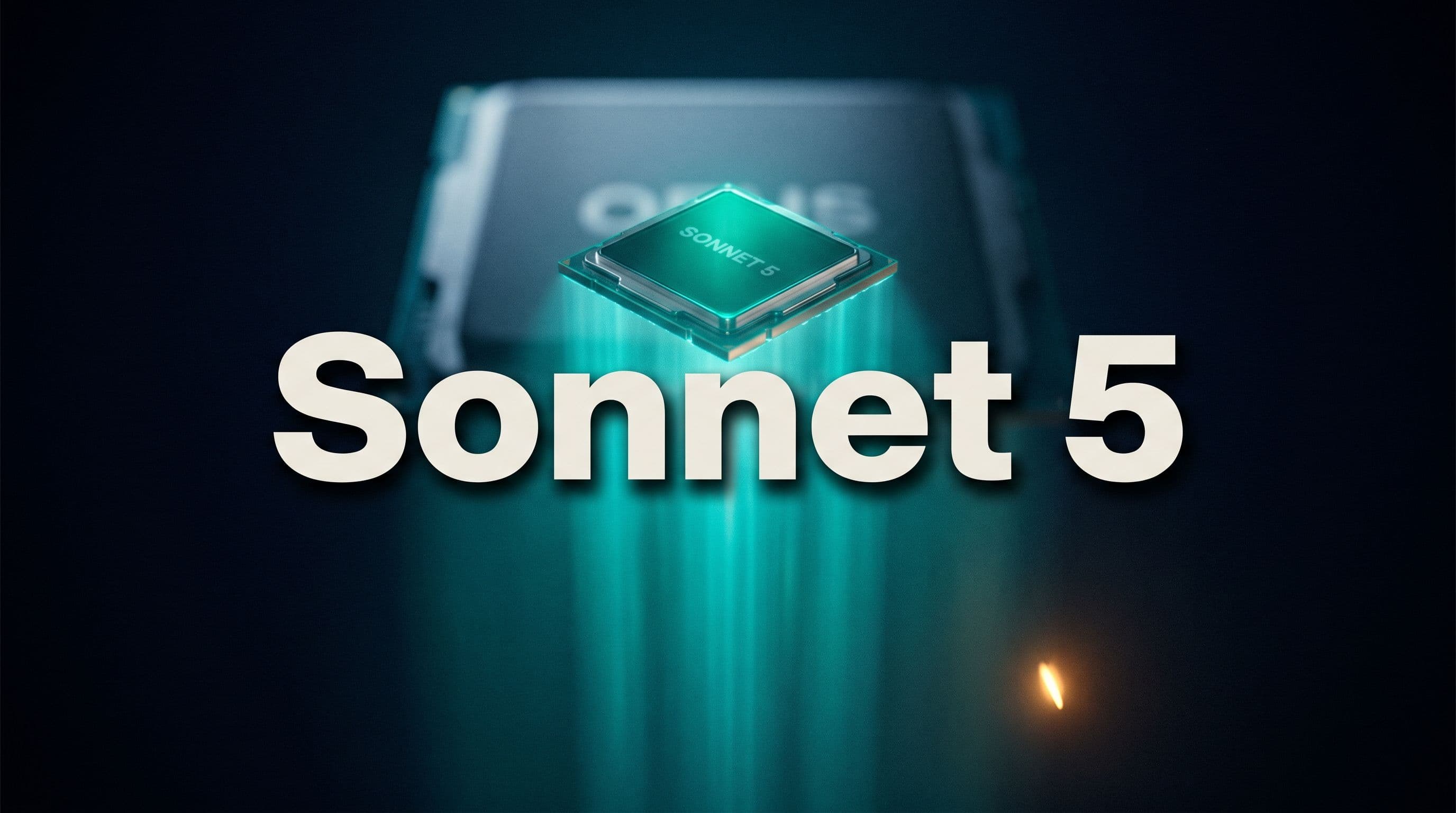
Quick answer:Claude Sonnet 5 is Anthropic's new default model, releasedJune 30, 2026. It comes close to flagshipOpus 4.8 on several benchmarks — at a much lower price (introductory:$2 / $10 per million input/output tokens through August 31, 2026). Important catch: anew tokenizer produces roughly30% more tokens per text, which raises the effective cost.
The 30-second summary
- What: Anthropic released Claude Sonnet 5 — "our most agentic Sonnet model yet," and the new default model for Claude [1][2].
- When: June 30, 2026 — the same day Fable 5 was reinstated [7].
- Performance: closes in on Opus 4.8 — on knowledge work (GDPval-AA v2) Sonnet 5 actually edges ahead at 1,618 vs. Opus 4.8's 1,615 [3][4].
- Price: introductory $2 / $10 per million tokens through August 31, 2026, then $3 / $15 (same list price as Sonnet 4.6). For comparison: Opus 4.8: $5 / $25, Fable 5: $10 / $50 [3][4].
- The hidden catch: a new tokenizer produces about 30% more tokens for the same text — the list price is unchanged, but effective cost rises [5].
- Context window: 1M tokens native, up to 128K tokens output; knowledge cutoff January 2026 [4][5].
- New for safety: Sonnet 5 is the first Sonnet model with real-time cybersecurity safeguards — the same classifier approach that brought Fable 5 back online [6].
Benchmarks: how close is Sonnet 5 to Opus 4.8?
Benchmark · Sonnet 4.6 · **Sonnet 5 · Opus 4.8**
- **SWE-bench Pro (agentic coding) — 58.1% · 63.2%** · 69.2%
- **OSWorld-Verified (computer use) — 78.5% · 81.2%** · 83.4%
- **GDPval-AA v2 (knowledge work) — – · 1,618** · 1,615
*Source: benchmarks published by Anthropic [3][4].*
Reading it: Sonnet 5 beats its predecessor clearly across the board and moves within a few points of the notably more expensive Opus 4.8 — even edging past it on pure knowledge work. For most production enterprise workloads — text work, analysis, standard coding, agentic automation — Sonnet 5 is therefore the more economical workhorse, not the headline-grabbing Fable 5.
Pricing: the discount and the hidden tokenizer cost trap
On paper, Sonnet 5 is cheap:
- Introductory (through August 31, 2026): $2 per million input tokens, $10 per million output tokens [3].
- After that: $3 / $15 — identical to its predecessor Sonnet 4.6 [5].
- For comparison: Opus 4.8 costs $5 / $25, and Fable 5 costs $10 / $50 [4].
The catch most coverage misses: Sonnet 5 uses a new tokenizer. According to Anthropic's platform documentation, the same input text produces roughly 30% more tokens than on Sonnet 4.6 — content-dependent: about 27% for code and up to ~42% for English prose [5]. Because billing is per token, that means: at the same list price ($3 / $15), the effective cost per task is about 30% higher than the predecessor. The introductory discount cushions this through August — after that, enterprises should recalculate their AI budgets.
Practical tip: when budgeting, compare cost per completed task, not the headline token price — ideally with your own test run on real prompts.
What's new in Sonnet 5?
- Much more agentic: Sonnet 5 plans multi-step tasks on its own, uses tools like browsers and terminals, and self-checks its results without being explicitly prompted [1][2].
- Fewer hallucinations and less sycophancy than its predecessor [2].
- Better prompt-injection resistance and handling of malicious requests — relevant for anyone running Claude in production systems with external data [2][6].
- Real-time cybersecurity safeguards: Sonnet 5 is the first Sonnet-class model to filter risky requests live [6].
- Extensive documentation: Anthropic published a 145-page system card — a strong E-E-A-T and governance signal for regulated industries [7].
Sonnet 5 in the shadow of the Fable 5 ban
The timing is no coincidence. As Fable 5 returned after an 18-day US export ban, Anthropic launched Sonnet 5 — a model with deliberately lower offensive cyber capabilities than the Opus and Mythos classes, and with the real-time safety filter built in from the start [6].
For enterprises, that's a practical message: Sonnet 5 has the lowest regulatory risk profile of the current Anthropic generation. It isn't in the crosshairs of export controls, yet it's close to flagship performance. If, after the Fable episode, you want a reliably available working model, this is it — but don't forget the lesson of the ban: an available US model is still a US model. (More in our sovereign-AI guide.)
Who should switch?
Your use case · Recommendation
- Standard text work, analysis, research — Sonnet 5 — best price-performance
- Agentic automation, heavy tool use — Sonnet 5 — built for it, far cheaper than Opus
- Hardest complex reasoning / specialist coding — Opus 4.8 — the edge holds on the toughest tasks
- Very large contexts (long docs, whole codebases) — Sonnet 5 — 1M tokens native
- Data must not leave the EU — EU/sovereign alternative via an LLM router (see below)
The critical voices: not everyone is convinced
In fairness: in the community (e.g., r/ClaudeAI), some users report that Sonnet 5 is slower, consumes more usage quota, and in some cases delivers worse results than expected [8]. That partly aligns with the tokenizer effect (more tokens = more consumption). Takeaway: don't rely on benchmark marketing — test Sonnet 5 on your own representative tasks before switching production over.
Availability and technical specs
- Context window: 1M tokens native, up to 128K tokens output per response [4][5].
- Knowledge cutoff: January 2026 [4].
- Available: default model for Free and Pro; available to Max, Team, and Enterprise; new default in Claude Code with 1M context and promotional pricing [1][3].
- Model ID: `claude-sonnet-5`.
What enterprises should do now
- Test, don't trust benchmarks. Measure Sonnet 5 against your current model on real prompts — quality and cost per task.
- Price in the tokenizer effect. Budget on actual token consumption, not the list price; use the discount through August 31 for evaluation.
- Introduce model routing. Use an LLM router to pick the best price-performance model per use case (Sonnet 5 for standard, Opus 4.8 for hard cases).
- Keep sovereignty in mind. For data that must not leave the continent, keep EU-hosted inference and open-weight alternatives ready.
How ADVISORI makes your AI economical and sovereign
With our Synthara LLM broker, we route each request to the right model automatically — Sonnet 5 for everyday work, Opus 4.8 for the hardest cases, EU-hosted models for anything sensitive. That cuts cost, prevents vendor lock-in, and delivers automatic failover if a model drops out — the lesson of the Fable 5 ban. Together with our partner Yorizon, we run language models entirely on European infrastructure.
See the proof: Yorizon × ADVISORI — Sovereign AI in action
FAQ
What is Claude Sonnet 5?
Claude Sonnet 5 is Anthropic's new default model, released June 30, 2026. It's the most agentic Sonnet model to date and reaches near-flagship (Opus 4.8) performance on several benchmarks — at a much lower price [1][3].
How much does Claude Sonnet 5 cost?
At the introductory rate, $2 per million input tokens and $10 per million output tokens (through August 31, 2026), then $3 / $15. Opus 4.8 costs $5 / $25; Fable 5 costs $10 / $50 [3][4].
Is Sonnet 5 actually cheaper than its predecessor?
The list price matches Sonnet 4.6. But a new tokenizer produces about 30% more tokens for the same text, so the effective cost per task rises. Compare cost per completed task, not the token price [5].
Sonnet 5 or Opus 4.8 — which for enterprises?
For standard tasks, analysis, and agentic automation, Sonnet 5 offers the best price-performance. For the most demanding reasoning and coding, Opus 4.8 keeps an edge [3][4].
How large is Sonnet 5's context window?
Sonnet 5 has a native 1M-token context window and can output up to 128K tokens per response. Its knowledge cutoff is January 2026 [4][5].
Is Claude Sonnet 5 free to use?
Yes — Sonnet 5 is the default model on the free Claude plan and on Pro; it's also available to Max, Team, and Enterprise, and in Claude Code [1][3].
Is Sonnet 5 safer than earlier models?
Sonnet 5 is the first Sonnet model with real-time cybersecurity safeguards, shows fewer hallucinations, and resists prompt injection more reliably. Anthropic documents this in a 145-page system card [2][6][7].
Is Sonnet 5 related to the Fable 5 ban?
Both happened on June 30, 2026. Sonnet 5 integrates the safety filter that was retrofitted to Fable 5 from the start and carries a lower regulatory risk profile [6][7].
Sources & context
[1] Anthropic, "Introducing Claude Sonnet 5," June 30, 2026 (anthropic.com/news/claude-sonnet-5) — positioning, availability · [2] Anthropic — capabilities, lower hallucination/sycophancy, prompt-injection resistance · [3] VentureBeat / TechCrunch, June 30, 2026 — introductory pricing, IPO context · [4] the-decoder, June 30, 2026 — benchmarks (SWE-bench Pro, GDPval-AA v2), price comparison Opus/Fable · [5] Claude Platform Docs / Simon Willison, June 30, 2026 — new tokenizer "~30% more tokens," 1M context, standard price $3/$15 · [6] Claude Platform Docs "What's new in Sonnet 5" — first Sonnet with real-time cybersecurity safeguards · [7] heise online / All-AI.de, June 30, 2026 — parallel release, 145-page system card · [8] r/ClaudeAI (Reddit), June 30, 2026 — critical user reports (slower, higher consumption).

Sovereign AI · ADVISORI
Frontier AI on European infrastructure
Frontier performance, entirely in Europe and under European law: as local language models in your infrastructure or orchestrated through Synthara AI Studio.
- EU inference: no CLOUD Act, no kill switch
- GDPR-compliant on European hardware
- Live in a few weeks, no vendor lock-in