How to Become an AI Consultant: Career Path, Skills, Certifications 2026


AI consultants translate between business problems and AI engineering. The typical route takes 5 to 7 years through data analyst, data scientist or ML engineer roles. Ten core skills matter — five technical, five advisory — plus 2026 regulatory literacy in the EU AI Act, GDPR and ISO 42001. Career changers can still enter.
What an AI consultant actually does (vs. data scientist vs. ML engineer)
An AI consultant is not a model builder. The core job is translating business problems into tractable AI use cases, owning the business case, and steering adoption across the business line, IT, data protection and the board. The role differences in one line:
- Data scientist: builds models, validates statistics, explores data. Deep in mathematics and Python.
- ML engineer: productionises models, builds feature stores, monitors drift and cost in MLOps pipelines.
- AI consultant: identifies use cases, models ROI, runs workshops, orchestrates change, underwrites compliance — and produces the decision memo other roles cannot produce.
In practice the boundaries blur on smaller engagements. A seasoned AI consultant may build a prototype, but only to test a hypothesis — never as production work.
The five technical skills
Technical depth is not optional. Without it, the advice stays shallow and the business line will notice. Five areas form the foundation:
Machine learning foundations: supervised and unsupervised learning, bias-variance trade-off, cross-validation, evaluation metrics. No architecture research, but enough to assess feasibility and data requirements honestly.
MLOps and productionisation: feature stores, model registries, monitoring, CI/CD for ML. Consultants must know why 80 per cent of PoCs never ship — and how to prevent it.
LLMs and generative AI: prompting, retrieval-augmented generation (RAG), fine-tuning, hallucination evaluation, per-token cost modelling. Mandatory since 2024, baseline since 2026.
Data engineering basics: data quality, ETL pipelines, warehouse versus lakehouse, governance. No Spark tuning, but enough to surface data availability honestly and early.
Cloud AI services: AWS SageMaker / Bedrock, Azure Machine Learning / OpenAI Service, Google Vertex AI. Know one provider deeply, the others well enough to navigate.
The five advisory skills
Technical skills qualify you for the job. Advisory skills decide whether it becomes a career. Five capabilities make the difference:
Use-case mapping: recognising, from 30 ideas, the three that are technically feasible, commercially worthwhile and politically deliverable. Requires methods like value-effort matrices and domain decomposition.
Change management: AI projects rarely fail on the model. They fail on the organisation. Stakeholder mapping, Kotter-style frameworks, adoption metrics are baseline.
ROI modelling: full-cost accounting including infrastructure, ongoing model maintenance, compliance overhead and hidden opportunity cost. A crisp business case is often the only reason a project gets funded.
Stakeholder translation: the CFO wants ROI, the works council wants consultation, the business line wants relief, IT security wants data-loss controls. Same truth, four languages.
Executive communication: one page, three bullet points, one decision question. Those who cannot communicate in this format at board level do not make principal.
Regulatory skills: the 2026 differentiator
None of the major international sources on this topic — Simplilearn, Tredence, Ironhack — treat regulatory competence as an AI consulting skill. This is exactly where, since the EU AI Act high-risk obligations took full effect on 2 August 2026, European AI consultants have a structural advantage.
- EU AI Act: risk classification, conformity assessment, transparency obligations, prohibited practices. Knowing the obligations per risk class is the entry ticket to any European AI engagement.
- GDPR: legal bases for training and inference, purpose limitation, DPIAs, processor agreements with hyperscalers. No AI project can avoid this language.
- ISO 42001: AI management system, published late 2023. Becoming the de-facto governance standard for high-risk AI in 2026/2027.
- DORA (financial services): ICT risk management and third-party management apply to AI systems too. Anyone advising in financial services must know Article 28 DORA cold.
This regulatory depth is what separates a European AI consultant from someone brandishing a Coursera certificate.
The typical career path (5 to 7 years)
The classic route into AI consulting is rarely direct. Three stages are typical, about two to three years each:
- Entry (1-2 years): data analyst, business analyst or software developer. This is where you learn data literacy and project discipline.
- Depth (2-3 years): data scientist, ML engineer or internal AI project lead. First models in production, first stakeholder conflicts.
- Transition (1-2 years): move into a consulting role, external at a management consultancy or internal as an AI lead. First client projects on your own.
- Senior / principal: around year 6. Runs project portfolios, accountable for multi-million-pound revenue, sits on steering committees.
Faster routes exist — for example, career changers from strategy consulting who already have the stakeholder skills and only need to catch up on AI depth.
Education: degree, bootcamp, self-taught
Three routes lead into the role. They are not mutually exclusive:
Degree (default): computer science, mathematics, statistics, data science, business analytics or industrial engineering. A masters in AI, ML or data science is effectively an entry ticket at top consultancies.
Bootcamp or extended training: 12 to 24-week data-science programmes (Le Wagon, General Assembly, Ironhack, Constructor), supplemented by AI-specific certifications. Not a substitute for a degree at elite consultancies, but a valid route into in-house roles.
Self-taught / career change: strategy consultants with a finance or tech background, developers, domain experts with 10+ years of subject-matter depth. This route works best around a concrete use-case success, not a certificate alone.
The title is not legally protected. In practice the upper salary band almost always requires a relevant academic qualification plus multi-year project credentials.
Certifications that matter in 2026
Certifications do not replace project experience — they open doors. The six with the best signal-to-price ratio in 2026:
- AWS Certified Machine Learning — Specialty: the operational gold standard, expected in almost every AWS-heavy organisation.
- Google Cloud Professional Machine Learning Engineer: mandatory at Vertex AI customers, especially in digital retail and media.
- Microsoft Azure AI Engineer Associate: critical in European mid-market and at financial-services firms using Azure OpenAI Service.
- ISO 42001 Lead Auditor: the new mandatory credential for AI governance consulting, with multiple providers available from 2026.
- EU AI Act Specialist (various providers): Bitkom Akademie, TÜV, Fraunhofer, BCS. A formal signal that Articles 6-15 of the regulation are understood operationally.
- TOGAF or BCS Foundation Certificate in AI: enterprise architecture and strategy credentials, relevant at large-enterprise clients.
Pure prompt-engineering certificates or three-hour Coursera courses are no longer viewed as differentiating in hiring processes.
Salary ranges — UK, EU and US (2026)
The bands below are directional, compiled from StepStone, jobvector, Glassdoor and Levels.fyi for 2025-2026. Top-tier management consultancies and big tech pay at the upper end or above; in-house roles in mid-market pay at the lower end.
- Junior AI consultant (0-2 years): EUR 50-70k / GBP 45-65k / USD 90-130k base
- Mid-level (2-5 years): EUR 70-110k / GBP 65-95k / USD 130-200k base, 10-20% bonus
- Senior (5-10 years): EUR 110-170k / GBP 95-140k / USD 200-350k base, 20-30% bonus
- Principal / partner-track (10+ years): EUR 170-250k+ / GBP 140-220k+ / USD 350-500k+ base, partner share possible
- Freelance day rates: EUR 900-1,800 junior to mid, EUR 1,500-2,500 senior; higher for specialised top profiles
Bonuses are materially higher at elite consultancies (Bain, McKinsey, BCG: up to 50% of base). In-house industry roles pay lower bonuses but often deliver better work-life balance.
Breaking in from an adjacent field
Three career-change routes work in practice:
From strategy consulting: the stakeholder and financial-modelling skills are already there. The bottleneck is technical depth — typically 6-12 months of investment in a bootcamp, a side project and two to three AWS or Azure certifications.
From engineering or data science: the technical foundation exists. The bottleneck is advisory skills — closable through structured mentoring, deliberate presentation training and a conscious shift into project-based rather than line-based assignments.
From a business line (compliance, risk, product): domain expertise and an internal network are the lever. The bottleneck is AI method — here, two or three concrete use-case implementations in your own area count for more than any certificate.
Red flags to avoid
- Pure prompt-engineer roles: hype titles without a career structure. Skills become obsolete in months, roles get consolidated.
- Premature over-specialisation: "computer-vision specialist for agricultural drones" sounds good but narrows the job search dramatically. Build generalist depth first, then specialise.
- Pure research postdoc tracks with no business bridge: brilliant models, no advisory capability. The transition gets harder from year 3-4.
- Putting "AI consultant" on a business card after a weekend certificate: burns credibility with the market and your own career.
ADVISORI's position: AI consulting with regulatory depth
ADVISORI hires AI consultants who combine technical depth with regulatory expertise (EU AI Act, GDPR, ISO 42001, DORA) — because European enterprises need exactly that combination and most international consultancies do not deliver it to the same depth. If you bring this mix, our open roles are at advisori.de/karriere; for the content side of our work see advisori.de/ki-beratung.
Frequently asked questions
What does an AI consultant actually do?
An AI consultant identifies AI use cases with real business value, owns the business case, orchestrates adoption across the business line, IT, data protection and the board, and underwrites regulatory compliance. They rarely build models themselves, but understand enough to assess technical feasibility honestly and work as peers with data scientists and ML engineers.
How long does it take to become an AI consultant?
The classic route through a degree plus two intermediate stages (data analyst, data scientist) takes about 5 to 7 years before you take own-account consulting responsibility. Career changers from strategy consulting or from a technical role can enter in 12 to 24 months with focused skill-building.
What degree do I need to become an AI consultant?
Typical degrees are computer science, mathematics, statistics, data science, business analytics or industrial engineering. A masters in AI, ML or data science is effectively expected at top consultancies. In in-house roles and at specialised boutique firms, other STEM degrees plus certified training are also accepted.
What does an AI consultant earn?
In 2026 base salaries range from around EUR 50k (junior) to EUR 70-110k (mid) and EUR 110-170k (senior), up to EUR 170-250k+ at principal level — with roughly equivalent GBP and USD bands in the UK and US markets. Freelance day rates run from EUR 900 to EUR 2,500+ depending on seniority. Bonuses are materially higher at elite management consultancies than in-house roles.
Can I become an AI consultant without a degree?
The title is not legally protected, and entry without a degree is possible — particularly via certified training (Bitkom, TÜV, BCS, Fraunhofer) and demonstrable project successes. In practice top consultancies and large enterprises almost always require a relevant academic qualification. Without a degree, the realistic target role is in-house AI project lead rather than external consultant.
Will ChatGPT replace AI consultants?
No — if anything the opposite. Generative AI accelerates an AI consultant's work (research, first-draft use-case design, documentation) but replaces neither use-case mapping nor change management, ROI modelling, or regulatory assessment. Demand for experienced AI consultants grew materially faster than supply from 2024 to 2026.
Do AI consultants work remotely or on-site?
Hybrid is the 2026 default. Classic management consultancies typically require 3-4 days on-site with the client; in-house roles and specialised boutique firms are often more remote-friendly. For sensitive financial-services or government engagements (DORA, classified), on-site presence is frequently mandatory.
Which certifications matter most for AI consultants in 2026?
The six certifications with the best signal-to-price ratio in 2026 are: AWS ML Specialty, Google Cloud ML Engineer, Azure AI Engineer Associate, ISO 42001 Lead Auditor, an EU AI Act Specialist course (Bitkom, TÜV, Fraunhofer, BCS) and TOGAF or BCS for the enterprise-architecture angle. Pure prompt-engineering certificates are no longer differentiating.

Sovereign AI · ADVISORI
Frontier AI on European infrastructure
Frontier performance, entirely in Europe and under European law: as local language models in your infrastructure or orchestrated through Synthara AI Studio.
- EU inference: no CLOUD Act, no kill switch
- GDPR-compliant on European hardware
- Live in a few weeks, no vendor lock-in
Related articles
Continue exploring with related insights from our experts.
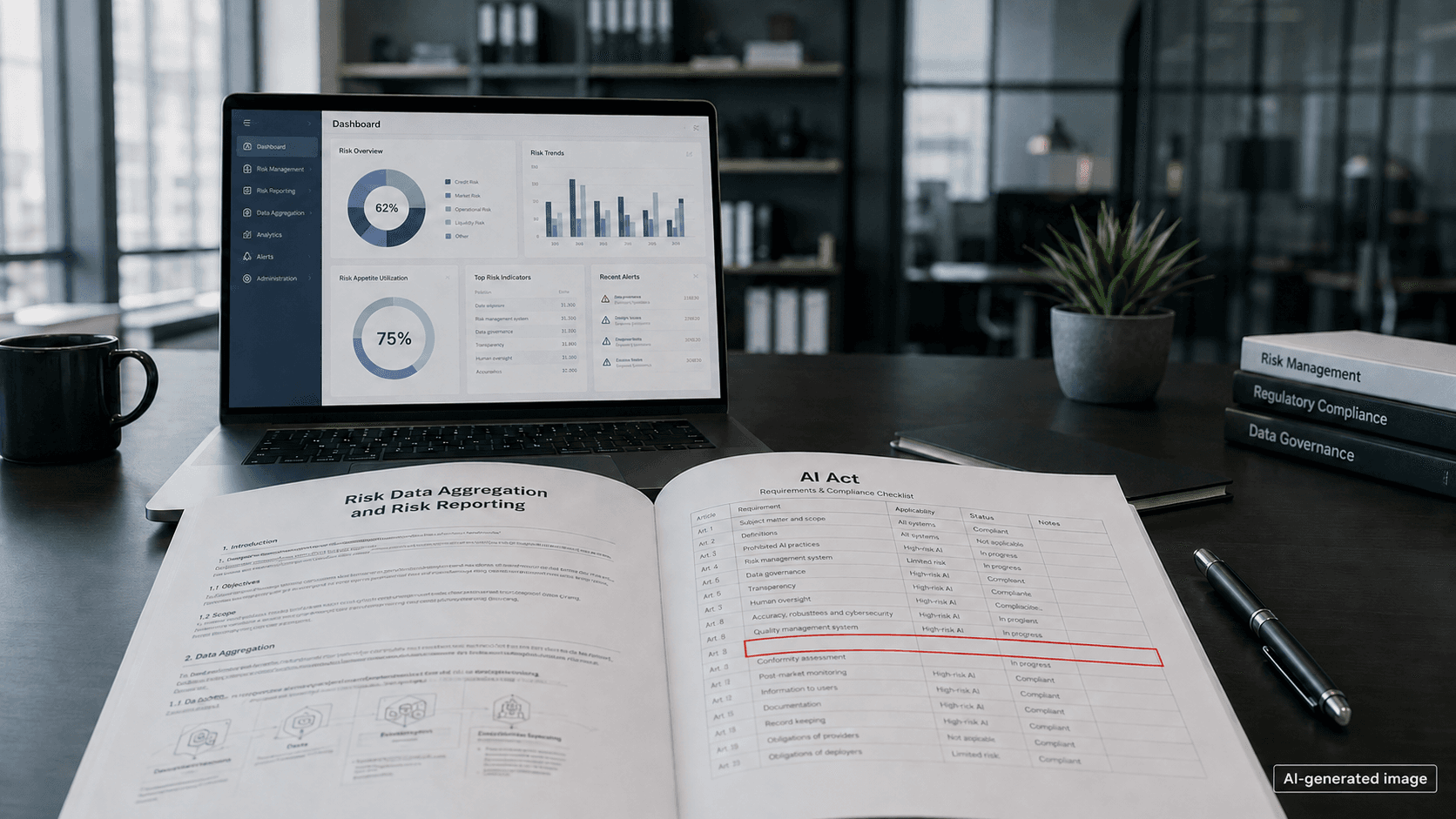
The EU AI Act for Banks: What 13 Years of BCBS 239 Are Really Worth in the Age of AI
The EU AI Act finds banks on familiar ground: data quality, data lineage, model risk management, and human oversight are disciplines that BCBS 239 has required since 2013 and that the ECB has tightened in its RDARR Guide. The head start is real, but limited. Three requirements have no equivalent in the current framework: bias and fairness controls, the explainability of model decisions, and the fundamental rights impact assessment under Article 27. An assessment that identifies specific areas requiring action.
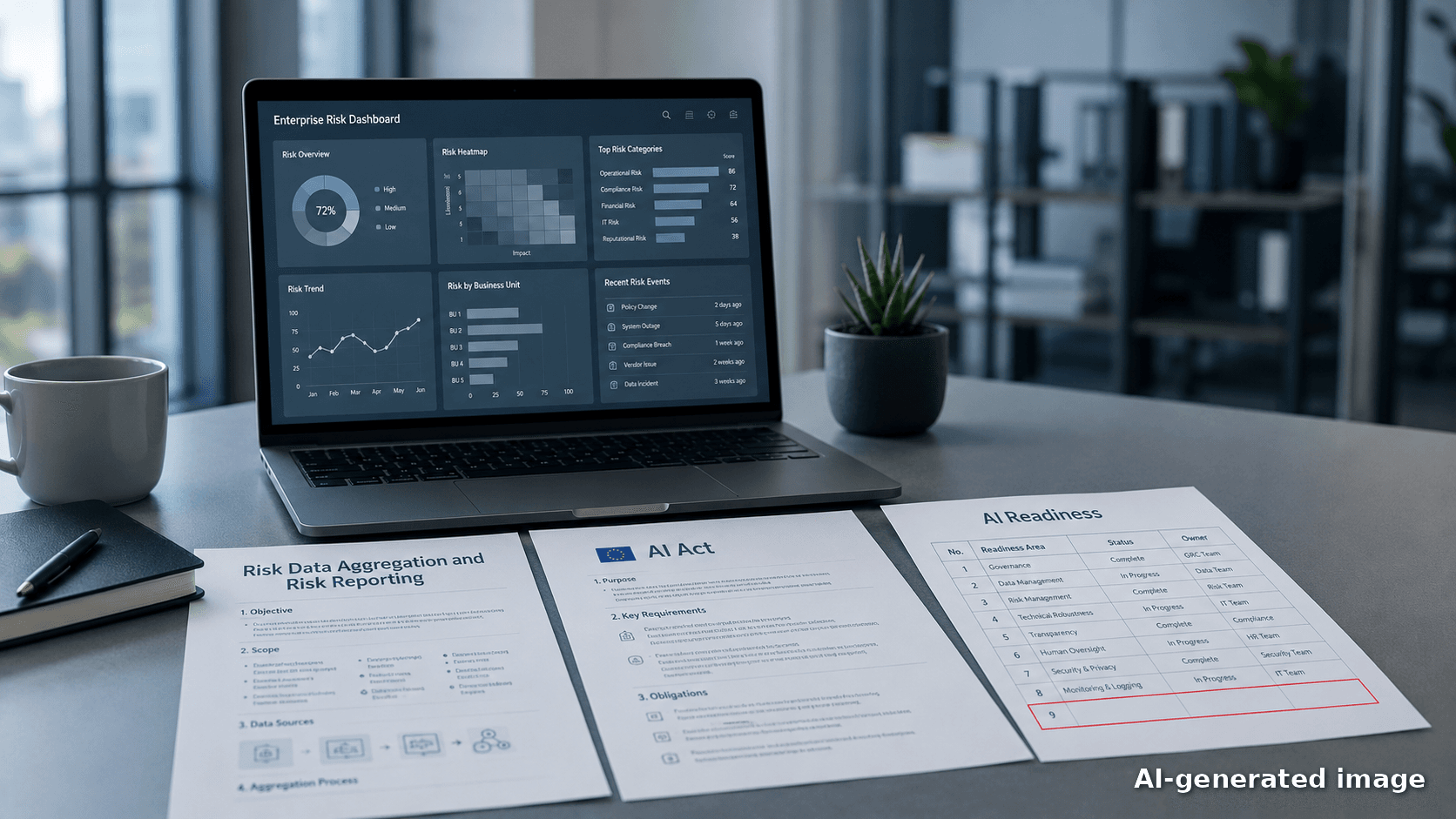
AI-Ready Data: Assessing Your Data – The Data Quality Dimensions That Determine AI Success
AI readiness is decided earlier than most organizations expect — at the level of the data itself. This article sets out the data quality dimensions that make data AI-ready, places data readiness for AI within the regulatory framework from the EU AI Act to BCBS 239, and explains why the four classic quality dimensions are not sufficient for AI models.
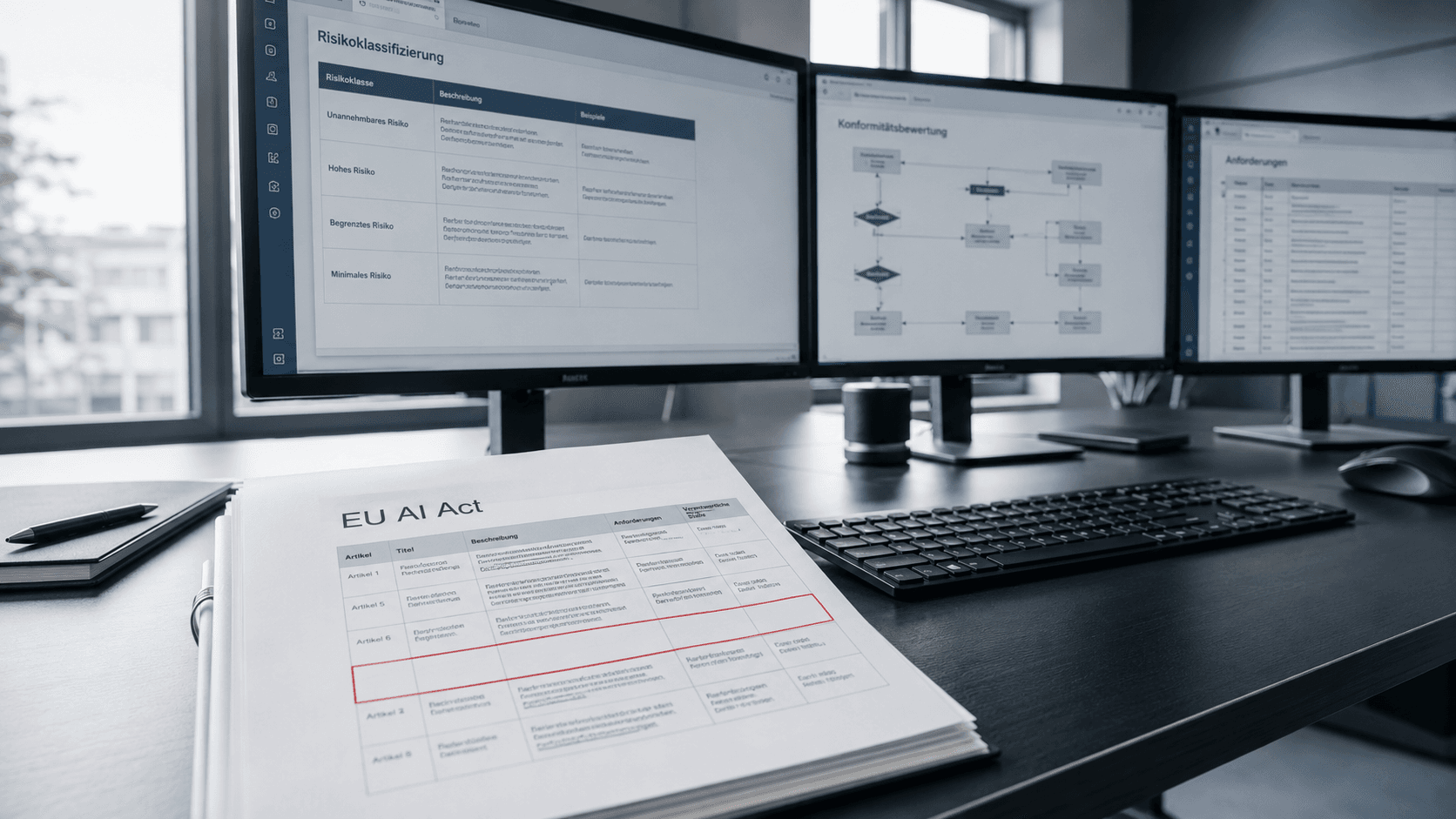
AI Governance for Banks: Connecting Data, Models, and Internal Structures
AI governance does not replace what banks already do well. It builds on it. This article shows how data governance, model governance, and internal governance combine into a framework that satisfies supervisors and enables AI at scale: from dataset suitability and continuous monitoring to accountability across the three lines of defense.