
Generative AI: The strategic compass for Europe's decision-makers - beyond the hype, towards a competitive advantage

Worth knowing:
Europe's sovereignty trap:
The impressive research strength of Germany + France masks a dangerous gap in investment and commercial implementation. Without a radical market launch strategy, Europe risks losing the value of its own innovations to the USA and China.
The EU AI Act as a double-edged sword:
Europe’s AI regulatory framework is both an opportunity and a burden. It offers the opportunity to use trust as a unique selling point, but comes with the risk of losing speed and agility in global competition.
The real bottleneck is not technology:
The key limiting factor for European companies is not the lack of AI models, but access to cutting-edge infrastructure (computing power) and highly qualified talent. Anyone who doesn't invest here will lose out.
Revolution of business models:
Generative AI is more than an efficiency tool. It forces a fundamental change from product-oriented to service- and results-oriented business models and calls traditional value chains into question.
The new reality for European leaders
Generative artificial intelligence (GenKI) has left the experimental phase. It is now a fundamental driver of productivity, innovation and market displacement. While American and Asian companies are scaling at breathtaking speed, European decision-makers are navigating a unique field of tension:
How can we take advantage of the immense opportunities offered by GenAI without becoming trapped in the pitfalls of regulation, infrastructure deficits and a fragmented market?
This strategic report looks behind the headlines and delivers the unvarnished truth. It is not a technical overview;Action guide for VPs, CTOs, operations managers and investors. We unravel the complex connections between technology, business and regulation in Europe and provide you with the insights you need to make informed, profitable decisions. Forget the hype; This is about your strategic advantage.
The unvarnished truth: Europe's position in the global AI race
The popular belief that Europe is behind in the AI race is too simplistic. The reality is more nuanced – and far more alarming for decision makers.
The fallacy of research strength
This report confirms:
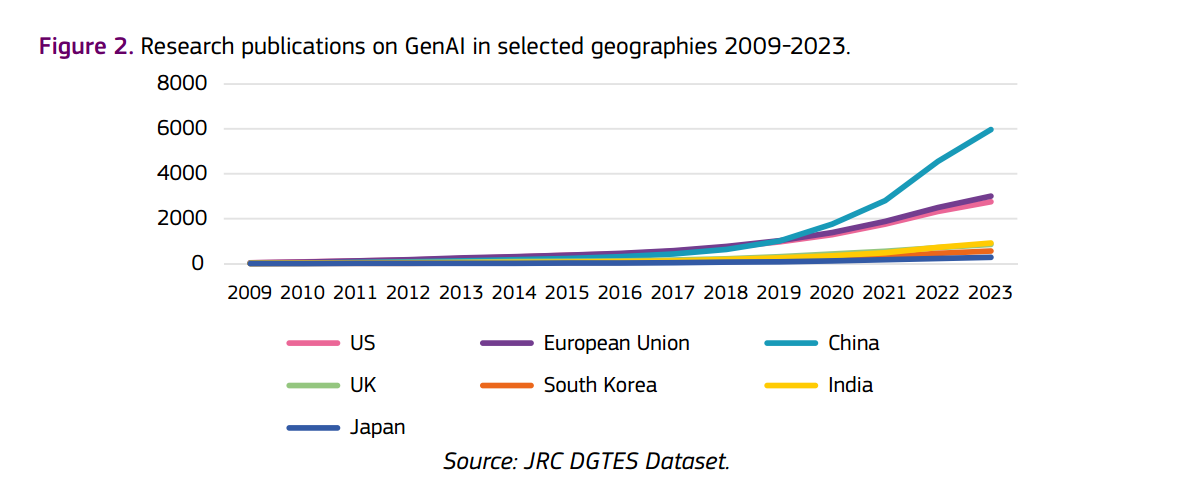
The EU ranks second in the world for academic publications.
This is a solid base, but it is also astrategic trap.
A look at the hard facts reveals a bleak picture:
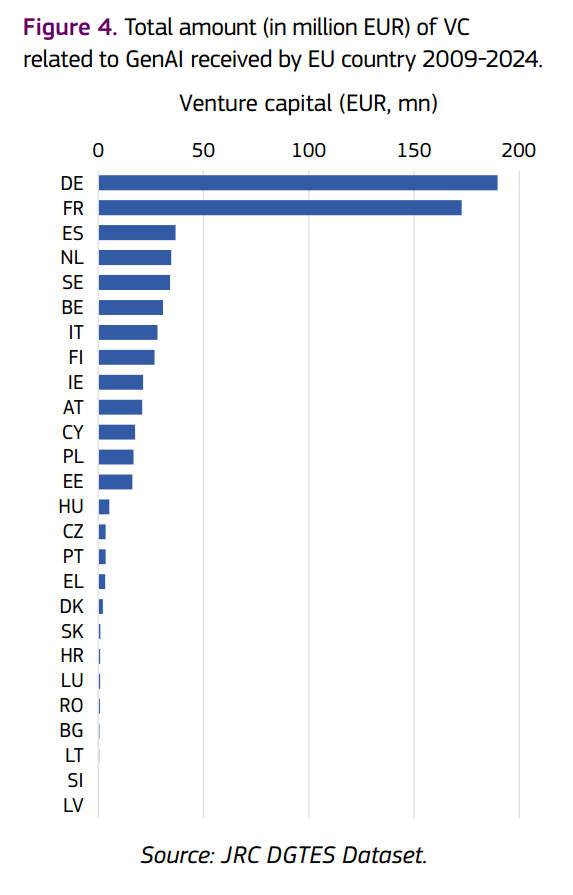
Investment desert:
There is a huge gap compared to the USA when it comes to venture capital investments in GenKI start-ups. Without massive capital, European champions cannot emerge or will be bought up by US competitors before they reach their full potential.
Innovation dilemma:
While China dominates in the number of AI patents, the USA leads in the commercial implementation of top models (such as GPT-4, Claude 3.5). The EU is lagging behind in converting research into patented, marketable products.
Expert insight:
Research alone does not generate sales. The real threat to Europe's digital sovereignty lies not in the lack of ideas, but in the lack of an aggressive, well-funded ecosystem that turns those ideas into global leaders.
The regulatory labyrinth: The EU AI Act as a strategic calculation
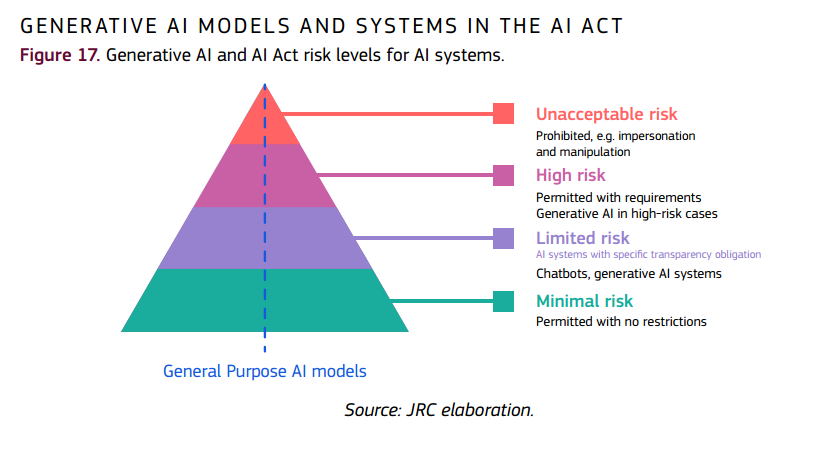
No discussion about AI in Europe is complete without an analysis of itAI Acts. For decision-makers, this framework is not a legal footnote, but a central element of business strategy.
Opportunity: Trust as a competitive advantageThe AI Act forces companies to have transparency, risk management and ethical standards. At first glance, this is a burden. From a strategic point of view, however, it is an opportunity to create a unique selling point:
Brand differentiation:
Position your company as a provider of “Trustworthy AI”. In markets such as healthcare, the financial industry or the public sector, this can be a crucial step in gaining trust among customers and partners.
Risk minimization:
A proactive AI Act-aligned approach protects against future penalties and reputational damage.
Risk:
Loss of speed and agilityThe other side of the coin is the administrative effort. While competitors in other regions move faster, EU companies have to meet complex compliance requirements.
Strategic question for your company:
How can you integrate the AI Act compliance requirements into your processes so that they become a quality feature instead of just a cost factor? How do you actively market “trust”?
Beyond Automation: The Tectonic Shift in Value Creation
The true revolution of GenKI lies not in the automation of existing tasks, but in the creation of completely new value chains and business models.
From product to intelligent service
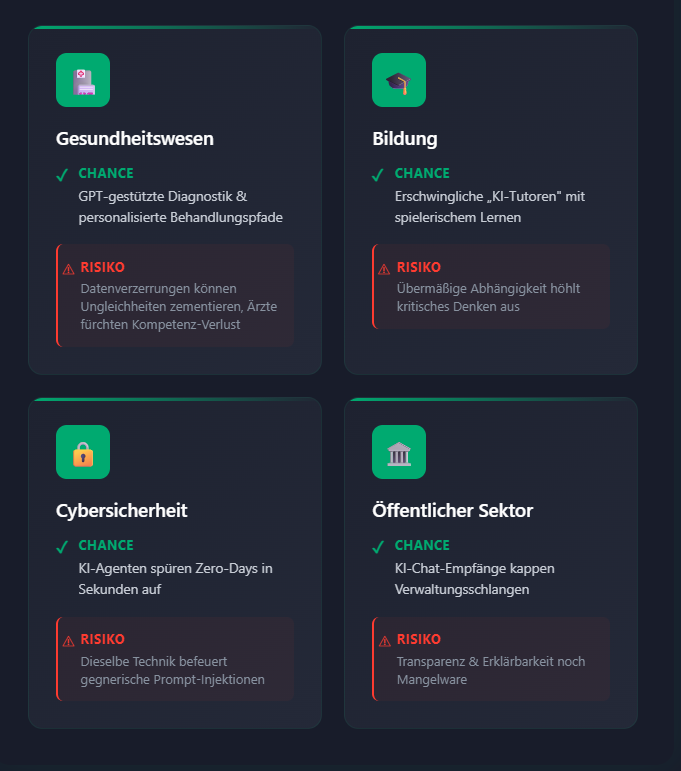
Industries such as manufacturing, healthcare and the creative sector are experiencing fundamental transformation. It's no longer just about selling a product, but about delivering data-driven results.
Example healthcare:
GenKI not only enables faster diagnoses, but also creates the basis for hyper-personalized treatment plans and virtual human twins (digital twins) to simulate therapies.
Example creative industry:
The copyright debate is just the tip of the iceberg. GenKI is forcing new licensing models and changing the way content is created, personalized and monetized.
The gap in the job market
The impact on the labor market is profound. Polarization takes place:
Upgrade:
Careers that require critical thinking, emotional intelligence and strategic oversight are being upgraded.
Substitution:
Routine cognitive tasks are becoming increasingly automated.
This creates an urgent need for strategic workforce development. Companies have to make massive investmentsAI competence(AI Literacy) of their workforce – not just among the technicians, but across all departments.
The foundation of success: infrastructure, data and the fight for talent
Your GenKI strategy is only as strong as its foundation. The report highlights the most critical vulnerabilities for European companies.
The power of data and data centers
GenAI models are insatiable. You need two things: massive amounts of high-quality data and immense computing power.
Data quality over quantity:
The problem of “model collapse,” where AI systems lose performance due to training with low-quality, AI-generated content, is a real danger. Access to curated, high-quality and diverse data sets is a key competitive advantage.
Infrastructure as a bottleneck:
The EU is home to significantly fewer high-performance data centers than the USA and China. Access to GPUs and TPUs is a strategic bottleneck that determines success or failure.
Expert warning:
Dependence on non-European cloud providers for the core computing power of your AI applications represents a significant business and sovereignty risk. The development of our own infrastructure or access to European infrastructure must be a priority.
Strategic implications & recommendations for action for decision-makers
Commercialization gapAssess your innovation portfolio:
Identify research projects with high market potential and accelerate their commercialization. Actively seek venture capital, including outside traditional European channels.
Regulatory PressureBuild a compliance-as-a-feature task force:
Integrate AI Act requirements into product development from the start. Actively use the transparency requirements in marketing to establish trust as a selling point.
Changing business modelsStart pilot projects for service-based models:
Experiment with GenAI-powered services that go beyond your core product. Analyze how you can sell customer results instead of just products.
Talent and Infrastructure DeficitConduct an AI competency analysis:
Identify the skill gaps in your workforce and start targeted upskilling programs. Secure long-term access to computing power through strategic partnerships or investments.
Conclusion: From observer to actor – Europe’s time to act is now
The “Generative AI Outlook Report” is more than an inventory; he is a wake-up call. For European decision-makers, the time for waiting and watching is finally over. Generative AI is not a distant technological wave, but the current that is already reshaping entire markets.
Your success will not depend on whether you use GenAI, but how you do it. It will depend on you understanding the unique challenges and opportunities of the European market and translating them into a coherent, aggressive strategy.
The next step for you as a decision-maker is clear:
Evaluate your own organization in light of the strategic realities outlined here.
- Where do you stand in the race for talent, infrastructure and data?
- How do you turn regulatory hurdles into a competitive advantage?
- And how do you ensure your business model is ready for the AI era?
The answers to these questions will determine the market leaders of tomorrow. Act now.
Further resources:
The report for download
Next step: Free initial consultation
Would you like to address these issues strategically? Our experts will be happy to advise you - without obligation and in a practical manner.Arrange an initial consultation now →
Next step: Free initial consultation
Would you like to address these issues strategically? Our experts will be happy to advise you - without obligation and in a practical manner.Arrange an initial consultation now →
Next step: Free initial consultation
📖 Also read:The Salesforce-inspired AI strategy playbook for your business
📖 Also read:The Salesforce-inspired AI strategy playbook for your business
Would you like to address these issues strategically? Our experts will be happy to advise you - without obligation and in a practical manner.Arrange an initial consultation now →