1. Home/
  2. Services/
  3. Digital Transformation/
  4. Process Automation/
  5. Intelligent Automation/
  6. Intelligent Automation Consulting En

Newsletter abonnieren

Bleiben Sie auf dem Laufenden mit den neuesten Trends und Entwicklungen

Durch Abonnieren stimmen Sie unseren Datenschutzbestimmungen zu.

A
ADVISORI FTC GmbH

Transformation. Innovation. Sicherheit.

Firmenadresse

Kaiserstraße 44

60329 Frankfurt am Main

Deutschland

Auf Karte ansehen

Kontakt

info@advisori.de+49 69 913 113-01

Mo-Fr: 9:00 - 18:00 Uhr

Unternehmen

Leistungen

Social Media

Folgen Sie uns und bleiben Sie auf dem neuesten Stand.

  • /
  • /

© 2024 ADVISORI FTC GmbH. Alle Rechte vorbehalten.

Your browser does not support the video tag.
Strategic Intelligent Automation Consulting for Enterprise Transformation

Intelligent Automation Consulting

Intelligent Automation Consulting transforms your automation vision into strategic reality through expert-driven advisory that goes far beyond traditional RPA implementation. We develop tailored hyperautomation strategies that seamlessly integrate AI-supported process automation, change management, and EU AI Act compliance to ensure sustainable digital transformation and operational excellence.

  • ✓Strategic automation roadmap development with hyperautomation vision and ROI focus
  • ✓Expert guidance for RPA, process mining, and AI integration in enterprise environments
  • ✓Change management and organizational transformation for successful automation adoption
  • ✓EU AI Act-compliant automation governance and compliance strategies

Your strategic success starts here

Our clients trust our expertise in digital transformation, compliance, and risk management

30 Minutes • Non-binding • Immediately available

For optimal preparation of your strategy session:

  • Your strategic goals and objectives
  • Desired business outcomes and ROI
  • Steps already taken

Or contact us directly:

info@advisori.de+49 69 913 113-01

Certifications, Partners and more...
ISO 9001 CertifiedISO 27001 CertifiedISO 14001 CertifiedBeyondTrust PartnerBVMW Bundesverband MitgliedMitigant PartnerGoogle PartnerTop 100 InnovatorMicrosoft AzureAmazon Web Services

Intelligent Automation Consulting - Strategic Advisory for Modern Enterprise Automation

Why Intelligent Automation Consulting with ADVISORI

  • Comprehensive consulting expertise from strategic assessment to implementation guidance
  • EU AI Act-compliant advisory for legally sound and compliant automation strategies
  • Proven transformation methodologies for enterprise-wide automation excellence
  • A comprehensive approach spanning technology strategy, change management, and governance
⚠

Intelligent Automation Consulting as a Strategic Transformation Enabler

Professional Intelligent Automation Consulting services are becoming a critical success factor for enterprise-wide automation transformation that ensures sustainable business outcomes and operational excellence.

ADVISORI in Numbers

11+

Years of Experience

120+

Employees

520+

Projects

We pursue a strategic consulting approach that combines modern automation technologies with proven transformation methodologies to ensure sustainable business outcomes and operational excellence.

Our Approach:

Comprehensive assessment and strategic readiness evaluation for well-founded automation decisions

Technology strategy development with platform selection and architecture design

Implementation roadmap creation with phased planning and risk mitigation

Change management and stakeholder engagement for sustainable transformation

Continuous advisory and optimization support for long-term automation excellence

"Intelligent Automation Consulting is the strategic foundation for successful digital transformation. We transform complex automation challenges into strategic business opportunities through expert-driven advisory that seamlessly integrates AI-supported process automation, change management, and EU AI Act compliance to create sustainable operational excellence and competitive advantages."

Asan Stefanski

Asan Stefanski

Head of Digital Transformation

Expertise & Experience:

11+ years of experience, Applied Computer Science degree, Strategic planning and management of AI projects, Cyber Security, Secure Software Development, AI

LinkedIn Profile

Our Services

We offer you tailored solutions for your digital transformation

Strategic Automation Assessment and Readiness Evaluation

Comprehensive assessment of your automation readiness and strategic roadmap development for successful transformation.

  • Automation maturity assessment and current state analysis for strategic baseline evaluation
  • Process portfolio evaluation and automation opportunity identification with ROI projections
  • Technology readiness assessment and infrastructure evaluation for implementation planning
  • Organizational readiness assessment and change management strategy development

Technology Strategy and Platform Selection Consulting

Expert-driven advisory for optimal automation technology selection and architecture design.

  • RPA platform evaluation and vendor selection for optimal technology fit decisions
  • Hyperautomation architecture design and integration strategies for scalable solutions
  • AI integration strategies and cognitive automation roadmap for intelligent process automation
  • Cloud vs. on-premises strategies and hybrid architecture advisory for enterprise requirements

Process Mining Strategy and Discovery Consulting

Strategic advisory for data-driven process analysis and automation potential identification.

  • Process mining tool selection and implementation strategies for optimal process discovery
  • Data strategy development and event log preparation for effective process analysis
  • Process intelligence frameworks and analytics strategies for continuous optimization
  • Automation opportunity prioritization and business case development based on process insights

Change Management and Organizational Transformation

Comprehensive change management advisory for successful automation adoption and employee engagement.

  • Change strategy development and stakeholder engagement plans for sustainable transformation
  • Training and upskilling strategies for human-bot collaboration and the future of work
  • Communication strategies and adoption metrics for successful automation acceptance
  • Cultural transformation advisory and employee experience optimization for automation excellence

Governance Framework and Compliance Consulting

Strategic advisory for automation governance establishment and EU AI Act compliance management.

  • Center of excellence establishment and governance framework development for enterprise-wide automation
  • EU AI Act compliance strategies and risk management frameworks for AI-supported automation
  • Security and access control strategies for secure automation operations
  • Performance management and KPI frameworks for continuous automation optimization

Implementation Guidance and Continuous Advisory

Ongoing consulting support for successful automation implementation and continuous optimization.

  • Implementation roadmap development and project management advisory for successful execution
  • Vendor management and partner selection advisory for optimal implementation partnerships
  • Quality assurance and testing strategies for robust automation solutions
  • Continuous improvement advisory and scaling strategies for sustainable automation excellence

Looking for a complete overview of all our services?

View Complete Service Overview

Our Areas of Expertise in Digital Transformation

Discover our specialized areas of digital transformation

Digital Strategy

Development and implementation of AI-supported strategies for your company's digital transformation to secure sustainable competitive advantages.

▼
    • Digital Vision & Roadmap
    • Business Model Innovation
    • Digital Value Chain
    • Digital Ecosystems
    • Platform Business Models
Data Management & Data Governance

Establish a robust data foundation as the basis for growth and efficiency through strategic data management and comprehensive data governance.

▼
    • Data Governance & Data Integration
    • Data Quality Management & Data Aggregation
    • Automated Reporting
    • Test Management
Digital Maturity

Precisely determine your digital maturity level, identify potential in industry comparison, and derive targeted measures for your successful digital future.

▼
    • Maturity Analysis
    • Benchmark Assessment
    • Technology Radar
    • Transformation Readiness
    • Gap Analysis
Innovation Management

Foster a sustainable innovation culture and systematically transform ideas into marketable digital products and services for your competitive advantage.

▼
    • Digital Innovation Labs
    • Design Thinking
    • Rapid Prototyping
    • Digital Products & Services
    • Innovation Portfolio
Technology Consulting

Maximize the value of your technology investments through expert consulting in the selection, customization, and seamless implementation of optimal software solutions for your business processes.

▼
    • Requirements Analysis and Software Selection
    • Customization and Integration of Standard Software
    • Planning and Implementation of Standard Software
Data Analytics

Transform your data into strategic capital: From data preparation through Business Intelligence to Advanced Analytics and innovative data products – for measurable business success.

▼
    • Data Products
      • Data Product Development
      • Monetization Models
      • Data-as-a-Service
      • API Product Development
      • Data Mesh Architecture
    • Advanced Analytics
      • Predictive Analytics
      • Prescriptive Analytics
      • Real-Time Analytics
      • Big Data Solutions
      • Machine Learning
    • Business Intelligence
      • Self-Service BI
      • Reporting & Dashboards
      • Data Visualization
      • KPI Management
      • Analytics Democratization
    • Data Engineering
      • Data Lake Setup
      • Data Lake Implementation
      • ETL (Extract, Transform, Load)
      • Data Quality Management
        • DQ Implementation
        • DQ Audit
        • DQ Requirements Engineering
      • Master Data Management
        • Master Data Management Implementation
        • Master Data Management Health Check
Process Automation

Increase efficiency and reduce costs through intelligent automation and optimization of your business processes for maximum productivity.

▼
    • Intelligent Automation
      • Process Mining
      • RPA Implementation
      • Cognitive Automation
      • Workflow Automation
      • Smart Operations
AI & Artificial Intelligence

Leverage the potential of AI safely and in regulatory compliance, from strategy through security to compliance.

▼
    • Securing AI Systems
    • Adversarial AI Attacks
    • Building Internal AI Competencies
    • Azure OpenAI Security
    • AI Security Consulting
    • Data Poisoning AI
    • Data Integration For AI
    • Preventing Data Leaks Through LLMs
    • Data Security For AI
    • Data Protection In AI
    • Data Protection For AI
    • Data Strategy For AI
    • Deployment Of AI Models
    • GDPR For AI
    • GDPR-Compliant AI Solutions
    • Explainable AI
    • EU AI Act
    • Explainable AI
    • Risks From AI
    • AI Use Case Identification
    • AI Consulting
    • AI Image Recognition
    • AI Chatbot
    • AI Compliance
    • AI Computer Vision
    • AI Data Preparation
    • AI Data Cleansing
    • AI Deep Learning
    • AI Ethics Consulting
    • AI Ethics And Security
    • AI For Human Resources
    • AI For Companies
    • AI Gap Assessment
    • AI Governance
    • AI In Finance

Frequently Asked Questions about Intelligent Automation Consulting

What is Intelligent Automation Consulting and how does it transform traditional automation approaches into strategic business solutions?

Intelligent Automation Consulting represents a paradigm shift from isolated RPA implementations to strategically orchestrated, AI-supported automation transformations. It establishes consulting as a strategic enabler for sustainable digital transformation — one that not only develops technical solutions, but also ensures organizational change, change management, and long-term automation excellence.

🎯 Strategic Consulting Approach and Transformation Methodology:

• Intelligent Automation Consulting integrates proven consulting methodologies with state-of-the-art automation technologies for comprehensive transformation strategies
• Comprehensive assessment frameworks systematically evaluate automation readiness, technology maturity, and organizational change readiness
• Strategic roadmap development combines business case creation with technical architecture planning for sustainable implementation strategies
• Stakeholder engagement and executive sponsorship ensure organization-wide support and resource allocation
• Risk assessment and mitigation strategies proactively identify potential challenges and develop appropriate solution approaches

🔧 Technology Strategy and Platform Selection Excellence:

• Expert guidance for RPA platform evaluation takes into account enterprise requirements, scalability, and integration complexity
• Hyperautomation architecture design develops future-ready automation landscapes with AI integration and cloud-native approaches
• Vendor selection and partnership strategies optimize technology fit and minimize implementation risks
• Process mining tool evaluation and data strategy development enable data-driven automation decisions
• Security and compliance integration ensures EU AI Act-compliant automation architectures from the outset

📊 Business Value Realization and ROI Optimization:

• Quantitative business case development with measurable KPIs and ROI projections for well-founded investment decisions
• Process opportunity assessment identifies high-impact automation potentials with optimal cost-benefit ratios
• Value stream mapping and process intelligence enable precise efficiency improvement projections
• Performance measurement frameworks establish continuous success monitoring and optimization cycles
• Scaling strategies ensure sustainable automation expansion beyond pilot projects

👥 Change Management and Organizational Excellence:

• Human-centric transformation approaches integrate employee empowerment into automation strategies
• Training and upskilling programs prepare teams for human-bot collaboration and the future of work
• Communication strategies and stakeholder engagement create automation acceptance and organizational support
• Cultural change management transforms corporate culture for automation excellence and continuous innovation
• Leadership development and change champion programs sustainably establish internal automation expertise

🛡 ️ Governance Framework and Compliance Excellence:

• Center of excellence establishment creates strategic automation leadership and best practice standardization
• EU AI Act compliance strategies ensure legally sound AI integration into automation processes
• Risk management frameworks proactively identify and mitigate automation risks
• Quality assurance and testing strategies secure robust, error-free automation solutions
• Audit trail and documentation standards fulfill regulatory requirements and enable compliance verification

What strategic advantages does professional Intelligent Automation Consulting offer over internal automation initiatives?

Professional Intelligent Automation Consulting transforms internal automation initiatives through external expertise, proven methodologies, and strategic perspectives that offer significant advantages in speed, quality, and sustainable outcomes. The combination of specialist knowledge, neutral assessment, and best practice transfer enables automation transformations that internal teams often cannot achieve on their own.

⚡ Accelerated Time-to-Value and Implementation Excellence:

• Proven consulting methodologies reduce implementation times through structured approaches and lessons learned from comparable projects
• Pre-built frameworks and templates significantly accelerate assessment phases, business case development, and roadmap creation
• Vendor relationships and partnership networks enable optimized procurement processes and preferential terms
• Rapid prototyping and proof-of-concept development validate automation approaches quickly and cost-efficiently
• Change management expertise minimizes adoption barriers and accelerates organizational transformation

🎯 Objective Assessment and Strategic Perspective:

• Neutral evaluation free from internal politics or legacy thinking enables unbiased automation strategies
• Cross-industry expertise brings best practices and innovative approaches from various sectors
• Independent validation of internal automation concepts by external specialists
• Stakeholder management without internal conflicts of interest for objective decision-making
• A fresh perspective on established processes often identifies overlooked automation potentials

💡 Deep Expertise and Specialized Knowledge:

• Technology expertise across multiple automation platforms enables optimal tool selection without vendor bias
• Regulatory compliance knowledge, particularly regarding the EU AI Act, ensures legally sound automation strategies
• Industry-specific automation patterns and use cases accelerate solution development
• Advanced analytics and process mining expertise for data-driven automation decisions
• Integration expertise for complex enterprise landscapes and legacy system connectivity

📈 Risk Mitigation and Quality Assurance:

• Proven methodologies reduce implementation risks through structured, tested approaches
• Quality gates and review processes ensure high solution quality and robustness
• Contingency planning and risk management expertise for proactive problem prevention
• Testing strategies and validation frameworks secure error-free automation solutions
• Post-implementation support and optimization ensure sustainable automation performance

🔄 Scalability and Future-Proofing:

• Enterprise architecture expertise for scalable automation landscapes
• Technology roadmap development takes future automation trends and technology evolution into account
• Modular design principles enable flexible extension and adaptation of automation solutions
• Cloud-native and API-first approaches create future-ready automation architectures
• Continuous improvement frameworks establish ongoing optimization and innovation

💼 Cost Optimization and Resource Efficiency:

• Optimized resource allocation through external expertise avoids internal capacity bottlenecks
• Reduced learning curve through immediate availability of automation expertise
• Economies of scale through consulting experience from multiple projects
• Flexible engagement models adapt consulting intensity to project phases
• Knowledge transfer ensures sustainable internal competency development alongside external support

How does Intelligent Automation Consulting conduct strategic assessment and readiness evaluation for successful transformation decisions?

Strategic assessment and readiness evaluation form the fundamental foundation for successful Intelligent Automation transformations. Through systematic, multi-dimensional assessment frameworks, we analyze organizational maturity, technology readiness, process suitability, and change capacity to enable data-driven transformation decisions and minimize implementation risks.

🔍 Comprehensive Maturity Assessment and Current State Analysis:

• Automation maturity model evaluation systematically assesses existing automation capabilities, governance structures, and organizational readiness
• Process landscape analysis identifies automation potentials through detailed workflow documentation and complexity assessment
• Technology infrastructure assessment evaluates existing IT landscapes, integration options, and modernization requirements
• Organizational capability evaluation analyzes skills, resources, and change readiness for automation transformation
• Governance and compliance review examines existing frameworks and identifies adaptation needs for automation excellence

📊 Data-Driven Process Discovery and Opportunity Identification:

• Process mining-based analysis extracts objective insights from event logs and system data for precise automation assessment
• Quantitative process metrics systematically capture throughput times, error rates, resource consumption, and cost factors
• Automation suitability scoring evaluates processes based on rule-based structure, standardization, volume, and complexity
• ROI potential analysis quantifies expected efficiency gains, cost savings, and quality improvements
• Risk-benefit matrix prioritizes automation opportunities by implementation effort and business impact

🏗 ️ Technology Readiness and Architecture Assessment:

• Infrastructure capability evaluation examines cloud readiness, scalability, and performance requirements for automation platforms
• Integration complexity analysis assesses API availability, legacy system connectivity, and data quality
• Security and compliance assessment evaluates existing security measures and regulatory requirements
• Vendor landscape review analyzes existing technology partnerships and expansion options
• Scalability planning develops architecture roadmaps for enterprise-wide automation expansion

👥 Organizational Change Readiness and Cultural Assessment:

• Change capacity evaluation measures organizational absorption capacity for transformation initiatives
• Stakeholder analysis identifies key players, change champions, and potential sources of resistance
• Skills gap assessment analyzes existing competencies and development needs for automation excellence
• Cultural readiness assessment evaluates openness to innovation, risk acceptance, and collaboration capabilities
• Leadership commitment analysis examines executive sponsorship and resource allocation for sustainable transformation

📋 Strategic Roadmap Development and Implementation Planning:

• Multi-phase implementation strategy develops structured transformation roadmaps with clear milestones
• Quick win identification prioritizes high-impact, low-effort automations for early successes
• Resource planning and budget allocation optimize investment strategies and ROI realization
• Risk mitigation strategies develop contingency plans for identified implementation challenges
• Success metrics and KPI frameworks establish measurable success criteria for continuous monitoring

🎯 Business Case Development and Investment Justification:

• Quantitative ROI modeling with detailed cost-benefit analyses and payback calculations
• Qualitative benefits assessment captures strategic advantages such as compliance improvement and employee satisfaction
• Scenario planning develops best-case, realistic, and conservative projections for investment decisions
• Competitive advantage analysis positions automation initiatives in the market context
• Executive summaries and presentation materials communicate assessment results in a stakeholder-appropriate manner

What role does change management play in Intelligent Automation Consulting and how does it ensure sustainable transformation?

Change management is the strategic core of successful Intelligent Automation transformations and distinguishes sustainable automation success from temporary technical implementations. Through systematic organizational development, human-centric transformation approaches, and cultural evolution, we create the organizational prerequisites for long-term automation excellence and employee empowerment.

🎯 Strategic Change Vision and Transformation Leadership:

• Change vision development articulates clear, inspiring visions of the future for automation-transformed organizations
• Executive sponsorship and leadership alignment ensure visible support and resource allocation
• Change champion networks establish multipliers across various organizational areas for decentralized transformation
• Communication strategy develops consistent messages across all hierarchical levels and stakeholder groups
• Success story development and celebration frameworks reinforce positive transformation experiences

👥 Human-Centric Transformation and Employee Empowerment:

• Job impact analysis examines in detail how automation transforms various roles and develops individual transition strategies
• Reskilling and upskilling programs prepare employees for higher-value, analytical, and creative activities
• Career path development demonstrates concrete development opportunities in automated work environments
• Employee voice mechanisms enable active participation and continuous feedback during transformation
• Recognition and incentive programs acknowledge employee contributions to successful automation adoption

📚 Comprehensive Learning and Capability Development:

• Role-based training programs systematically address the specific requirements of different employee groups
• Hands-on learning approaches enable practical experience with new automation tools and processes
• Continuous learning platforms support ongoing skill development and adaptation to evolving technologies
• Mentoring and coaching programs provide individual support during critical transition phases
• Certification programs validate new skills and create career incentives for automation expertise

🔄 Phased Implementation and Iterative Improvement:

• Pilot program design tests automation solutions in controlled environments with selected user groups
• Gradual rollout strategies minimize disruption and enable continuous adjustments based on feedback
• Feedback loop integration systematically collects user input for process and tool optimization
• Agile change management dynamically adapts transformation strategies to lessons learned and changing requirements
• Success measurement continuously tracks both technical performance and human adoption metrics

💬 Communication Excellence and Stakeholder Engagement:

• Multi-channel communication uses various media for effective message delivery to diverse target groups
• Two-way communication platforms enable dialogue and proactively address concerns and questions
• Regular updates and progress reports keep all stakeholders informed about transformation progress
• Town hall meetings and Q&A sessions create transparency and direct interaction opportunities
• Myth busting and FAQ development systematically address misunderstandings and concerns regarding automation

🤝 Collaboration and Cross-Functional Integration:

• Cross-functional teams integrate diverse perspectives into automation design and implementation
• Business-IT partnership models ensure technical solutions that optimally meet business requirements
• User experience design ensures that automated systems are intuitive and user-friendly
• Community of practice establishment promotes knowledge sharing and best practice exchange between teams
• Collaborative problem-solving approaches leverage collective intelligence for automation optimization

📊 Performance Monitoring and Continuous Support:

• Adoption metrics systematically track usage rates, user satisfaction, and performance indicators
• User support systems provide continuous assistance with technical and process-related challenges
• Performance coaching supports teams in optimizing their work with automated systems
• Continuous improvement processes use change feedback for ongoing optimization of the transformation strategy
• Long-term sustainability planning ensures lasting change integration and cultural anchoring

How does Intelligent Automation Consulting develop technology strategy and platform selection for optimal automation architectures?

Technology strategy and platform selection form the technical foundation for successful Intelligent Automation transformations. Through systematic evaluation of automation platforms, architecture design, and integration strategies, we develop future-ready technology roadmaps that harmonize business requirements with technical excellence and ensure sustainable scalability.

🔧 Comprehensive Platform Evaluation and Vendor Assessment:

• Multi-criteria platform assessment systematically analyzes RPA tools, hyperautomation platforms, and AI integration capabilities
• Vendor landscape analysis evaluates market leaders, niche solutions, and emerging technologies for optimal tool selection
• Total cost of ownership modeling takes into account licensing costs, implementation effort, and maintenance requirements
• Scalability assessment examines platform capabilities for enterprise-wide automation and volume scaling
• Integration capability evaluation assesses API availability, connector ecosystems, and legacy system connectivity

🏗 ️ Enterprise Architecture Design and Integration Strategy:

• Reference architecture development defines standardized automation landscapes for consistent implementation
• Microservices and API-first approaches create flexible, extensible automation architectures
• Cloud-native design principles enable scalable, resilient automation infrastructures
• Hybrid architecture strategies optimally combine on-premises and cloud solutions
• Data architecture planning ensures efficient data flows and analytics integration

⚡ Technology Roadmap Development and Future-Proofing:

• Strategic technology roadmaps align automation technologies with business objectives and IT strategies
• Emerging technology assessment evaluates AI trends, low-code platforms, and automation innovations
• Migration strategy development plans the gradual modernization of existing automation landscapes
• Technology lifecycle management takes platform evolution and upgrade cycles into account
• Innovation pipeline planning continuously integrates new automation technologies

🔗 Integration Strategy and System Connectivity:

• Enterprise integration patterns define standardized connectivity strategies for various system types
• API management and gateway strategies create secure, scalable integration infrastructures
• Legacy system integration develops modernization strategies for outdated applications
• Real-time data integration enables event-driven automation and real-time process orchestration
• Security integration ensures secure automation through identity management and access control

🛡 ️ Security Architecture and Compliance Integration:

• Security-by-design principles integrate security requirements from the beginning of architecture planning
• Zero trust architectures create secure automation environments with minimal access rights
• Compliance architecture ensures conformity with the EU AI Act, GDPR, and industry-specific regulations
• Audit trail design enables complete traceability of all automation activities
• Risk management integration proactively identifies and mitigates technology risks

📊 Performance Optimization and Monitoring Strategy:

• Performance architecture design optimizes automation speed and resource consumption
• Monitoring and observability strategies create transparency over automation performance
• Capacity planning and resource management ensure optimal infrastructure utilization
• SLA definition and performance metrics establish measurable quality criteria
• Continuous optimization frameworks enable ongoing performance improvements

What role does process mining strategy play in Intelligent Automation Consulting and how does it enable data-driven automation decisions?

Process mining strategy transforms traditional, intuitive automation decisions into data-driven, objective optimization strategies. Through systematic analysis of event logs, process discovery, and performance analytics, we create transparent insights into actual business processes, precisely identify automation potentials, and develop evidence-based transformation roadmaps.

🔍 Advanced Process Discovery and Data-Driven Analysis:

• Event log analysis extracts objective process insights from ERP systems, CRM platforms, and workflow applications
• Process visualization creates transparent representations of complex business processes with all variants and exceptions
• Bottleneck identification locates performance bottlenecks and inefficiencies through quantitative data analysis
• Process variant analysis identifies standard processes and deviations for targeted automation strategies
• Root cause analysis systematically determines the causes of process problems and quality deficiencies

📊 Quantitative Process Intelligence and Performance Metrics:

• KPI-based process assessment objectively measures throughput times, costs, quality, and compliance metrics
• Statistical process analysis identifies trends, patterns, and anomalies in business processes
• Benchmarking and best practice identification compare process performance across departments and locations
• Process maturity assessment evaluates the automation readiness of various process areas
• ROI potential quantification calculates expected automation benefits based on current performance

🎯 Automation Opportunity Identification and Prioritization:

• Rule-based process scoring evaluates automation suitability based on structure, volume, and complexity
• Exception handling analysis identifies process areas that require human intervention
• Process standardization potential evaluates harmonization opportunities prior to automation
• Quick win identification prioritizes high-impact, low-effort automations for rapid results
• Strategic automation roadmap develops phased implementation based on process intelligence

🔄 Continuous Process Monitoring and Optimization:

• Real-time process monitoring tracks automation performance and identifies optimization potentials
• Process conformance checking continuously validates adherence to defined process standards
• Deviation detection proactively identifies process deviations and quality issues
• Performance trend analysis tracks automation effects and improvement trends over the long term
• Predictive process analytics anticipates future process problems and optimization needs

🛠 ️ Process Mining Tool Strategy and Technology Integration:

• Tool selection and platform evaluation for optimal process mining solutions based on organizational requirements
• Data integration strategies connect various data sources for comprehensive process intelligence
• Process mining-automation integration creates seamless connections between discovery and implementation
• Self-service analytics enable business users to conduct independent process analyses
• Process intelligence dashboards visualize key insights for various stakeholder groups

💡 Business Case Development and Value Realization:

• Evidence-based business cases use process mining data for precise ROI calculations
• Before-after analyses quantitatively measure actual automation effects
• Process cost modeling calculates detailed cost savings through automation
• Quality impact assessment quantifies improvements in error rates and compliance
• Strategic value identification captures qualitative benefits such as customer experience and employee satisfaction

🎨 Process Redesign and Optimization Strategy:

• Process reengineering recommendations optimize workflows prior to automation
• Standardization strategy harmonizes process variants for more efficient automation
• Exception handling design develops strategies for complex, non-automatable process steps
• Process simplification eliminates unnecessary complexity and redundancies
• Future state design develops optimized process landscapes for maximum automation benefits

How does Intelligent Automation Consulting establish governance frameworks and EU AI Act compliance for legally sound automation?

Governance frameworks and EU AI Act compliance form the regulatory foundation for legally sound, sustainable Intelligent Automation implementations. Through systematic compliance strategies, risk management frameworks, and governance structures, we ensure that automation initiatives meet the highest legal standards while enabling business agility.

🏛 ️ Center of Excellence Establishment and Governance Structure:

• Automation center of excellence design creates strategic leadership structures for enterprise-wide automation
• Governance board establishment defines decision-making structures, responsibilities, and escalation processes
• Role and responsibility matrix clarifies tasks between business, IT, and compliance teams
• Policy framework development standardizes automation guidelines and best practices
• Change control processes ensure controlled, traceable automation changes

⚖ ️ EU AI Act Compliance Strategy and Legal Framework:

• AI system classification systematically assesses automation solutions according to EU AI Act risk categories
• High-risk AI system compliance implements required documentation, testing, and monitoring requirements
• Conformity assessment processes establish EU-compliant certification procedures for AI-supported automation
• Transparency and explainability requirements ensure traceable automation decisions
• Data governance integration harmonizes AI Act requirements with GDPR compliance

🛡 ️ Risk Management Framework and Compliance Monitoring:

• Automation risk assessment systematically identifies and evaluates technical, operational, and regulatory risks
• Risk mitigation strategies develop proactive measures for identified automation risks
• Continuous compliance monitoring tracks adherence to regulatory requirements in real time
• Incident response processes define response strategies for compliance violations and system failures
• Regular compliance audits validate governance effectiveness and identify areas for improvement

📋 Documentation and Audit Trail Management:

• Comprehensive documentation standards capture all automation decisions and implementation steps
• Audit trail systems record all automation activities for regulatory verification
• Version control and change documentation ensure traceability of all system changes
• Compliance reporting frameworks automate regulatory reporting
• Evidence management systems organize compliance records for audits and reviews

🔐 Security Governance and Access Control:

• Identity and access management integration ensures secure automation access
• Privileged access management strictly controls administrative automation rights
• Security policy enforcement automates security guidelines within automation processes
• Data protection compliance integrates data protection requirements into automation design
• Cybersecurity framework alignment harmonizes automation security with enterprise security

📊 Performance Governance and Quality Assurance:

• SLA definition and monitoring establish measurable quality criteria for automation services
• Quality gates implementation ensures quality standards across all development phases
• Performance metrics and KPI frameworks continuously measure automation effectiveness
• Continuous improvement processes optimize governance structures based on lessons learned
• Stakeholder feedback integration incorporates user experiences into governance optimization

🌐 Multi-Jurisdictional Compliance and Global Governance:

• Cross-border compliance strategies address international regulatory differences
• Data localization requirements take regional data protection requirements into account
• Global governance standards harmonize automation guidelines across locations
• Regulatory change management proactively tracks evolving compliance requirements
• International best practice integration leverages global governance experience for local optimization

How does Intelligent Automation Consulting support implementation guidance and continuous advisory for sustainable automation excellence?

Implementation guidance and continuous advisory transform strategic automation visions into operational reality through structured implementation support, proactive problem-solving, and continuous optimization. Our advisory approach ensures not only successful implementation, but also long-term automation excellence through ongoing support and strategic further development.

🚀 Structured Implementation Roadmap and Project Management:

• Phase-gate methodology structures automation implementation into manageable, measurable project phases
• Critical path analysis identifies dependencies and optimizes implementation sequences
• Resource allocation optimization efficiently coordinates internal teams, external partners, and vendor resources
• Risk-based project planning anticipates implementation challenges and develops mitigation strategies
• Milestone tracking and progress reporting ensure transparency and timely course correction

🤝 Vendor Management and Partnership Optimization:

• Vendor selection advisory evaluates implementation partners based on expertise, capacity, and cultural fit
• Contract negotiation support optimizes vendor agreements for maximum business value and risk mitigation
• Multi-vendor coordination orchestrates complex implementation ecosystems with various specialists
• Performance management monitors vendor delivery and ensures quality standards
• Partnership evolution strategies develop long-term vendor relationships for ongoing innovation

🔧 Technical Implementation Support and Quality Assurance:

• Architecture review and technical validation ensure robust, scalable automation solutions
• Code review and best practice enforcement secure high development quality
• Testing strategy development establishes comprehensive quality assurance processes
• Integration testing coordination validates seamless system connectivity
• Performance optimization guidance maximizes automation efficiency and resource utilization

📈 Continuous Monitoring and Performance Optimization:

• Real-time performance dashboards create transparency over automation effectiveness
• Proactive issue detection identifies potential problems before they impact the business
• Root cause analysis and problem resolution ensure fast, sustainable problem-solving
• Capacity planning and scaling guidance support automation expansion
• Performance tuning recommendations continuously optimize existing automation solutions

🎯 Business Value Realization and ROI Optimization:

• Value tracking and benefit measurement quantify actual automation benefits
• ROI analysis and business case validation demonstrate investment success with concrete metrics
• Quick win identification maximizes early automation successes for stakeholder buy-in
• Scaling strategy development systematically plans automation expansion for maximum business impact
• Value engineering approaches continuously optimize cost-benefit ratios

🔄 Continuous Improvement and Innovation Integration:

• Regular health checks evaluate automation performance and identify optimization potentials
• Technology evolution guidance strategically integrates new automation technologies
• Process optimization recommendations continuously improve automated workflows
• Innovation pipeline management systematically plans future automation initiatives
• Best practice sharing transfers lessons learned between various automation projects

🎓 Knowledge Transfer and Capability Building:

• Skills development programs prepare internal teams for automation ownership
• Documentation and knowledge base creation ensure sustainable knowledge retention
• Training and certification support develop internal automation expertise
• Mentoring and coaching programs support team development over the long term
• Community of practice establishment promotes organization-wide knowledge sharing and innovation

How does Intelligent Automation Consulting maximize business value realization and ROI optimization for sustainable automation investments?

Business value realization and ROI optimization transform automation investments from cost factors into strategic value drivers. Through systematic value engineering, performance measurement, and continuous optimization, we ensure that every automation initiative generates measurable business benefits and creates long-term competitive advantages.

💰 Strategic Value Engineering and Investment Optimization:

• Value stream analysis identifies high-impact automation potentials with optimal return-on-investment ratios
• Business case development quantifies both direct cost savings and strategic benefits such as quality improvement and customer experience
• Investment portfolio optimization prioritizes automation projects by ROI potential, implementation effort, and strategic importance
• Total economic impact modeling captures all value creation levels from efficiency gains to innovation enablement
• Risk-adjusted ROI calculations take implementation risks and market volatility into account for realistic investment assessments

📊 Comprehensive Performance Measurement and Value Tracking:

• Multi-dimensional KPI frameworks measure automation effects across cost, time, quality, and strategic metrics
• Real-time value dashboards create transparency over automation performance and ROI realization
• Before-after analyses quantify actual improvements through objective baseline comparisons
• Stakeholder-specific value reports communicate automation benefits to various decision-making levels in a target-group-appropriate manner
• Continuous value monitoring proactively identifies optimization potentials and performance deviations

🎯 Quick Win Strategy and Early Value Realization:

• Quick win identification prioritizes high-impact, low-effort automations for rapid ROI realization
• Pilot program design validates automation approaches with minimal investment before full-scale implementation
• Phased value delivery plans automation rollouts for continuous benefit realization
• Early success communication reinforces stakeholder buy-in through visible automation successes
• Momentum building leverages early successes for expansion funding and organizational support

🔄 Continuous Value Optimization and Performance Enhancement:

• Value engineering reviews optimize existing automation solutions for maximum efficiency
• Performance tuning strategies continuously improve automation speed and resource utilization
• Process optimization recommendations identify improvement potentials in automated workflows
• Technology upgrade planning integrates new automation technologies for enhanced value creation
• Scaling strategy development maximizes ROI through systematic automation expansion

📈 Strategic Business Impact and Competitive Advantage:

• Market positioning analysis assesses automation benefits in the competitive context
• Innovation enablement assessment quantifies how automation enables new business models
• Customer experience impact measures automation effects on service quality and customer satisfaction
• Employee productivity enhancement captures employee empowerment through automation
• Strategic agility improvement assesses increased adaptability through flexible automation architectures

💡 Value Communication and Stakeholder Engagement:

• Executive reporting frameworks effectively communicate automation successes at C-level
• Business case updates document ROI realization and justify further automation investments
• Success story development creates internal champions and promotes automation adoption
• Stakeholder value workshops align various interest groups on shared automation objectives
• ROI communication strategies translate technical automation benefits into business-relevant metrics

What role does hyperautomation strategy play in Intelligent Automation Consulting and how does it enable end-to-end process orchestration?

Hyperautomation strategy transforms isolated RPA implementations into orchestrated, AI-supported automation ecosystems that seamlessly automate complex end-to-end business processes. By integrating RPA, AI, machine learning, process mining, and low-code platforms, we create intelligent automation landscapes that enable adaptive, self-optimizing process orchestration.

🤖 Intelligent Automation Orchestration and AI Integration:

• AI-supported decision making integrates machine learning algorithms into automation workflows for intelligent decision-making
• Natural language processing enables automated document processing and content analysis in complex business processes
• Computer vision integration automates visual data extraction and image processing for comprehensive process automation
• Predictive analytics integration proactively anticipates process anomalies and optimizes automation performance
• Cognitive automation strategies combine rule-based RPA with AI capabilities for adaptive process handling

🔗 End-to-End Process Orchestration and System Integration:

• Cross-system workflow orchestration connects various applications and data sources in seamless automation chains
• API-first integration strategies create flexible, extensible automation architectures
• Event-driven automation enables real-time process orchestration based on business events and triggers
• Microservices-based automation creates modular, scalable process components
• Enterprise service bus integration harmonizes data flows between various automation components

⚡ Low-Code/No-Code Platform Strategy and Citizen Development:

• Low-code automation platforms enable business users to develop automations independently
• Citizen developer programs democratize automation capabilities beyond IT departments
• Visual workflow designers simplify complex process automation for non-technical users
• Template-based automation libraries accelerate automation development through reusable components
• Governance frameworks for citizen development ensure quality and compliance in decentralized automation

🧠 Adaptive Learning and Self-Optimizing Automation:

• Machine learning integration enables self-learning automation systems that continuously improve performance
• Anomaly detection identifies process deviations and dynamically adapts automation logic
• Performance analytics-driven optimization uses data analysis for continuous automation improvement
• Feedback loop integration collects user input for iterative automation optimization
• Adaptive rule engine automatically adjusts automation rules based on process changes

🌐 Cloud-Native Hyperautomation and Scalability:

• Cloud-first automation architectures enable elastic scaling and global availability
• Containerized automation services create portable, consistent automation environments
• Serverless automation functions optimize resource consumption and cost efficiency
• Multi-cloud automation strategies avoid vendor lock-in and maximize flexibility
• Edge computing integration enables local automation with cloud orchestration

📊 Process Intelligence and Data-Driven Optimization:

• Real-time process monitoring creates transparency over end-to-end automation performance
• Process mining integration continuously identifies optimization potentials in automated workflows
• Data analytics-driven insights enable evidence-based automation improvements
• Performance benchmarking compares automation effectiveness across various process areas
• Predictive process analytics anticipates future automation needs and optimization opportunities

🛡 ️ Security and Compliance in Hyperautomation:

• Zero trust security principles comprehensively secure complex automation landscapes
• Automated compliance monitoring ensures continuous adherence to regulatory requirements
• Security-by-design integrates security measures from the beginning of hyperautomation planning
• Audit trail orchestration records all automation activities for compliance verification
• Risk management integration proactively identifies and mitigates hyperautomation risks

How does Intelligent Automation Consulting develop scaling strategies and enterprise-wide automation expansion for sustainable transformation?

Scaling strategies and enterprise-wide automation expansion transform successful pilot projects into organization-wide automation transformations. Through systematic scaling planning, change management, and governance structures, we ensure that automation successes can be replicated, standardized, and continuously optimized.

🚀 Strategic Scaling Roadmap and Expansion Planning:

• Maturity-based scaling models develop phased automation expansion based on organizational readiness
• Cross-functional scaling strategies identify automation potentials across departmental boundaries
• Geographic expansion planning scales successful automation solutions to various locations and regions
• Business unit integration harmonizes automation approaches across various business areas
• Technology roadmap alignment ensures consistent automation architectures during scaling

🏗 ️ Standardization and Reusability Framework:

• Automation template libraries create reusable automation components for accelerated scaling
• Best practice standardization documents successful automation approaches for organization-wide replication
• Component-based architecture enables modular automation development and flexible reuse
• Configuration management systems ensure consistent automation implementation across various environments
• Quality assurance standards maintain consistent automation quality during scaling

👥 Organizational Change Management and Capability Building:

• Change champion networks establish automation experts across various organizational areas
• Skills development programs prepare teams for expanded automation responsibilities
• Cultural transformation strategies create an automation-friendly corporate culture
• Communication frameworks ensure consistent automation messaging across all organizational levels
• Resistance management approaches proactively address scaling resistance

📊 Performance Management and Quality Assurance:

• Scaling KPI frameworks systematically measure automation expansion and scaling success
• Quality gates implementation ensures quality standards during accelerated automation development
• Performance benchmarking compares automation effectiveness across various implementations
• Continuous monitoring systems track scaling performance and identify optimization needs
• Feedback loop integration collects lessons learned for continuous scaling improvement

🔧 Technology Infrastructure and Platform Scaling:

• Infrastructure-as-code enables automated, consistent automation environments
• Container orchestration strategies elastically scale automation services
• Load balancing and performance optimization ensure stable automation performance during scaling
• Disaster recovery planning secures automation continuity during enterprise-wide expansion
• Monitoring and observability systems create transparency over scaled automation landscapes

💼 Governance and Risk Management During Scaling:

• Scaling governance frameworks define decision-making structures for automation expansion
• Risk assessment processes evaluate scaling risks and develop mitigation strategies
• Compliance management ensures regulatory conformity during organization-wide automation
• Audit trail scaling records all automation activities across various implementations
• Change control processes coordinate automation changes across scaled environments

🎯 Value Realization and ROI Optimization During Scaling:

• Economies of scale realization maximizes cost savings through automation volume
• Cross-functional value synergies identify additional value creation potentials during scaling
• Investment optimization strategies prioritize scaling investments by ROI potential
• Value network effects leverage automation interconnection for exponential value creation growth
• Scaling success metrics quantify scaling benefits and justify further expansion

🔄 Continuous Innovation and Future-Proofing:

• Innovation pipeline management integrates new automation technologies into scaled environments
• Technology evolution strategies prepare scaled automation landscapes for future developments
• Experimentation frameworks enable safe innovation testing in scaled environments
• Knowledge management systems preserve scaling expertise and promote organization-wide learning
• Future state visioning develops long-term automation strategies for sustainable scaling

How does Intelligent Automation Consulting ensure vendor management and partnership optimization for successful automation implementation?

Vendor management and partnership optimization transform automation projects from isolated technology implementations into strategic ecosystem partnerships. Through systematic vendor evaluation, contract optimization, and performance management, we create sustainable automation partnerships that enable long-term innovation and value creation.

🤝 Strategic Vendor Selection and Partnership Development:

• Multi-criteria vendor assessment evaluates automation providers by technical expertise, cultural fit, and strategic vision
• Partnership maturity models develop vendor relationships from transactional to strategic partnerships
• Vendor ecosystem mapping identifies optimal partner combinations for complex automation projects
• Due diligence processes assess vendor stability, compliance, and long-term roadmap alignment
• Cultural compatibility assessment ensures harmonious collaboration between internal teams and external partners

📋 Contract Optimization and Risk Mitigation:

• Value-based contracting models align vendor incentives with business outcomes and ROI objectives
• SLA definition and performance metrics establish measurable quality criteria for vendor delivery
• Risk allocation strategies optimally distribute project and performance risks between the organization and vendor
• Intellectual property agreements secure automation assets and knowledge transfer
• Flexible contract structures enable adaptation to evolving automation requirements

🎯 Performance Management and Continuous Optimization:

• Vendor performance dashboards create transparency over delivery quality and project progress
• Regular performance reviews evaluate vendor contribution and identify improvement potentials
• Benchmarking and best practice sharing continuously optimize vendor performance
• Issue escalation processes ensure rapid problem resolution and project continuity
• Performance incentive systems motivate vendor excellence and innovation

🔄 Multi-Vendor Coordination and Ecosystem Management:

• Vendor integration strategies orchestrate complex multi-vendor automation projects
• Communication frameworks coordinate information sharing between various vendor teams
• Conflict resolution mechanisms proactively address inter-vendor disputes
• Joint governance structures align various vendor activities toward shared project objectives
• Ecosystem performance optimization maximizes synergies between various automation partners

💡 Innovation Partnership and Technology Evolution:

• Innovation roadmap alignment synchronizes vendor developments with organizational automation objectives
• Joint innovation projects develop customized automation solutions for specific business requirements
• Technology preview programs enable early access to new automation technologies
• Co-creation workshops promote collaborative solution development between internal teams and vendors
• Future technology scouting identifies emerging automation trends for strategic partnership planning

📊 Cost Optimization and Value Engineering:

• Total cost of ownership modeling optimizes vendor investments across the entire automation lifecycle
• Value engineering reviews identify cost-saving potentials without loss of quality
• Pricing model optimization develops fair, performance-based vendor compensation
• Budget management systems control vendor expenditures and ensure cost predictability
• ROI-based vendor evaluation assesses partner contribution to business value realization

🛡 ️ Risk Management and Compliance Assurance:

• Vendor risk assessment systematically evaluates security, compliance, and operational risks
• Business continuity planning ensures automation continuity in the event of vendor failures
• Compliance monitoring tracks vendor adherence to regulatory requirements
• Data security agreements protect sensitive automation data in vendor relationships
• Exit strategy planning prepares controlled vendor transitions

🎓 Knowledge Transfer and Capability Building:

• Skills transfer programs develop internal automation expertise through vendor knowledge
• Documentation and knowledge base creation ensure sustainable knowledge retention
• Training and certification support prepare internal teams for automation ownership
• Mentoring programs enable direct knowledge transfer from vendor experts
• Community of practice integration promotes ongoing learning and best practice sharing

Success Stories

Discover how we support companies in their digital transformation

Generative KI in der Fertigung

Bosch

KI-Prozessoptimierung für bessere Produktionseffizienz

Fallstudie
BOSCH KI-Prozessoptimierung für bessere Produktionseffizienz

Ergebnisse

Reduzierung der Implementierungszeit von AI-Anwendungen auf wenige Wochen
Verbesserung der Produktqualität durch frühzeitige Fehlererkennung
Steigerung der Effizienz in der Fertigung durch reduzierte Downtime

AI Automatisierung in der Produktion

Festo

Intelligente Vernetzung für zukunftsfähige Produktionssysteme

Fallstudie
FESTO AI Case Study

Ergebnisse

Verbesserung der Produktionsgeschwindigkeit und Flexibilität
Reduzierung der Herstellungskosten durch effizientere Ressourcennutzung
Erhöhung der Kundenzufriedenheit durch personalisierte Produkte

KI-gestützte Fertigungsoptimierung

Siemens

Smarte Fertigungslösungen für maximale Wertschöpfung

Fallstudie
Case study image for KI-gestützte Fertigungsoptimierung

Ergebnisse

Erhebliche Steigerung der Produktionsleistung
Reduzierung von Downtime und Produktionskosten
Verbesserung der Nachhaltigkeit durch effizientere Ressourcennutzung

Digitalisierung im Stahlhandel

Klöckner & Co

Digitalisierung im Stahlhandel

Fallstudie
Digitalisierung im Stahlhandel - Klöckner & Co

Ergebnisse

Über 2 Milliarden Euro Umsatz jährlich über digitale Kanäle
Ziel, bis 2022 60% des Umsatzes online zu erzielen
Verbesserung der Kundenzufriedenheit durch automatisierte Prozesse

Let's

Work Together!

Is your organization ready for the next step into the digital future? Contact us for a personal consultation.

Your strategic success starts here

Our clients trust our expertise in digital transformation, compliance, and risk management

Ready for the next step?

Schedule a strategic consultation with our experts now

30 Minutes • Non-binding • Immediately available

For optimal preparation of your strategy session:

Your strategic goals and challenges
Desired business outcomes and ROI expectations
Current compliance and risk situation
Stakeholders and decision-makers in the project

Prefer direct contact?

Direct hotline for decision-makers

Strategic inquiries via email

Detailed Project Inquiry

For complex inquiries or if you want to provide specific information in advance
Latest Insights on Intelligent Automation Consulting

Discover our latest articles, expert knowledge and practical guides about Intelligent Automation Consulting

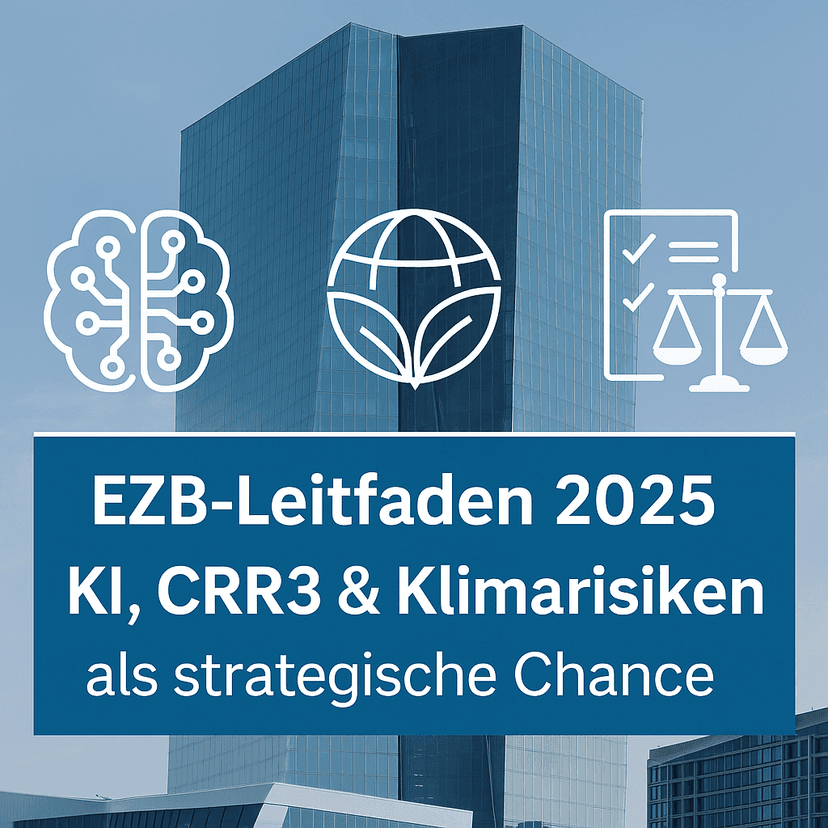
EZB-Leitfaden für interne Modelle: Strategische Orientierung für Banken in der neuen Regulierungslandschaft
Risikomanagement

EZB-Leitfaden für interne Modelle: Strategische Orientierung für Banken in der neuen Regulierungslandschaft

July 29, 2025
8 Min.

Die Juli-2025-Revision des EZB-Leitfadens verpflichtet Banken, interne Modelle strategisch neu auszurichten. Kernpunkte: 1) Künstliche Intelligenz und Machine Learning sind zulässig, jedoch nur in erklärbarer Form und unter strenger Governance. 2) Das Top-Management trägt explizit die Verantwortung für Qualität und Compliance aller Modelle. 3) CRR3-Vorgaben und Klimarisiken müssen proaktiv in Kredit-, Markt- und Kontrahentenrisikomodelle integriert werden. 4) Genehmigte Modelländerungen sind innerhalb von drei Monaten umzusetzen, was agile IT-Architekturen und automatisierte Validierungsprozesse erfordert. Institute, die frühzeitig Explainable-AI-Kompetenzen, robuste ESG-Datenbanken und modulare Systeme aufbauen, verwandeln die verschärften Anforderungen in einen nachhaltigen Wettbewerbsvorteil.

Andreas Krekel
Read
 Erklärbare KI (XAI) in der Softwarearchitektur: Von der Black Box zum strategischen Werkzeug
Digitale Transformation

Erklärbare KI (XAI) in der Softwarearchitektur: Von der Black Box zum strategischen Werkzeug

June 24, 2025
5 Min.

Verwandeln Sie Ihre KI von einer undurchsichtigen Black Box in einen nachvollziehbaren, vertrauenswürdigen Geschäftspartner.

Arosan Annalingam
Read
KI Softwarearchitektur: Risiken beherrschen & strategische Vorteile sichern
Digitale Transformation

KI Softwarearchitektur: Risiken beherrschen & strategische Vorteile sichern

June 19, 2025
5 Min.

KI verändert Softwarearchitektur fundamental. Erkennen Sie die Risiken von „Blackbox“-Verhalten bis zu versteckten Kosten und lernen Sie, wie Sie durchdachte Architekturen für robuste KI-Systeme gestalten. Sichern Sie jetzt Ihre Zukunftsfähigkeit.

Arosan Annalingam
Read
ChatGPT-Ausfall: Warum deutsche Unternehmen eigene KI-Lösungen brauchen
Künstliche Intelligenz - KI

ChatGPT-Ausfall: Warum deutsche Unternehmen eigene KI-Lösungen brauchen

June 10, 2025
5 Min.

Der siebenstündige ChatGPT-Ausfall vom 10. Juni 2025 zeigt deutschen Unternehmen die kritischen Risiken zentralisierter KI-Dienste auf.

Phil Hansen
Read
KI-Risiko: Copilot, ChatGPT & Co. -  Wenn externe KI durch MCP's zu interner Spionage wird
Künstliche Intelligenz - KI

KI-Risiko: Copilot, ChatGPT & Co. - Wenn externe KI durch MCP's zu interner Spionage wird

June 9, 2025
5 Min.

KI Risiken wie Prompt Injection & Tool Poisoning bedrohen Ihr Unternehmen. Schützen Sie geistiges Eigentum mit MCP-Sicherheitsarchitektur. Praxisleitfaden zur Anwendung im eignen Unternehmen.

Boris Friedrich
Read
Live Chatbot Hacking - Wie Microsoft, OpenAI, Google & Co zum unsichtbaren Risiko für Ihr geistiges Eigentum werden
Informationssicherheit

Live Chatbot Hacking - Wie Microsoft, OpenAI, Google & Co zum unsichtbaren Risiko für Ihr geistiges Eigentum werden

June 8, 2025
7 Min.

Live-Hacking-Demonstrationen zeigen schockierend einfach: KI-Assistenten lassen sich mit harmlosen Nachrichten manipulieren.

Boris Friedrich
Read
View All Articles
ADVISORI Logo
BlogCase StudiesAbout Us
info@advisori.de+49 69 913 113-01