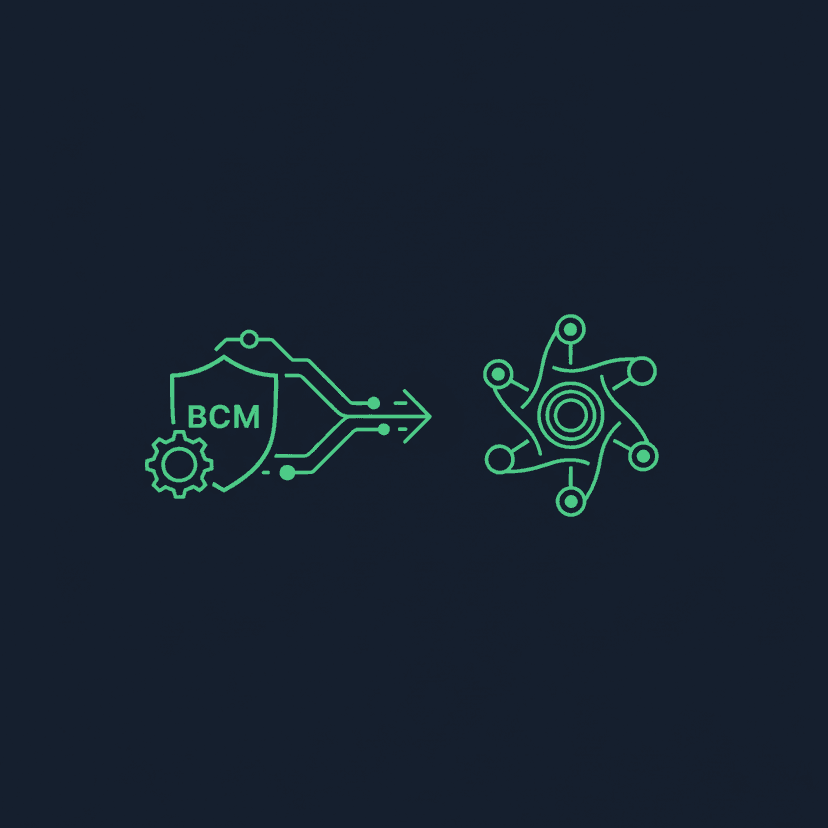
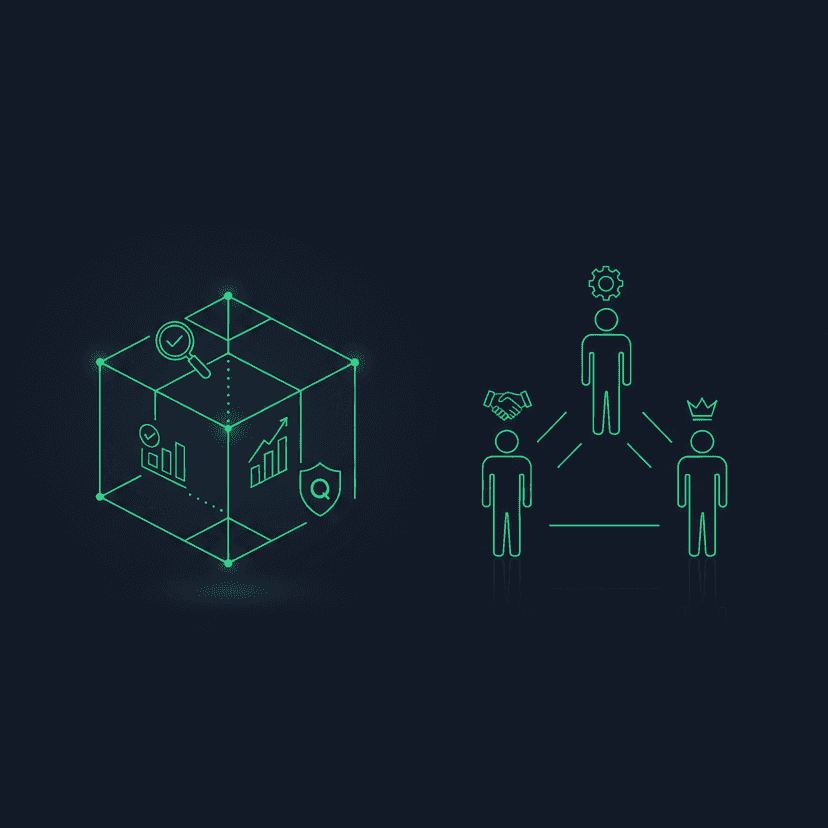
Central Data Foundation for Intelligent Decisions
Data Lake Setup
Unlock the full potential of your data with a modern Data Lake architecture. We support you in designing and implementing a flexible data infrastructure that integrates diverse data sources and makes them optimally available for analytics applications.
- ✓Flexible storage and processing of structured and unstructured data
- ✓Significant cost reduction compared to traditional Data Warehouse solutions
- ✓Improved data availability for analytics and AI applications
- ✓Future-proof data architecture with high scalability
Your strategic success starts here
Our clients trust our expertise in digital transformation, compliance, and risk management
30 Minutes • Non-binding • Immediately available
For optimal preparation of your strategy session:
- Your strategic goals and objectives
- Desired business outcomes and ROI
- Steps already taken
Or contact us directly:
Certifications, Partners and more...










Data Lake Architecture: Scalable Data Infrastructure for Your Organization
Our Strengths
- Deep expertise in modern Data Lake technologies and cloud platforms
- Vendor-independent consulting and technology selection
- Comprehensive approach with a focus on business value and feasibility
- Experienced team with extensive project experience across various industries
⚠
Expert Tip
The introduction of a Data Lake should always be accompanied by a clear strategy for data management and governance. Our experience shows that the greatest return on investment arises where the Data Lake is conceived not as an isolated technical solution, but as an integral component of a comprehensive data architecture. A phased implementation with regular value milestones is often more successful than a big-bang approach.
ADVISORI in Numbers
11+
Years of Experience
120+
Employees
520+
Projects
Developing and implementing an effective Data Lake requires a structured approach that addresses both technical and organizational aspects. Our proven methodology ensures that your Data Lake is not only technically sound but also delivers genuine business value.
Our Approach:
Phase 1: Assessment – Analysis of existing data sources, flows, and structures, along with definition of business requirements and use cases
Phase 2: Architecture Design – Development of a flexible Data Lake architecture, taking into account storage, processing, and access technologies
Phase 3: Data Integration – Implementation of data pipelines for efficient data transfer and transformation
Phase 4: Governance & Security – Establishment of metadata management, data quality controls, and access permissions
Phase 5: Analytics Integration – Connection of BI tools, Data Science workbenches, and ML platforms for data utilization
"A well-designed Data Lake is not merely a technological construct, but a strategic enabler for data-driven business models. It enables organizations to unlock the full potential of their data and creates the foundation for advanced analytics, AI applications, and ultimately better business decisions."

Asan Stefanski
Head of Digital Transformation
Expertise & Experience:
11+ years of experience, Applied Computer Science degree, Strategic planning and management of AI projects, Cyber Security, Secure Software Development, AI
Our Services
We offer you tailored solutions for your digital transformation
Data Lake Strategy & Architecture
Development of a tailored Data Lake strategy and architecture optimally aligned with your business requirements and IT landscape. We take into account both current requirements and future development potential.
- Analysis of business requirements and definition of use cases
- Evaluation of technology options (cloud, hybrid, on-premise)
- Design of a flexible, multi-layer Data Lake architecture
- Development of a roadmap for phased implementation
Data Lake Implementation
Implementation of a modern Data Lake based on leading technologies such as Hadoop, Spark, Databricks, or cloud solutions such as AWS, Azure, or Google Cloud. We support you with the technical implementation and integration into your existing IT landscape.
- Setup of the Data Lake infrastructure (storage, compute, network)
- Development and implementation of data pipelines for data integration
- Implementation of data processing frameworks for batch and stream processing
- Setup of access layers for various use cases
Data Governance & Metadata Management
Development and implementation of governance structures and metadata management for your Data Lake to ensure data quality, compliance, and usability. A well-managed Data Lake avoids the risk of becoming a "Data Swamp".
- Implementation of metadata catalogs and data dictionaries
- Development of data quality rules and processes
- Setup of data access and security concepts
- Establishment of data lineage and impact analysis
Analytics & ML Integration
Integration of analytics and machine learning platforms into your Data Lake to unlock the full potential of your data for advanced analytics and AI applications. We build the bridge between data storage and data utilization.
- Setup of self-service BI and analytics platforms
- Integration of Data Science workbenches and ML frameworks
- Development of data marts and OLAP cubes for specific use cases
- Implementation of real-time analytics and stream processing
Our Competencies in Data Engineering
Choose the area that fits your requirements
Data Lake Implementation
Transform your data landscape with a tailored Data Lake solution. We support you in the successful implementation of a flexible, future-proof Data Lake — from strategic planning through technical implementation to productive operations and continuous expansion.
Data Quality Management
Establish systematic data quality management that ensures the consistency, correctness, and completeness of your data. Our tailored solutions help you detect data issues early, resolve them, and prevent them sustainably – providing trustworthy information as the basis for your business decisions.
ETL (Extract Transform Load)
Develop robust, scalable ETL processes that extract data from diverse sources, transform it, and load it into your target systems. Our ETL solutions ensure your analytics systems are always supplied with current, high-quality, and business-relevant data.
Master Data Management
Establish a strategic master data management approach that guarantees consistent, up-to-date, and high-quality master data across all areas of your organization. Our tailored MDM solutions create the foundation for well-informed business decisions, efficient processes, and successful digitalization initiatives.
Frequently Asked Questions about Data Lake Setup
What is a Data Lake and how does it differ from a Data Warehouse?
A Data Lake is a central repository that stores large volumes of structured and unstructured data in their raw format, making them flexibly available for a wide range of analytical approaches.
💾 Key Differences from a Data Warehouse
•
Data structure: Data Lakes store data in raw format (schema-on-read), while Data Warehouses hold structured, transformed data (schema-on-write)
•
Data types: Data Lakes can accommodate structured, semi-structured, and unstructured data; Data Warehouses primarily handle structured data
•
Flexibility: Data Lakes enable exploratory, yet-to-be-defined analyses; Data Warehouses are optimized for predefined queries and reports
•
User groups: Data Lakes are frequently used by Data Scientists for complex analyses; Data Warehouses by Business Analysts for standard reporting
🔄 Architectural Characteristics
•
Storage: Data Lakes use cost-efficient object storage with near-unlimited scalability
•
Processing: Support for various processing models (batch, stream, interactive)
•
Organization: Multi-tier zones (Raw, Cleansed, Curated) for different data quality levels
•
Integration: Open interfaces for a wide range of analytics tools and frameworks
📊 Primary Use Cases
•
Data Lakes: Big data analytics, machine learning, AI applications, exploratory analyses
•
Data Warehouses: Standardized reporting, business intelligence, dashboards, performance KPIsModern data architectures often combine both approaches in hybrid models such as Data Lakehouses, which unite the flexibility of Data Lakes with the structure and performance of Data Warehouses. This enables both agile data exploration and reliable, high-performance reporting on a shared data foundation.
Which technologies and platforms are suitable for building a Data Lake?
A broad spectrum of technologies and platforms is available for building a modern Data Lake, which can be combined depending on requirements, existing IT landscape, and strategic direction. Cloud Platforms and Services AWS: S
3 as the storage layer with AWS Lake Formation for governance, Glue for metadata and ETL, Athena for SQL queries Microsoft Azure: Azure Data Lake Storage Gen2, Azure Synapse Analytics, Azure Databricks for processing Google Cloud: Cloud Storage, BigQuery, Dataproc for Hadoop/Spark workloads, Dataflow for streaming Snowflake: Cloud Data Platform with Data Lake integration and flexible analytics Open-Source Frameworks and Tools Apache Hadoop: Distributed file system (HDFS) and MapReduce framework as the foundation of many Data Lakes Apache Spark: In-memory processing engine for batch and stream processing with high performance Apache Hive: Data warehouse system for SQL-based queries on Hadoop data Apache Kafka: Real-time streaming platform for data integration and event processing Delta Lake, Apache Iceberg, Apache Hudi: Table formats for transactional.
How is effective Data Governance ensured in a Data Lake?
Effective Data Governance is essential to keeping a Data Lake usable over the long term and preventing it from becoming an uncontrolled "Data Swamp". It encompasses organizational, procedural, and technical measures for responsible data management. Metadata Management and Cataloging Business metadata: Documentation of data origin, meaning, and business context Technical metadata: Capture of schema structures, data types, and relationships Operational metadata: Logging of access events, usage statistics, and updates Data catalogs: Central, searchable directories of all available datasets with metadata Data Quality Management Definition of data quality rules and metrics according to data type and intended use Implementation of automated data quality checks at various points in the data pipeline Monitoring and reporting of data quality metrics with escalation paths Processes for error remediation and continuous quality improvement Access and Security Concepts Differentiated access controls based on roles, attributes, and data classification Implementation of the least-privilege principle for minimal access rights Data masking and encryption.
What advantages does a Data Lake offer for analytics and AI applications?
A well-designed Data Lake creates ideal conditions for advanced analytics and AI applications by providing access to comprehensive, diverse data assets and supporting flexible analysis capabilities. Benefits for Advanced Analytics Consolidated data foundation: Integration of heterogeneous data sources for comprehensive, cross-functional analyses Historical depth: Long-term data storage for time series analyses and trend detection Exploratory flexibility: Support for agile, hypothesis-driven analytical approaches without prior schema constraints Scalability: Processing of large data volumes for complex statistical analyses across the entire data foundation Value for Machine Learning and AI Training foundation: Broad availability of training data of various types for ML models Feature engineering: Access to raw data for developing meaningful predictors Model lifecycle: Support for the entire ML lifecycle from development through training to monitoring Multimodal analyses: Combination of structured data with text, images, and audio for comprehensive AI models Benefits for Real-Time and Stream Analytics Event processing: Integration of streaming platforms for real-time processing of.
How do on-premise, cloud, and hybrid approaches differ for Data Lakes?
The decision between on-premise, cloud, or hybrid solutions for a Data Lake has far-reaching implications for cost, flexibility, security, and the operating model. Each approach offers specific advantages and disadvantages. On-Premise Data Lakes Control: Full control over infrastructure, data, and security measures Compliance: Direct fulfillment of specific regulatory requirements without dependency on third parties Investment model: High initial investments (CAPEX) for hardware, software, and infrastructure Scalability: Limited scaling options that require new hardware investments Expertise: Need for in-house specialists for infrastructure operation and maintenance Cloud-Based Data Lakes Agility: Rapid provisioning and flexible scaling on demand without hardware procurement Cost model: Usage-based billing (OPEX) with low upfront investment Services: Access to integrated cloud services for analytics, ML, governance, and security Dependency: Vendor lock-in and reliance on cloud provider availability Data transfer: Potential costs and latency with high data transfer volumes Hybrid Approaches for Data Lakes Flexibility: Combination of the advantages of both worlds depending on specific.
What steps should be considered when planning and implementing a Data Lake project?
A successful Data Lake project requires a structured approach that takes into account business requirements, technical implementation, and organizational aspects. Careful planning and phased implementation are critical to long-term success. Strategic Planning and Requirements Analysis Define business objectives: Clear formulation of business goals and expected value Prioritize use cases: Identification and prioritization of concrete use cases with measurable benefit Involve stakeholders: Early engagement of business units, IT, and management Define success metrics: Establishment of clear KPIs to measure project success Data Analysis and Architecture Design Identify data sources: Capture of all relevant internal and external data sources Assess data quality: Analysis of data quality and required cleansing measures Develop architecture concept: Design of a flexible multi-layer architecture (Raw, Trusted, Refined) Technology selection: Evaluation and selection of suitable technologies and platforms Implementation and Build Define MVP: Specification of an initial, value-creating Minimum Viable Product Set up infrastructure: Establishment of the base infrastructure for storage and processing.
How can data quality be ensured in a Data Lake?
Ensuring high data quality in a Data Lake is a critical challenge, as the flexible, schema-on-read nature of the Data Lake can quickly lead to an unmanageable "Data Swamp" without appropriate measures. Quality Assurance at Data Ingestion Validation rules: Implementation of automated validation rules for incoming data Data profiling: Automatic analysis and profiling of new datasets Data triage: Classification of incoming data by quality level with corresponding labeling Metadata capture: Automatic extraction and storage of technical and business metadata Architectural Quality Measures Zone concept: Implementation of a multi-tier zone model (Raw, Validated, Curated, Published) Data cleansing: Defined processes for data cleansing during transitions between zones Versioning: Traceable versioning of datasets and transformations Quality SLAs: Definition of service level agreements for different data domains Continuous Quality Monitoring Quality metrics: Establishment of measurable indicators for completeness, correctness, and consistency Data quality dashboards: Visualization of data quality with trend and outlier detection Alerting: Automatic notification when defined quality.
How is data security and access control handled in a Data Lake?
Securing a Data Lake requires a comprehensive security concept that balances data protection, compliance requirements, and the necessary flexibility for legitimate data use. Fundamental Security Layers Encryption in transit: Secure transmission protocols (TLS/SSL) for all data movements Encryption at rest: End-to-end encryption of stored data with secure key management Network security: Segmentation, firewalls, VPNs, and private endpoints for secure connectivity Physical security: For on-premise solutions, securing the physical infrastructure Authentication and Identity Management Centralized identity management: Integration with enterprise directory services (AD, LDAP) Multi-factor authentication: Additional security layer for critical access Service identities: Secure management of service accounts for automated processes Single sign-on: Consistent, secure authentication across various components Authorization and Access Control Role-based access controls (RBAC): Rights assignment based on organizational roles Attribute-based access controls (ABAC): Fine-grained control based on data attributes Data classification: Automatic detection and labeling of sensitive data Principle of least privilege: Restriction of access rights to the necessary minimum Monitoring.
Which typical use cases are particularly well-suited for a Data Lake?
Data Lakes offer a wide range of application possibilities across various business areas, thanks to their flexible architecture and ability to store and process large volumes of diverse data. Customer-Oriented Use Cases Customer 360-degree view: Integration of data from CRM, web analytics, social media, and transaction systems Customer segmentation: Development of precise customer segments based on behavioral and transaction data Churn prediction: Forecasting customer attrition through analysis of historical behavioral patterns Next-best-offer: Personalized product recommendations based on customer history and preferences IoT and Operational Analytics Sensor and device data analysis: Storage and processing of large volumes of IoT data Predictive maintenance: Forecasting maintenance needs based on device sensor data Supply chain visibility: End-to-end transparency through integration of various data sources Real-time monitoring: Continuous surveillance of operational parameters for rapid response Advanced Analytics and AI Applications Machine learning and AI: Building, training, and deploying forecasting and classification models Natural language processing: Analysis of unstructured text data.
How do Data Lakes integrate into existing IT landscapes?
Successfully integrating a Data Lake into an established IT landscape requires a well-considered approach that complements rather than replaces existing systems and creates value incrementally. Data Integration and Connectivity ETL/ELT processes: Data extraction, transformation, and load processes for batch integration Change Data Capture (CDC): Capture and transfer of changes from source systems in real time APIs and connectors: Standardized interfaces for connecting to enterprise systems Streaming integration: Processing of continuous data streams from real-time sources Architectural Integration Hybrid architecture: Coexistence of Data Lake and traditional systems such as Data Warehouses Lambda/Kappa architectures: Combined batch and stream processing for various use cases Data fabric: Overarching framework for consistent data access across various platforms Virtualization: Logical integration layer for unified access to distributed data sources Synchronization and Control Mechanisms Metadata management: Cross-system cataloging and management of data from various systems Workflow orchestration: Coordination of complex data flow processes between systems Data quality alignment: Ensuring consistent data quality.
How do you scale a Data Lake as data volumes grow?
Scalability is a central advantage of modern Data Lakes, but it requires a well-considered architecture and various technical and organizational measures to handle continuously growing data volumes. Fundamental Scaling Strategies Horizontal scaling: Adding additional storage and compute nodes rather than enlarging existing resources Vertical partitioning: Splitting datasets by logical entities or business domains Horizontal partitioning: Segmentation of large tables by time, region, or other criteria Resource isolation: Separation of critical workloads for predictable performance Data Organization and Optimization Data tiers: Implementation of hot, warm, and cold tiers for different access frequencies Data format compression: Use of efficient formats such as Parquet, ORC, or Avro with compression Indexing: Strategic indexing for fast access to frequently queried data Data compaction: Merging small files into larger blocks for more efficient processing Elastic Resource Management Automatic scaling: Dynamic adjustment of compute resources based on workload requirements Resource pooling: Shared use of compute resources for various use cases Workload management:.
How do you measure the success and ROI of a Data Lake project?
Measuring success and assessing the ROI of a Data Lake project requires a comprehensive approach that considers both direct technical and economic metrics as well as indirect strategic benefits. Technical Performance Metrics Data provisioning time: Reduction in the time required to make data available for analyses Query performance: Improvement in response times for complex analytical queries Data integration rate: Increase in the speed and volume of data integration System availability: Reliability and fault tolerance of the Data Lake platform Economic Metrics Cost savings: Reduction of infrastructure and operating costs through consolidation Time-to-market: Acceleration of the development and delivery of new data-driven products Resource efficiency: Optimization of personnel effort for data management and analysis Direct revenue impact: New or improved revenue streams enabled by the Data Lake Usage and Impact Metrics Active users: Number and diversity of Data Lake users across various departments Use case adoption: Implementation and utilization of planned use cases Data democratization: Increase.
How does a modern Data Lake differ from traditional database systems?
Modern Data Lakes and traditional database systems differ fundamentally in their architecture, areas of application, and flexibility — both have their specific strengths for different use cases. Data Storage and Schema Handling Schema-on-Read vs. Schema-on-Write: Data Lakes store data initially without prior schema structuring, while traditional databases require a fixed schema before data storage Data types: Data Lakes can accommodate structured, semi-structured, and unstructured data (text, images, videos, logs); relational databases primarily handle structured data Data modeling: Flexible, evolutionary data modeling in Data Lakes versus strict, predefined modeling in traditional systems Data organization: File-based storage in Data Lakes vs. table-based organization in relational databases Processing and Query Capabilities Processing paradigms: Data Lakes support various processing methods (batch, stream, interactive); databases focus on transaction processing and defined queries Workload optimization: Separation of storage and compute in modern Data Lakes vs. integrated architecture in traditional databases Access mechanisms: Diverse analytics engines and programming languages in Data Lakes; primarily SQL in relational databases Performance characteristics: High throughput for analytical workloads vs.
What role does streaming data play in a Data Lake?
Streaming data has gained central importance in modern Data Lake architectures, as it enables real-time capabilities and immediate response options for organizations. The integration of streaming data extends the Data Lake from a primarily batch-oriented to a hybrid platform. Fundamental Significance of Streaming in Data Lakes Real-time insights: Enabling timely insights rather than delayed batch analyses Continuous intelligence: Ongoing updates to metrics and KPIs in real time Event-driven analytics: Immediate response to business-critical events Historical + live data: Combination of historical analyses with real-time data for context-rich decisions Typical Streaming Data Sources IoT devices and sensors: Continuous data streams from connected devices and machines Clickstreams and usage behavior: User interactions on websites and in applications Transaction data: Payments, orders, and other business transactions in real time System messages: Logs, metrics, and events from IT systems and applications Architecture Components for Streaming in Data Lakes Streaming ingestion: Technologies such as Apache Kafka, AWS Kinesis, or Azure.
What challenges exist when implementing a Data Lake?
Implementing a Data Lake presents, alongside the technical and organizational opportunities, a number of challenges that should be considered during planning and execution. Data Management Challenges "Data Swamp" risk: Danger of uncontrolled data growth without adequate organization and governance Metadata management: Difficulty in maintaining consistent and comprehensive metadata for heterogeneous data assets Data quality assurance: Complexity of ensuring high data quality in a schema-on-read environment Data lineage: Challenge of documenting the complete provenance and transformation of data in a traceable manner Security and Governance Challenges Data protection and compliance: Adherence to regulatory requirements (GDPR, BDSG, etc.) with flexible data access Access management: Establishment of granular access controls across heterogeneous data assets Data classification: Systematic identification and labeling of sensitive or regulated data Audit and control: Comprehensive monitoring and tracking of data access and usage Technical Implementation Challenges Data integration: Complexity of connecting heterogeneous source systems and legacy applications Performance optimization: Ensuring adequate query and analysis.
What best practices should be followed when implementing a Data Lake?
Successful Data Lake implementation requires consideration of proven practices that have emerged from experience across numerous projects. These best practices help avoid typical pitfalls and create sustainable value. Strategic Alignment and Planning Business orientation: Start with concrete business use cases rather than technology-driven implementation Iterative roadmap: Development of a stepwise implementation strategy with measurable milestones Stakeholder involvement: Early and continuous engagement of business units and data users Success metrics: Definition of clear success criteria and KPIs to measure progress Architecture and Design Multi-layer model: Implementation of a structured zone architecture (Raw, Trusted, Curated) Modular design: Decoupling of components for flexibility and independent further development Cloud-first: Use of cloud-based services for scalability and reduced operational complexity Future-proofing: Consideration of future requirements and technology developments Data Management and Governance Metadata-first: Early establishment of comprehensive metadata management Automated data quality: Integration of quality checks into data pipelines Data classification: Systematic categorization of data by sensitivity and business value.
How does a Data Lake relate to Data Mesh and Lakehouse architectures?
Data Lake, Data Mesh, and Lakehouse represent evolutionary developments in the field of data architectures, each responding to specific challenges and limitations of earlier approaches. These concepts can be used both as alternatives and as complements to one another. Data Lake as a Foundation Central repository: Storage of large volumes of heterogeneous data in their raw format Schema-on-Read: Flexible data use without prior structuring Horizontal scalability: Cost-efficient storage of large data volumes Unified access: Common access point for various data types and sources Data Mesh as an Organizational Paradigm Domain orientation: Organization of data along business domains rather than central management Data as a product: Treatment of datasets as independent products with defined interfaces Decentralized ownership: Distributed responsibility for data quality and governance Self-service infrastructure: Shared technical platform for cross-domain standards Data Lakehouse as a Technological Evolution Structured layer: Integration of Data Warehouse capabilities on the basis of Data Lake technologies ACID transactions: Support for.
What competencies are required to build and operate a Data Lake?
Successfully building and operating a Data Lake requires a versatile team with various technical and non-technical competencies spanning the entire data value chain. Core Technical Competencies Data engineering: Expertise in developing flexible data pipelines and ETL/ELT processes Data architecture: Skills in designing a future-proof, flexible data architecture Cloud platform knowledge: In-depth knowledge of the cloud services used (AWS, Azure, GCP) Big data technologies: Experience with distributed systems such as Hadoop, Spark, Kafka, etc. Programming and scripting languages: Proficiency in Python, Scala, SQL, and other relevant languages Analytical Skills Data science: Competency in statistical analysis, machine learning, and AI applications Business intelligence: Ability to develop meaningful reports and dashboards MLOps: Expertise in the operationalization and deployment of ML models Data visualization: Knowledge of effective visual representation of complex data Data modeling: Ability to develop logical and physical data models Governance and Security Data governance: Expertise in developing and implementing data policies Cybersecurity: Knowledge of data security,.
What trends are shaping the future of Data Lake architectures?
The data landscape is in constant flux, and Data Lake architectures are continuously evolving to meet new requirements. Current trends point to significant changes in the coming years. Convergence Toward Lakehouse Architectures ACID transactions: Integration of transactional capabilities into Data Lakes for data consistency Schema enforcement: Optional schema validation for improved data quality and integrity Performance optimization: Indexing, caching, and metadata management for more efficient queries SQL access: Improved SQL support for broader user groups without specialized knowledge AI-Supported Automation and Optimization Intelligent metadata management: Automatic detection and cataloging of data structures Self-tuning: Self-optimizing data pipelines and query processing Anomaly detection: AI-supported identification of data quality issues and anomalies Data fabric integration: Automated data integration across distributed sources Real-Time Capabilities and Event Streaming Integration of stream analytics: Combination of batch and stream processing Event-driven architectures: Focus on event-based processing rather than pure batch processes Real-time processing: Reduced latency from data creation to analysis Continuous intelligence:.
How do Data Lake solutions differ across various industries?
Data Lake implementations are adapted to the specific requirements, data types, and regulatory frameworks of various industries, while the underlying technical concepts remain largely similar. Financial Services and Banking Regulatory focus: Strict compliance requirements (MaRisk, BCBS 239, MiFID II, etc.) Core use cases: Fraud prevention, risk management, customer analytics, regulatory reporting Data focus: Transaction data, market data, customer information, risk metrics Specifics: Highest security standards, strict data sovereignty, audit requirements, time series data Healthcare and Pharma Regulatory focus: Strict data protection requirements (HIPAA, GDPR health data) Core use cases: Clinical analytics, patient care, precision medicine, pharmacovigilance Data focus: Patient data, clinical trials, genomic data, imaging (DICOM) Specifics: Data masking, data de-identification, secure multi-party collaboration Manufacturing and Industry Regulatory focus: Product safety, environmental regulations, industry standards Core use cases: Predictive maintenance, quality assurance, production optimization, supply chain Data focus: IoT sensor data, machine parameters, quality data, supply chain data Specifics: Edge Data Lake integration, real-time requirements,.
Success Stories
Discover how we support companies in their digital transformation
Digitalization in Steel Trading
Klöckner & Co
Digital Transformation in Steel Trading
Case Study
Results
Over 2 billion euros in annual revenue through digital channels
Goal to achieve 60% of revenue online by 2022
Improved customer satisfaction through automated processes
AI-Powered Manufacturing Optimization
Siemens
Smart Manufacturing Solutions for Maximum Value Creation
Case Study
Results
Significant increase in production performance
Reduction of downtime and production costs
Improved sustainability through more efficient resource utilization
AI Automation in Production
Festo
Intelligent Networking for Future-Proof Production Systems
Case Study

Results
Improved production speed and flexibility
Reduced manufacturing costs through more efficient resource utilization
Increased customer satisfaction through personalized products
Generative AI in Manufacturing
Bosch
AI Process Optimization for Improved Production Efficiency
Case Study

Results
Reduction of AI application implementation time to just a few weeks
Improvement in product quality through early defect detection
Increased manufacturing efficiency through reduced downtime
Let's
Work Together!
Is your organization ready for the next step into the digital future? Contact us for a personal consultation.
Your strategic success starts here
Our clients trust our expertise in digital transformation, compliance, and risk management
Ready for the next step?
Schedule a strategic consultation with our experts now
30 Minutes • Non-binding • Immediately available
For optimal preparation of your strategy session:
Your strategic goals and challenges
Desired business outcomes and ROI expectations
Current compliance and risk situation
Stakeholders and decision-makers in the project
Prefer direct contact?
Direct hotline for decision-makers
Strategic inquiries via email
Detailed Project Inquiry
For complex inquiries or if you want to provide specific information in advance