MaRisk AT Requirements: General Framework for German Banks
MaRisk AT requirements establish the regulatory foundation for risk management at all German credit institutions. The General Part of MaRisk defines overarching principles on governance, risk culture, outsourcing, and ICAAP that every institution must implement in compliance with BaFin. ADVISORI guides you through complete, practice-oriented implementation of all MaRisk AT modules.
- ✓BaFin-compliant MaRisk AT implementation for German banking institutions
- ✓Risk-oriented approaches for maximum efficiency and regulatory excellence
- ✓Effective technologies for automated monitoring and continuous control
- ✓Strategic integration for sustainable competitive advantages in German banking
Your strategic success starts here
Our clients trust our expertise in digital transformation, compliance, and risk management
30 Minutes • Non-binding • Immediately available
For optimal preparation of your strategy session:
- Your strategic goals and objectives
- Desired business outcomes and ROI
- Steps already taken
Or contact us directly:
Certifications, Partners and more...







MaRisk AT as Regulatory Foundation for German Banking
Our MaRisk AT Expertise
- Specialized expertise in German banking regulation and BaFin requirements
- Proven experience with MaRisk AT implementations in German banking institutions
- Deep understanding of local market conditions and regulatory dynamics
- Effective RegTech approaches for sustainable MaRisk AT excellence and future-proofing
German MaRisk AT Innovation
MaRisk AT Requirements are more than regulatory obligation – they are strategic opportunity for operational excellence and competitive differentiation. Our solutions create not only BaFin conformity but also enable sustainable business innovation and strategic market positioning.
ADVISORI in Numbers
11+
Years of Experience
120+
Employees
520+
Projects
We develop with you a tailored MaRisk AT strategy that not only ensures BaFin compliance but also identifies strategic business opportunities and creates sustainable competitive advantages for German banking institutions.
Our Approach:
Comprehensive MaRisk AT gap analysis and current-state assessment of your compliance position
Strategic framework design with focus on German regulatory requirements
Agile implementation with continuous BaFin alignment and stakeholder engagement
Technology integration with RegTech solutions for automated compliance monitoring
Continuous optimization and regulatory updates for long-term MaRisk AT excellence
"The German MaRisk AT requirements present specific challenges that require local expertise and effective solution approaches. Successful BaFin compliance is more than regulatory obligation – it is strategic opportunity for operational excellence and market differentiation. Our MaRisk AT solutions create not only regulatory security but also enable sustainable business innovation and competitive advantages through intelligent risk management systems and future-oriented governance frameworks."

Melanie Düring
Head of Risk Management
Our Services
We offer you tailored solutions for your digital transformation
BaFin-Compliant Risk Management Frameworks
We develop comprehensive risk management systems specifically tailored to German MaRisk AT requirements, combining international best practices with local regulatory standards.
- Risk strategy development according to BaFin guidelines and German market conditions
- Risk appetite framework with quantitative and qualitative risk indicators
- Risk assessment methods for German banking specifics
- Integrated risk reporting systems for BaFin-compliant documentation
Governance System Optimization
We implement solid governance structures that meet MaRisk AT requirements while promoting operational efficiency, strategic decision-making, and sustainable compliance culture.
- Organizational structure optimization according to German governance standards
- Committee structures and decision processes for MaRisk AT conformity
- Responsibility matrix and role distribution for clear accountability
- Governance documentation and monitoring for continuous compliance
Internal Control System Development
We create comprehensive internal control systems that meet MaRisk AT standards while enabling automated monitoring, efficient processes, and proactive risk control.
- Three lines of defense model according to German regulatory standards
- Control activity design for critical business processes
- Automated control monitoring and exception reporting
- Continuous control effectiveness assessment and optimization
RegTech Integration for MaRisk AT Compliance
We implement effective RegTech solutions that automate MaRisk AT compliance while significantly improving operational efficiency, data quality, and regulatory transparency.
- Automated compliance monitoring systems for continuous oversight
- Real-time risk dashboard for management reporting and decision support
- Intelligent data validation and quality assurance for BaFin reporting
- Workflow automation for efficient compliance processes
Strategic Risk Management Consulting
We provide strategic consulting for complex MaRisk AT challenges and develop tailored solutions for specific German banking requirements and market conditions.
- Strategic risk management roadmap for sustainable MaRisk AT excellence
- Regulatory impact analysis for planned business developments
- Stress testing frameworks for German market scenarios
- Change management for sustainable compliance culture transformation
Continuous MaRisk AT Optimization
We ensure long-term MaRisk AT excellence through continuous monitoring, regulatory updates, and proactive optimization of your compliance systems and processes.
- Regulatory trend analysis and proactive adaptation strategies
- Continuous compliance assessment and performance monitoring
- Best practice integration and international benchmark analyses
- Employee training and competency development for MaRisk AT excellence
Frequently Asked Questions about MaRisk AT Requirements
How does MaRisk AT compliance support strategic business objectives beyond regulatory requirements?
MaRisk AT compliance creates significant strategic value beyond regulatory obligation. Solid risk management frameworks enable better capital allocation, improved decision-making processes, and enhanced stakeholder confidence. Strong governance structures attract investors and facilitate business expansion. Comprehensive internal controls reduce operational losses and improve efficiency. Advanced risk reporting provides management with actionable insights for strategic planning. Integration with business processes creates competitive advantages through superior risk-adjusted returns. Our approach transforms MaRisk AT compliance from regulatory burden into strategic enabler, supporting sustainable growth, market differentiation, and long-term value creation for German banking institutions.
What are the critical success factors for MaRisk AT implementation in German banks?
Successful MaRisk AT implementation requires strong management commitment, clear governance structures, and comprehensive change management. Critical factors include: executive sponsorship and board engagement, adequate resource allocation (financial, human, technological), realistic timeline planning with phased approach, effective communication across all organizational levels, integration with existing processes and systems, continuous training and competency development, solid project management and monitoring, stakeholder engagement including BaFin dialogue, technology enablement through RegTech solutions, and cultural transformation toward risk awareness. Our proven methodology addresses all critical success factors systematically, ensuring sustainable MaRisk AT excellence and long-term compliance effectiveness.
How can smaller German banks achieve MaRisk AT compliance with limited resources?
MaRisk AT explicitly recognizes proportionality principle, allowing smaller institutions to implement requirements appropriate to their size, complexity, and risk profile. Effective approaches include: leveraging standardized frameworks and templates, utilizing shared services and outsourcing for specialized functions, implementing cost-effective RegTech solutions, focusing on material risks and critical processes, adopting agile implementation methodologies, collaborating with industry associations for best practices, utilizing external expertise strategically, automating routine compliance tasks, and maintaining pragmatic documentation. Our tailored solutions help smaller banks achieve full MaRisk AT compliance efficiently, balancing regulatory requirements with resource constraints while maintaining operational effectiveness and competitive positioning.
What role does technology play in modern MaRisk AT compliance?
Technology is fundamental to efficient MaRisk AT compliance in modern banking. RegTech solutions enable automated risk monitoring, real-time reporting, and continuous control testing. Advanced analytics support sophisticated risk modeling and scenario analysis. Workflow automation streamlines compliance processes and reduces manual effort. Data management platforms ensure data quality and regulatory reporting accuracy. Dashboard solutions provide management with comprehensive risk visibility. AI and machine learning enhance risk detection and predictive capabilities. Cloud technologies enable scalability and cost efficiency. Integration platforms connect disparate systems for comprehensive risk management. Our technology-enabled approach combines effective RegTech solutions with proven methodologies, creating sustainable, efficient, and future-proof MaRisk AT compliance frameworks.
How does MaRisk AT address emerging risks like cyber security and digital transformation?
MaRisk AT framework explicitly addresses emerging risks through principles-based requirements that adapt to evolving risk landscapes. Cyber security risks are covered through operational risk management, IT risk frameworks, and business continuity requirements. Digital transformation risks are addressed through change management processes, technology risk assessment, and innovation governance. The framework requires continuous risk identification, assessment of new risk types, and adaptation of control measures. BaFin expectations include proactive management of technological risks, solid cyber resilience, and secure digital innovation. Our approach integrates emerging risk management into comprehensive MaRisk AT frameworks, ensuring Austrian banks remain resilient and competitive in rapidly evolving digital banking environment.
What are the BaFin's expectations regarding MaRisk AT governance structures?
BaFin expects solid governance structures with clear accountability, effective oversight, and comprehensive risk culture. Key expectations include: clearly defined organizational structure with separation of duties, competent and experienced management board, effective supervisory board oversight with appropriate committees, independent risk management and compliance functions, comprehensive policies and procedures, regular management reporting and escalation processes, documented decision-making frameworks, adequate resources and expertise, continuous training and development, and strong risk culture throughout organization. Governance must be proportionate to institution size and complexity while ensuring effective risk management. Our governance solutions meet BaFin expectations while supporting operational efficiency and strategic objectives.
How should German banks prepare for MaRisk AT supervisory reviews and audits?
Effective preparation for BaFin supervisory reviews requires comprehensive documentation, solid evidence of compliance, and clear communication strategies. Key preparation steps include: conducting internal gap assessments, organizing complete documentation libraries, preparing management presentations and summaries, ensuring data quality and reporting accuracy, conducting mock audits and dry runs, training key personnel on BaFin interactions, establishing clear escalation and response processes, maintaining audit trails and evidence, addressing known deficiencies proactively, and developing remediation plans for identified issues. Continuous compliance monitoring and regular self-assessments ensure audit readiness. Our audit preparation services help Austrian banks demonstrate MaRisk AT compliance effectively, manage supervisory interactions professionally, and achieve positive audit outcomes.
What are the documentation requirements under MaRisk AT?
MaRisk AT requires comprehensive, clear, and current documentation covering all aspects of risk management and governance. Essential documentation includes: risk management strategy and policies, organizational structure and responsibilities, process descriptions and procedures, risk identification and assessment methodologies, control frameworks and testing procedures, reporting structures and escalation processes, business continuity and recovery plans, outsourcing arrangements and vendor management, training programs and competency frameworks, and audit trails and decision records. Documentation must be proportionate, accessible, regularly updated, and demonstrably implemented. Our documentation frameworks ensure MaRisk AT compliance while maintaining practical usability and supporting operational efficiency for Austrian banking institutions.
How does MaRisk AT integrate with other German regulatory requirements?
MaRisk AT forms part of comprehensive German regulatory framework, integrating with Banking Act (KWG), Capital Requirements Regulation (CRR), DORA, and other EU directives. Integration requires coordinated compliance approach addressing overlapping requirements, avoiding duplication, and leveraging synergies. Key integration areas include: capital adequacy and risk-weighted assets, operational resilience and business continuity, IT security and cyber risk management, outsourcing and third-party risk, data protection and privacy, AML and financial crime prevention, and supervisory reporting. Our integrated compliance approach ensures efficient implementation across all regulatory requirements, reduces compliance costs, and creates comprehensive risk management framework aligned with German and European regulatory expectations.
What are the key challenges in implementing MaRisk AT risk appetite frameworks?
Implementing effective risk appetite frameworks under MaRisk AT presents several challenges: defining quantitative and qualitative risk appetite statements that are meaningful and measurable, cascading risk appetite from board level to operational units, establishing appropriate risk limits and thresholds, integrating risk appetite into strategic planning and business decisions, monitoring compliance with risk appetite in real-time, communicating risk appetite effectively across organization, balancing risk-taking with prudent risk management, adapting risk appetite to changing market conditions, and ensuring board understanding and ownership. Our structured approach addresses these challenges systematically, creating practical, actionable risk appetite frameworks that guide decision-making while meeting MaRisk AT requirements and BaFin expectations.
How does MaRisk AT address outsourcing and third-party risk management?
MaRisk AT establishes comprehensive requirements for outsourcing and third-party risk management, particularly for material outsourcing arrangements. Requirements include: thorough due diligence before outsourcing decisions, written outsourcing agreements with clear service levels, ongoing monitoring and control of service providers, business continuity and exit strategies, data protection and confidentiality measures, audit rights and regulatory access, concentration risk management, and documentation of outsourcing arrangements. Special attention is required for cloud services, critical functions, and cross-border outsourcing. Our third-party risk management solutions ensure MaRisk AT compliance while enabling efficient vendor relationships, supporting digital transformation, and maintaining operational resilience for German banking institutions.
What role does internal audit play in MaRisk AT compliance?
Internal audit serves as third line of defense under MaRisk AT, providing independent assurance on effectiveness of risk management, governance, and internal controls. Key responsibilities include: conducting risk-based audit planning, performing comprehensive audits of all material activities, assessing adequacy and effectiveness of controls, evaluating compliance with policies and regulations, reporting findings to management and supervisory board, following up on remediation actions, and maintaining professional standards and independence. Internal audit must have adequate resources, competencies, and organizational independence. Our internal audit solutions help German banks establish effective audit functions that meet MaRisk AT requirements, provide valuable insights, and support continuous improvement of risk management frameworks.
How should German banks approach MaRisk AT stress testing requirements?
MaRisk AT requires comprehensive stress testing programs covering all material risks and business activities. Effective stress testing includes: identifying relevant risk factors and scenarios, developing severe but plausible stress scenarios, conducting regular stress tests across risk types, analyzing results and potential impacts, integrating stress testing into risk management and strategic planning, documenting methodologies and assumptions, reporting results to management and board, and using insights for capital planning and risk mitigation. Stress testing must be proportionate to institution size and complexity while providing meaningful insights. Our stress testing frameworks help German banks meet MaRisk AT requirements, enhance risk understanding, and support strategic decision-making through sophisticated scenario analysis and impact assessment.
What are the MaRisk AT requirements for data quality and data management?
MaRisk AT emphasizes high data quality standards for risk management and regulatory reporting. Requirements include: establishing data governance frameworks, defining data quality standards (accuracy, completeness, timeliness, consistency), implementing data validation and reconciliation processes, maintaining data lineage and audit trails, ensuring data security and confidentiality, managing data across systems and processes, documenting data definitions and methodologies, and conducting regular data quality assessments. Poor data quality undermines risk management effectiveness and regulatory compliance. Our data management solutions help German banks establish solid data governance, improve data quality, and meet MaRisk AT requirements while supporting advanced analytics and regulatory reporting accuracy.
How does MaRisk AT address model risk management?
MaRisk AT requires comprehensive model risk management for all material models used in risk management, valuation, and decision-making. Key requirements include: model inventory and classification, model development and validation processes, independent model validation, ongoing model monitoring and performance testing, model change management, documentation of models and assumptions, governance and oversight structures, and remediation of model deficiencies. Model risk management must address both quantitative models (credit risk, market risk, operational risk) and qualitative models (rating systems, scoring models). Our model risk management frameworks help Austrian banks establish solid model governance, ensure model reliability, and meet MaRisk AT requirements while supporting sophisticated risk management capabilities.
What are the MaRisk AT expectations for risk culture and behavior?
MaRisk AT emphasizes importance of strong risk culture throughout organization. BaFin expects: tone from the top with management demonstrating risk awareness, clear communication of risk appetite and values, appropriate incentive structures aligned with risk management, open communication and escalation of risk issues, continuous training and competency development, accountability for risk management at all levels, integration of risk considerations into decision-making, learning from incidents and near-misses, and regular assessment of risk culture effectiveness. Strong risk culture is fundamental to effective risk management and sustainable compliance. Our culture transformation programs help German banks develop and embed solid risk cultures that support MaRisk AT compliance and long-term organizational resilience.
How should German banks manage MaRisk AT compliance during mergers and acquisitions?
M&A activities require careful MaRisk AT compliance management throughout transaction lifecycle. Key considerations include: conducting comprehensive risk due diligence, assessing target's compliance status and gaps, planning integration of risk management frameworks, harmonizing policies and procedures, integrating governance structures and committees, consolidating risk reporting and systems, managing cultural integration and change, maintaining continuous compliance during transition, communicating with FMA about material changes, and documenting integration decisions and rationale. Post-merger integration must ensure combined entity meets all MaRisk AT requirements. Our M&A compliance services help German banks navigate complex integration challenges, maintain regulatory compliance, and realize synergies while managing integration risks effectively.
What are the MaRisk AT requirements for business continuity and operational resilience?
MaRisk AT requires comprehensive business continuity management ensuring operational resilience. Requirements include: business impact analysis identifying critical functions, recovery time objectives and recovery point objectives, business continuity plans and procedures, disaster recovery capabilities for IT systems, crisis management and communication plans, regular testing and exercises, continuous improvement based on lessons learned, and integration with overall risk management. Business continuity must address various scenarios including cyber attacks, natural disasters, pandemics, and system failures. With DORA implementation, requirements are further enhanced. Our business continuity solutions help German banks establish solid resilience frameworks meeting MaRisk AT and DORA requirements while ensuring operational continuity and stakeholder confidence.
How can German banks utilize MaRisk AT compliance for competitive advantage?
MaRisk AT compliance creates multiple competitive advantages when implemented strategically. Benefits include: enhanced reputation and stakeholder confidence, improved risk-adjusted returns through better risk management, operational efficiency through streamlined processes, better strategic decision-making through comprehensive risk insights, reduced capital requirements through advanced risk models, competitive differentiation through superior governance, easier access to funding and lower costs, ability to pursue growth opportunities with confidence, resilience during market stress, and foundation for digital innovation. Leading banks transform MaRisk AT from compliance cost into strategic asset. Our strategic approach helps Austrian banks maximize value from MaRisk AT compliance, creating sustainable competitive advantages and supporting long-term success in evolving banking landscape.
Latest Insights on MaRisk AT Requirements
Discover our latest articles, expert knowledge and practical guides about MaRisk AT Requirements
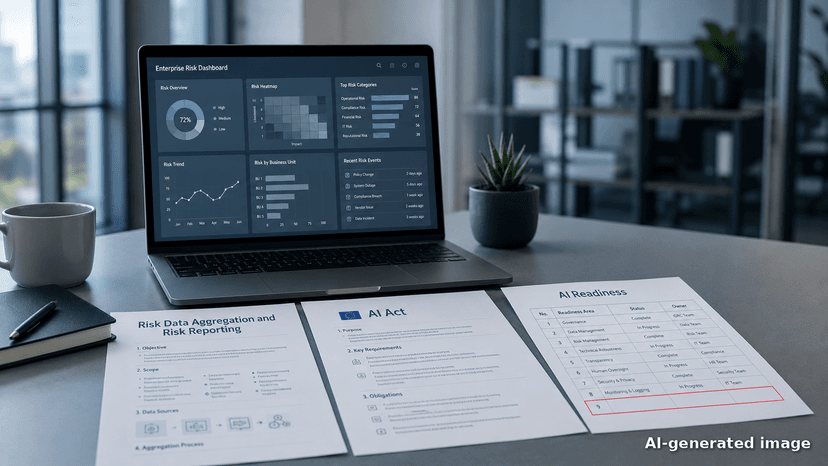
AI-Ready Data: Assessing Your Data – The Data Quality Dimensions That Determine AI Success
AI readiness is decided earlier than most organizations expect — at the level of the data itself. This article sets out the data quality dimensions that make data AI-ready, places data readiness for AI within the regulatory framework from the EU AI Act to BCBS 239, and explains why the four classic quality dimensions are not sufficient for AI models.

AI governance does not replace what banks already do well. It builds on it. This article shows how data governance, model governance, and internal governance combine into a framework that satisfies supervisors and enables AI at scale: from dataset suitability and continuous monitoring to accountability across the three lines of defense.
9th MaRisk Amendment 2026: What Changes for Banks Now
The 9th MaRisk Amendment is final: more proportionality, SNCI reliefs, new size categories. All changes, deadlines and an implementation roadmap to 2027.

The EU Benchmarks Regulation Tightens Again: What ESMA's 2026 Internal Control Guidelines Mean for Benchmark Administrators
The EU Benchmarks Regulation has acquired another layer. On 5 May 2026, ESMA published new Guidelines on Internal Controls that apply from 1 October 2026 — the latest step in a regulatory story running straight back to the LIBOR scandal. Here's what benchmark administrators and credit rating agencies now have to demonstrate.

The EBA Climate Stress Test: The New 2027 Climate Risk Module and What Banks Should Do
The draft 2027 EBA stress test introduces a dedicated climate risk module, layering transition and flood shocks onto the adverse macro-financial scenario. It leaves capital ratios untouched for now, but it produces exactly the kind of supervisory dataset that shapes future cycles, so the draft is best treated as a dry run.
PD Model Backtesting in the Spotlight: What the EBA's 2026 Paper Means for European Banks
For two decades, the performance of banks' PD models stayed inside confidential supervisory channels. The EBA's April 2026 Staff Paper changes that — applying systematic PD model backtesting across EU IRB banks, sharpening the binomial test for both asset and serial correlation, and putting a Tier 1 capital number on the result.
Success Stories
Discover how we support companies in their digital transformation
Digitalization in Steel Trading
Steel trading company from Germany
Digital Transformation in Steel Trading
Results
AI-Powered Manufacturing Optimization
Industrial group from Germany
Smart Manufacturing Solutions for Maximum Value Creation
Results
AI Automation in Production
Automation specialist from Germany
Intelligent Networking for Future-Proof Production Systems
Results
Generative AI in Manufacturing
Technology group from Germany
AI Process Optimization for Improved Production Efficiency
Results
Let's
Work Together!
Is your organization ready for the next step into the digital future? Contact us for a personal consultation.
Your strategic success starts here
Our clients trust our expertise in digital transformation, compliance, and risk management
Ready for the next step?
Schedule a strategic consultation with our experts now
30 Minutes • Non-binding • Immediately available
For optimal preparation of your strategy session:
Prefer direct contact?
Direct hotline for decision-makers
Strategic inquiries via email
Detailed Project Inquiry
For complex inquiries or if you want to provide specific information in advance