Risk Management vs Business Continuity: Differences and Synergies
Understand the fundamental differences between Enterprise Risk Management (ERM) and Business Continuity Management (BCM). ADVISORI shows you how to strategically combine prevention and response capability — for maximum organizational resilience under ISO 31000 and ISO 22301.
- ✓Clear differentiation and strategic positioning of both disciplines
- ✓Optimal integration for synergistic resilience effects
- ✓Efficient governance structures and resource allocation
- ✓Comprehensive enterprise resilience through coordinated approaches
Your strategic success starts here
Our clients trust our expertise in digital transformation, compliance, and risk management
30 Minutes • Non-binding • Immediately available
For optimal preparation of your strategy session:
- Your strategic goals and objectives
- Desired business outcomes and ROI
- Steps already taken
Or contact us directly:
Certifications, Partners and more...








Risk Management vs BCM — Strategic Differentiation and Integration
Why Integrated RM/BC Consulting with ADVISORI
- Deep expertise in both disciplines and their integration
- Industry-specific approaches for optimal resilience architectures
- Modern technology integration and AI-supported optimization
- Comprehensive transformation and change management support
Strategic Integration
The optimal combination of Risk Management and Business Continuity requires thoughtful integration that utilizes the strengths of both disciplines and avoids redundancies.
ADVISORI in Numbers
11+
Years of Experience
120+
Employees
520+
Projects
We follow a structured approach to analyze, differentiate, and integrate Risk Management and Business Continuity that optimally combines the specific strengths of both disciplines.
Our Approach:
Comprehensive Assessment of both disciplines and Gap Analysis
Strategic Integration Design with Collaboration Mapping
Unified Governance Framework and Organizational Alignment
Technology Integration and Platform Consolidation
Performance Optimization and Continuous Improvement
"The strategic integration of Risk Management and Business Continuity is crucial for modern enterprise resilience. By combining preventive risk minimization with reactive recovery capability, we create solid organizations that can both avoid and successfully manage disruptions."

Melanie Düring
Head of Risk Management
Our Services
We offer you tailored solutions for your digital transformation
Comparative Analysis & Differentiation
Detailed analysis of differences, commonalities, and integration potentials.
- Fundamental Difference Analysis and Scope Definition
- Methodological Comparison and Best Practice Identification
- Collaboration Mapping and Integration Opportunity Assessment
- Stakeholder Impact Analysis and Communication Strategy
Strategic Integration Framework
Development of integrated frameworks for optimal resilience impact.
- Unified Governance Model and Decision Framework
- Integrated Risk-Continuity Assessment Methodology
- Cross-functional Process Design and Workflow Integration
- Performance Metrics Alignment and KPI Harmonization
Organizational Design & Governance
Optimal organizational structures for integrated RM/BC functions.
- Role Definition and Responsibility Matrix Development
- Committee Structure Design and Reporting Hierarchies
- Competency Framework and Training Programmes
- Change Management and Cultural Integration
Technology Integration & Platforms
Consolidation and integration of RM/BC technology landscapes.
- Platform Assessment and Consolidation Strategy
- Unified Dashboard Development and Reporting Integration
- Data Integration and Analytics Harmonization
- Automation Opportunities and Workflow Optimization
Regulatory & Compliance Alignment
Coordinated compliance strategies for both disciplines.
- Regulatory Mapping and Compliance Harmonization
- Audit Coordination and Evidence Management
- Reporting Standardization and Documentation Alignment
- Regulatory Intelligence and Change Management
Performance Optimization & Maturity
Continuous improvement and maturity development for integrated approaches.
- Maturity Assessment and Capability Development
- Performance Benchmarking and Industry Comparison
- Continuous Improvement Programme and Innovation Integration
- Future-proofing and Emerging Risk Integration
Frequently Asked Questions about Risk Management vs Business Continuity
What are the fundamental differences between Risk Management and Business Continuity Management in terms of objectives and scope?
Risk Management and Business Continuity Management pursue different strategic objectives and operate in distinct areas of application, although both contribute to organizational resilience. Understanding these fundamental differences is essential for the optimal positioning and integration of both disciplines in modern organizations. Strategic Objectives: Risk Management focuses primarily on preventive risk identification, assessment, and mitigation to avoid adverse events Business Continuity Management concentrates on reactive recovery capability and the maintenance of critical business functions during and after disruptions Risk Management aims at probability reduction and impact minimization, while BCM is oriented toward resilience and rapid recovery The temporal orientation differs: RM is future-oriented and preventive, BCM is event-oriented and reactive Risk Management optimizes risk-return ratios; BCM maximizes survivability and continuity Scope and Application: Risk Management encompasses all types of organizational risks: strategic, operational, financial, regulatory, and reputational Business Continuity Management focuses specifically on operational continuity risks and critical business processes RM works with quantitative risk models.
How can Risk Management and Business Continuity be strategically integrated to create synergies and avoid redundancies?
The strategic integration of Risk Management and Business Continuity requires a systematic approach that utilizes the complementary strengths of both disciplines while minimizing overlap. Successful integration creates synergistic effects that exceed the sum of the individual components. Unified Governance Framework: Develop integrated governance structures that bring both disciplines together under a single strategic umbrella Establish cross-functional committees with representatives from Risk Management and Business Continuity Implement shared reporting lines and coordinated decision-making processes Create unified Risk Appetite Statements that address both preventive and reactive aspects Utilize integrated board-level oversight for comprehensive resilience management Integrated Assessment Methodology: Combine Risk Assessments with Business Impact Analyses for comprehensive evaluations Develop unified Risk-Continuity Matrices that link probability of occurrence with recovery complexity Implement shared scenario planning processes that address both prevention and response Utilize integrated modeling for end-to-end resilience assessments Establish shared criticality assessments for business processes and assets Shared Technology Platforms: Implement integrated GRC platforms that support both.
Which organizational structures and governance models are best suited for the coordinated leadership of Risk Management and Business Continuity?
The choice of optimal organizational structures and governance models for coordinated RM/BC leadership depends on company size, industry, risk culture, and strategic priorities. Successful models balance specialization with integration and establish clear accountability while fostering collaboration. Integrated Governance Models: Chief Resilience Officer Model: Unified leadership of both disciplines under a single CRO with direct board-level reporting Dual-Head Structure: Separate CRO and Chief Continuity Officer with coordinated reporting to the CEO or Board Matrix Organization: Functional specialization with cross-functional integration teams Center of Excellence Approach: Centralized coordination with decentralized implementation across business units Federated Model: Autonomous divisions with strong coordination mechanisms and shared standards Board-Level Integration: Establish an integrated Risk & Resilience Committee with a combined mandate Implement regular joint sessions between Risk and Audit Committees Create board-level Risk Appetite Statements encompassing both disciplines Utilize integrated board reporting with combined Risk-Continuity dashboards Establish board-level oversight for Crisis Management and Business Continuity Organizational Design Principles: Three Lines.
How do the technology requirements and tool landscapes differ between Risk Management and Business Continuity, and how can they be consolidated?
The technology landscapes of Risk Management and Business Continuity have historically developed separately, but offer significant consolidation potential. Modern integrated platforms can create synergies, reduce costs, and enhance the effectiveness of both disciplines. Risk Management Technology Stack: Quantitative Risk Modeling Platforms for statistical analyses and Monte Carlo simulations GRC systems for policy management, control testing, and compliance tracking Risk Data Aggregation Platforms for enterprise-wide risk data consolidation Predictive Analytics tools for trend analysis and early detection Risk reporting and dashboard solutions for management and board reporting Third-Party Risk Management Platforms for vendor assessment and monitoring Regulatory Change Management Systems for compliance updates and impact analysis Business Continuity Technology Stack: Business Impact Analysis tools for criticality assessment and dependency analysis Crisis Management Platforms for incident response and communication Recovery Planning Software for plan development and maintenance Testing and Exercise Management Systems for BCM validation Notification and Alerting Systems for emergency communication Backup and Recovery Solutions for.
How do performance metrics and KPIs differ between Risk Management and Business Continuity, and how can they be harmonized?
Performance metrics and KPIs for Risk Management and Business Continuity have traditionally had different focal points, but offer significant harmonization potential for integrated resilience measurement. Developing unified metrics enables comprehensive performance evaluation and strategic management. Risk Management KPIs: Risk-adjusted return metrics such as RAROC and Economic Value Added for strategic performance assessment Value at Risk and Expected Shortfall for quantitative risk measurement and capital allocation Risk Coverage Ratios and Control Effectiveness Indicators for operational risk control Incident Frequency and Loss Given Default for historical risk performance Risk Appetite Utilization and Limit Breach Indicators for governance compliance Early Warning Indicator Performance and Predictive Accuracy metrics for proactive risk management Business Continuity KPIs: Recovery Time Actual vs. Objective for recovery performance Business Impact Minimization and Revenue Protection metrics Exercise Success Rates and Plan Effectiveness Indicators Incident Response Time and Crisis Management Efficiency Stakeholder Communication Effectiveness and Reputation Impact Measures Supplier Continuity Performance and Third-Party Recovery Capabilities Harmonized.
What regulatory and compliance requirements must be considered when integrating Risk Management and Business Continuity?
The regulatory landscape for Risk Management and Business Continuity is becoming increasingly convergent, but still requires careful navigation of distinct compliance requirements. Successful integration must account for both existing and emerging regulatory requirements and respond proactively to regulatory developments. Financial Services Regulations: Basel III/IV requirements for integrated risk and continuity management in banks DORA Digital Operational Resilience Act for EU financial institutions with combined Risk-Continuity requirements MiFID II and ESMA Guidelines for investment firms with an operational resilience focus Solvency II for insurers with integrated risk and continuity assessments PCI DSS and other payment industry standards with security-continuity integration Cross-Industry Frameworks: ISO
31000 Risk Management and ISO
22301 Business Continuity integration COSO Enterprise Risk Management Framework with Business Continuity components NIST Cybersecurity Framework with Risk-Continuity alignment SOX compliance with integrated internal controls for both areas GDPR data protection with Risk-Continuity considerations for privacy incidents Regional Regulatory Requirements: EU NIS 2 Directive with combined cybersecurity and continuity.
How can organizations develop an effective change management strategy for the integration of Risk Management and Business Continuity?
Change management for RM/BC integration requires a structured approach that coordinates cultural, organizational, and technical changes. Successful transformation addresses stakeholder needs, minimizes disruption, and creates lasting change through systematic implementation. Strategic Change Planning: Develop a clear vision and business case for integration with quantified benefits Conduct a comprehensive stakeholder analysis to identify champions and sources of resistance Create detailed change roadmaps with milestones and success criteria Establish change governance structures with executive sponsorship and steering committees Implement risk-based change management with contingency planning for critical transformation phases Organizational Change Management: Conduct a cultural assessment to identify integration barriers and enablers Develop role transition plans for affected employees with clear career pathways Implement cross-training programs to develop hybrid competencies Establish change champion networks in both areas for peer-to-peer support Utilize structured communication campaigns to foster buy-in and engagement Competency Development: Develop integrated training curricula covering both disciplines Implement mentoring programs between risk and continuity professionals Establish.
What role do emerging technologies such as AI, Machine Learning, and IoT play in the convergence of Risk Management and Business Continuity?
Emerging technologies serve as catalysts for the convergence of Risk Management and Business Continuity by creating new opportunities for integrated analytics, predictive capabilities, and automated response. These technologies enable unprecedented visibility, automation, and intelligence across both disciplines. Artificial Intelligence Integration: AI-supported Risk-Continuity analytics for pattern recognition and anomaly detection across both areas Natural Language Processing for automated policy and plan analysis with cross-domain insights Computer Vision for physical security and facility continuity monitoring Cognitive Computing for complex decision support in crisis situations AI-based scenario generation for integrated Risk-Continuity planning Intelligent Document Processing for regulatory compliance and audit automation Machine Learning Applications: Predictive risk modeling with business impact forecasting for proactive intervention Dynamic risk scoring with real-time continuity impact assessment Behavioral analytics for insider threat detection and continuity planning Supply chain risk prediction with continuity impact modeling Automated incident classification and response recommendation Continuous learning systems for Risk-Continuity model optimization Internet of Things Enablement: Real-time environmental.
How do approaches to integrating Risk Management and Business Continuity differ across various industries and sectors?
Industry-specific approaches to RM/BC integration reflect different risk profiles, regulatory requirements, and operational characteristics. Successful integration accounts for sector-specific particularities and utilizes industry-proven best practices for optimal resilience. Financial Services Integration: Regulatory-driven integration through Basel III, DORA, and national supervisory requirements Capital-centric approach with risk-adjusted performance and continuity cost integration Real-time risk monitoring with immediate continuity response for trading and payment systems Systemic risk considerations with market-wide impact assessment Third-party risk integration with supplier continuity for critical financial infrastructure Healthcare Sector Approaches: Patient safety-focused integration with life-critical system continuity Regulatory compliance integration for HIPAA, FDA, and patient safety standards Clinical risk assessment with operational continuity for medical devices Supply chain resilience for critical medications and medical supplies Emergency response integration with hospital disaster planning Manufacturing Industry Models: Supply chain-centric integration with supplier risk and production continuity Operational risk focus with equipment failure and production disruption management Quality risk integration with product safety and recall management.
What maturity models and development stages exist for the integration of Risk Management and Business Continuity?
Maturity models for RM/BC integration provide structured development pathways from basic coordination to advanced, adaptive resilience. These models enable systematic capability development and benchmarking against industry best practices. Integration Maturity Levels: Level
1 – Initial: Separate RM and BC functions with minimal coordination and ad hoc communication Level
2 – Developing: Formalized coordination mechanisms with shared meetings and information sharing Level
3 – Defined: Integrated processes with standardized workflows and shared assessments Level
4 – Managed: Quantitative performance management with integrated metrics and continuous optimization Level
5 – Optimizing: Adaptive integration with AI-supported optimization and predictive capabilities Capability Dimensions: Governance Integration: From separate committees to unified resilience governance Process Integration: From isolated workflows to smooth end-to-end processes Technology Integration: From siloed systems to unified platforms and shared analytics People Integration: From separate teams to hybrid roles and cross-functional expertise Performance Integration: From separate KPIs to comprehensive resilience metrics Maturity Assessment Framework: Strategic Alignment: Integration of.
How can organizations conduct a cost-benefit analysis for the integration of Risk Management and Business Continuity?
A structured cost-benefit analysis for RM/BC integration requires quantitative evaluation of integration benefits against implementation costs. A successful analysis accounts for both direct and indirect value creation and utilizes modern valuation methods to support sound investment decisions. Cost Categories: Technology Integration Costs: Platform consolidation, system integration, and data migration Organizational Change Costs: Training, change management, and restructuring Process Redesign Costs: Workflow integration, documentation, and testing Consulting and External Support: Expertise, implementation support, and best practice transfer Ongoing Operational Costs: Maintenance, support, and continuous improvement Benefit Quantification: Cost Avoidance: Reduced duplication, shared resources, and efficiency gains Risk Reduction Benefits: Lower expected losses, improved recovery times, and enhanced resilience Compliance Efficiency: Streamlined audit, reduced regulatory costs, and faster reporting Strategic Value Creation: Better decision-making, competitive advantage, and stakeholder confidence Innovation Enablement: Faster time-to-market, enhanced agility, and digital transformation Valuation Methodologies: Net Present Value analysis for long-term investment assessment Return on Investment calculations for short-term payback evaluation Real.
What are the critical success factors and common pitfalls in the integration of Risk Management and Business Continuity?
Successful RM/BC integration depends on critical success factors, while common pitfalls must be avoided. Systematically addressing these factors increases the likelihood of successful transformation and sustainable integration. Critical Success Factors: Executive sponsorship with clear commitment and adequate resource allocation Clear vision and strategy with defined objectives and success criteria Strong change management with a structured approach and stakeholder engagement Adequate resources covering budget, personnel, and technology investment Cultural alignment with shared values and a collaborative mindset Phased implementation with pilot programs and gradual rollout Common Pitfalls: Underestimating the complexity of integration and the required effort Insufficient stakeholder buy-in and resistance management Technology-first approach without considering process and people dimensions Lack of clear governance for integration oversight and decision-making Inadequate training and skill development for new integrated roles Poor communication strategy with unclear messages and expectations Implementation Best Practices: Start with quick wins for early success and momentum building Establish clear metrics for progress tracking and.
How can organizations address the cultural and organizational challenges of integrating Risk Management and Business Continuity?
Cultural and organizational integration of RM/BC requires a systematic change management approach that addresses people, processes, and structures in equal measure. Successful transformation establishes shared values, a common understanding, and unified ways of working for sustainable integration.
🎯 Cultural Transformation Strategy:
👥 Organizational Design Integration:
🔄 Process Integration Approaches:
💡 Communication and Engagement:
What role do third-party providers and suppliers play in an integrated Risk Management and Business Continuity strategy?
Third-party providers and suppliers are critical components of integrated RM/BC strategies, as modern organizations are increasingly dependent on external partners. Successful integration requires systematic third-party risk and continuity management with proactive partnerships.
🔍 Third-Party Risk Assessment Integration:
🤝 Supplier Continuity Partnership:
📊 Integrated Supplier Management:
🌐 Supply Chain Resilience:
How can small and medium-sized enterprises (SMEs) achieve effective integration of Risk Management and Business Continuity with limited resources?
SMEs can achieve effective RM/BC integration through pragmatic, flexible approaches that account for their resource constraints. Successful strategies focus on essential elements, utilize external resources, and implement incremental improvements.
💰 Resource-Efficient Integration Strategies:
🔧 Practical Implementation Approaches:
🤝 External Support and Partnerships:
📈 Flexible Growth Approach:
🎯 Focus Areas for SMEs:
What future trends and developments will influence the integration of Risk Management and Business Continuity?
Future trends in RM/BC integration will be shaped by technological innovation, regulatory developments, and evolving risk landscapes. Successful organizations anticipate these trends and develop adaptive capabilities for future readiness. Technology-Driven Evolution: AI and Machine Learning for predictive Risk and Continuity analytics Digital Twins for integrated simulation and scenario planning Quantum Computing for complex risk modeling and optimization Blockchain for immutable audit trails and smart contracts IoT integration for real-time risk monitoring and automated response Extended Reality for immersive training and crisis simulation Regulatory and Compliance Trends: Convergent regulations with integrated Risk and Continuity requirements ESG integration with sustainability risk and continuity considerations Cross-border regulatory harmonization for global operations Real-time regulatory reporting with automated compliance Regulatory technology for efficient compliance management Privacy by Design integration into Risk and Continuity frameworks Operational Resilience Evolution: Ecosystem resilience with extended enterprise considerations Adaptive resilience with self-healing systems Continuous resilience testing with automated validation Resilience as a Service with cloud-based.
How can organizations measure the effectiveness of their integrated Risk Management and Business Continuity programs and continuously improve them?
Measuring the effectiveness of integrated RM/BC programs requires comprehensive assessment approaches that combine quantitative metrics with qualitative assessments. Continuous improvement is based on systematic performance analysis and adaptive optimization cycles.
📊 Integrated Performance Measurement:
🎯 Effectiveness Assessment Framework:
🔄 Continuous Improvement Cycles:
💡 Advanced Analytics for Improvement:
What governance structures and decision-making processes are required for successful integration of Risk Management and Business Continuity?
Successful RM/BC integration requires adaptive governance structures that ensure clear accountability, efficient decision-making processes, and strategic alignment. Modern governance combines traditional oversight with agile decision mechanisms.
🏛 ️ Integrated Governance Architecture:
⚖ ️ Decision-Making Frameworks:
📋 Accountability and Responsibility:
🔄 Adaptive Governance Mechanisms:
How can organizations effectively manage stakeholder expectations and communication when integrating Risk Management and Business Continuity?
Effective stakeholder management for RM/BC integration requires strategic communication that addresses different interest groups and accounts for their specific needs. Successful approaches build trust, transparency, and sustained engagement.
👥 Stakeholder Mapping and Segmentation:
📢 Strategic Communication Framework:
🎯 Expectation Management:
💬 Engagement and Participation:
🔄 Crisis Communication Integration:
What practical steps should organizations take to begin integrating Risk Management and Business Continuity?
Beginning an RM/BC integration requires a structured, stepwise approach with clear milestones and quick wins. Successful implementation starts with assessment, planning, and pilot-based approaches to drive sustainable change.
🎯 Phase 1 – Assessment and Baseline:
📋 Phase 2 – Strategic Planning:
🚀 Phase 3 – Pilot Implementation:
🔄 Phase 4 – Scaled Rollout:
💡 Critical Success Factors:
Latest Insights on Risk Management vs Business Continuity
Discover our latest articles, expert knowledge and practical guides about Risk Management vs Business Continuity
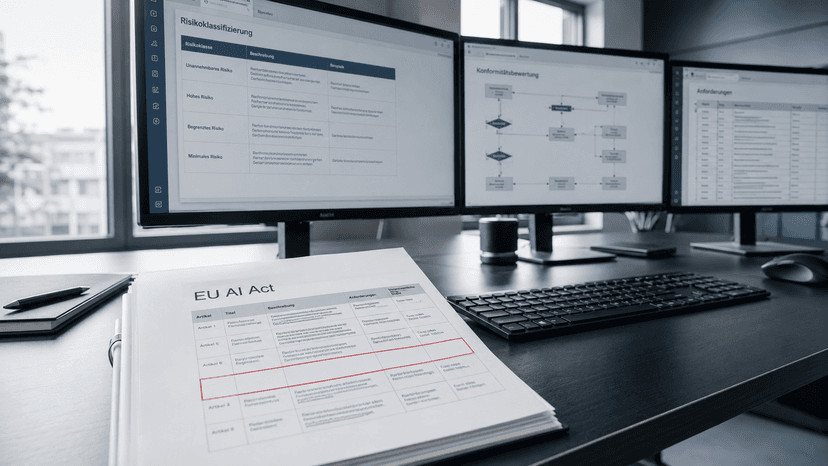
AI governance does not replace what banks already do well. It builds on it. This article shows how data governance, model governance, and internal governance combine into a framework that satisfies supervisors and enables AI at scale: from dataset suitability and continuous monitoring to accountability across the three lines of defense.
9th MaRisk Amendment 2026: What Changes for Banks Now
The 9th MaRisk Amendment is final: more proportionality, SNCI reliefs, new size categories. All changes, deadlines and an implementation roadmap to 2027.

The EU Benchmarks Regulation Tightens Again: What ESMA's 2026 Internal Control Guidelines Mean for Benchmark Administrators
The EU Benchmarks Regulation has acquired another layer. On 5 May 2026, ESMA published new Guidelines on Internal Controls that apply from 1 October 2026 — the latest step in a regulatory story running straight back to the LIBOR scandal. Here's what benchmark administrators and credit rating agencies now have to demonstrate.
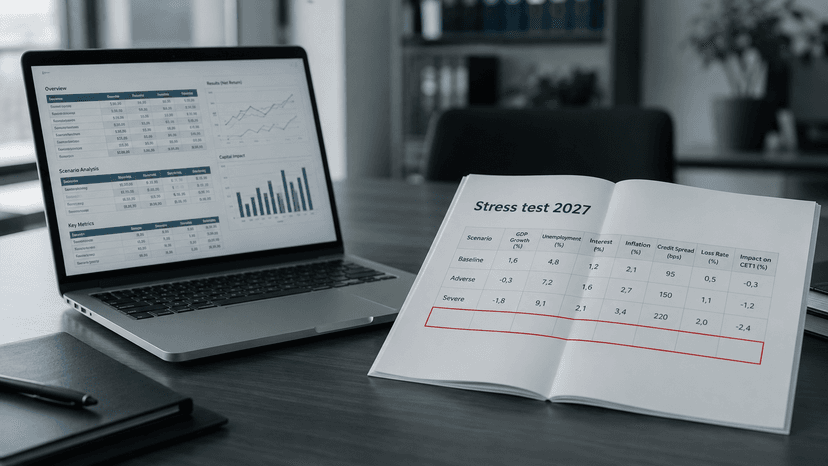
The EBA Climate Stress Test: The New 2027 Climate Risk Module and What Banks Should Do
The draft 2027 EBA stress test introduces a dedicated climate risk module, layering transition and flood shocks onto the adverse macro-financial scenario. It leaves capital ratios untouched for now, but it produces exactly the kind of supervisory dataset that shapes future cycles, so the draft is best treated as a dry run.
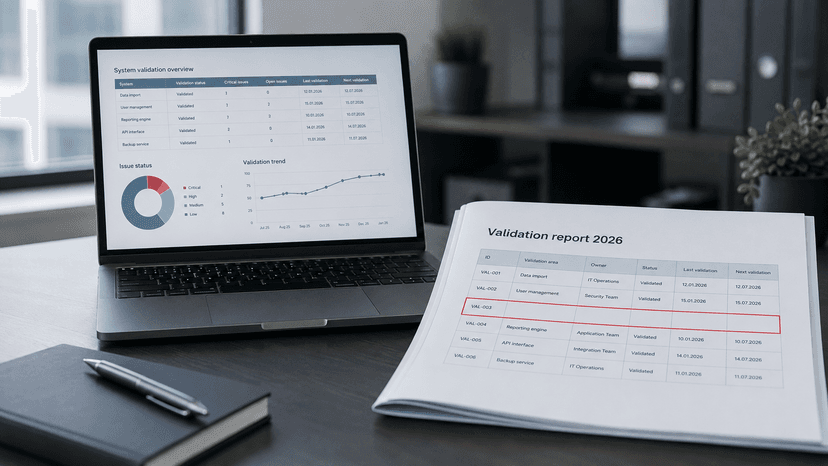
PD Model Backtesting in the Spotlight: What the EBA's 2026 Paper Means for European Banks
For two decades, the performance of banks' PD models stayed inside confidential supervisory channels. The EBA's April 2026 Staff Paper changes that — applying systematic PD model backtesting across EU IRB banks, sharpening the binomial test for both asset and serial correlation, and putting a Tier 1 capital number on the result.
The credit risk function of 2026 looks materially different from the one most banks still operate. Here are the five shifts, from generative AI to ESG integration, that risk managers should plan for now.
Success Stories
Discover how we support companies in their digital transformation
Digitalization in Steel Trading
Steel trading company from Germany
Digital Transformation in Steel Trading
Results
AI-Powered Manufacturing Optimization
Industrial group from Germany
Smart Manufacturing Solutions for Maximum Value Creation
Results
AI Automation in Production
Automation specialist from Germany
Intelligent Networking for Future-Proof Production Systems
Results
Generative AI in Manufacturing
Technology group from Germany
AI Process Optimization for Improved Production Efficiency
Results
Let's
Work Together!
Is your organization ready for the next step into the digital future? Contact us for a personal consultation.
Your strategic success starts here
Our clients trust our expertise in digital transformation, compliance, and risk management
Ready for the next step?
Schedule a strategic consultation with our experts now
30 Minutes • Non-binding • Immediately available
For optimal preparation of your strategy session:
Prefer direct contact?
Direct hotline for decision-makers
Strategic inquiries via email
Detailed Project Inquiry
For complex inquiries or if you want to provide specific information in advance