Contract Design for Outsourcing Relationships
Development of customized, legally compliant, and flexible contract solutions that protect your interests and enable successful outsourcing relationships.
- ✓Legally compliant contract templates and clauses
- ✓Risk-focused contract design and negotiation support
- ✓Comprehensive SLA and exit strategy development
- ✓Regulatory compliance and continuous optimization
Your strategic success starts here
Our clients trust our expertise in digital transformation, compliance, and risk management
30 Minutes • Non-binding • Immediately available
For optimal preparation of your strategy session:
- Your strategic goals and objectives
- Desired business outcomes and ROI
- Steps already taken
Or contact us directly:
Certifications, Partners and more...








Professional Contract Design for Outsourcing Relationships
Why Choose ADVISORI?
- Deep expertise in regulatory compliance and contract law
- Proven track record in complex outsourcing negotiations
- Practical, business-focused approach to contract design
- Comprehensive support from strategy to implementation
Expert Insight
The most successful outsourcing relationships are built on contracts that balance legal protection with operational flexibility. Invest time in comprehensive contract design to avoid costly disputes and ensure long-term success.
ADVISORI in Numbers
11+
Years of Experience
120+
Employees
520+
Projects
We follow a systematic, risk-focused methodology that combines legal expertise with practical business understanding to deliver contract solutions that protect your interests and enable successful outsourcing relationships.
Our Approach:
Comprehensive requirements analysis and risk assessment
Strategic contract structure development
Detailed clause elaboration and legal review
Negotiation support and strategy development
Implementation support and continuous optimization
"ADVISORI's support in redesigning our outsourcing contracts not only provided us with legal certainty but also significantly improved operational collaboration with our service providers. Particularly valuable was the combination of legal expertise and practical understanding of our business requirements."

Sarah Richter
Head of Information Security, Cyber Security
Expertise & Experience:
10+ years of experience, CISA, CISM, Lead Auditor, DORA, NIS2, BCM, Cyber and Information Security
Our Services
We offer you tailored solutions for your digital transformation
Contract Template Development
Creation of standardized, modular contract templates for various outsourcing scenarios with flexibly adaptable components.
- Industry-specific contract frameworks
- Modular clause libraries
- Regulatory compliance integration
SLA Design & Performance Management
Development of effective service level agreements with clear metrics, measurement procedures, and enforcement mechanisms.
- Business-aligned SLA metrics
- Performance monitoring frameworks
- Incentive and penalty structures
Exit Strategy & Transition Planning
Comprehensive exit management clauses and transition planning to minimize risks and ensure smooth service handover.
- Exit scenario planning
- Data migration frameworks
- Knowledge transfer protocols
Contract Negotiation Support
Expert support in contract negotiations with development of effective strategies and tactics for various scenarios.
- Negotiation strategy development
- Risk position analysis
- Active negotiation participation
Regulatory Compliance Integration
Integration of regulatory requirements into contract frameworks with continuous adaptation to new supervisory regulations.
- Compliance requirement mapping
- Audit rights specification
- Regulatory change management
Contract Documentation & Management
Structured documentation of complex contract frameworks for internal stakeholders, governance bodies, and supervisory authorities.
- Comprehensive contract documentation
- Version control and change tracking
- Stakeholder communication materials
Looking for a complete overview of all our services?
View Complete Service OverviewOur Areas of Expertise in Information Security
Discover our specialized areas of information security
Frequently Asked Questions about Contract Design for Outsourcing Relationships
What elements are indispensable for legally compliant outsourcing agreements?
Legally compliant outsourcing agreements must contain numerous specific elements in order to meet both regulatory requirements and adequately protect business interests. The particular challenge lies in combining legal precision with practical applicability. A professionally drafted outsourcing agreement not only takes into account current statutory requirements, but also anticipates potential risks and developments in the business relationship. The following core elements are indispensable and should be elaborated with particular care in every outsourcing agreement. Precise Service Description: Detailed, unambiguous definition of the scope of services with a clear delineation of the responsibilities of both parties. Concrete description of deliverables, work results and expected quality standards. Establishment of handover and acceptance processes with specific criteria and timelines. Clear provisions governing the involvement of subcontractors and their responsibilities. Defined processes for service changes and adjustments during the term of the agreement. Compliance and Regulatory Requirements: Integration of all regulatory requirements relevant to the specific industry (e.g. MaRisk, BAIT, DORA). Establishment of control, access and audit rights of the outsourcing company and the supervisory authorities.
How does one develop a tailored contract structure for different outsourcing scenarios?
Developing tailored contract structures for outsourcing arrangements requires a systematic, risk-focused approach that takes into account the specific characteristics and requirements of each outsourcing scenario. Unlike standard contracts, the goal is to precisely align contractual provisions with the specific operational, legal and strategic circumstances of the respective outsourcing arrangement. This tailored approach forms the foundation for a successful, legally compliant and value-creating outsourcing relationship. Systematic Analysis Phase: Conducting a comprehensive risk analysis as the basis for the contract structure, including identification of the specific risk areas of the outsourcing arrangement. Evaluation of the regulatory requirements for the specific outsourcing arrangement depending on industry, criticality and data categories. Analysis of the strategic importance of the outsourcing arrangement for the company and derivation of appropriate contractual protection mechanisms. Assessment of operational requirements for service delivery, including integration into existing processes and systems. Evaluation of the market position and negotiating strength of both parties as a basis for realistic contract negotiation objectives.
What specific legal considerations must be observed when drafting cloud service agreements?
Drafting cloud service agreements requires particular legal attention, as conventional outsourcing contract templates often fail to adequately address the specific characteristics and risks of cloud services. The standardisation of cloud offerings, the multi-tiered service provider structure, data and compliance issues, and continuous update cycles all present specific challenges that must be deliberately addressed in the contract drafting process. Professional cloud contract drafting takes these particularities into account and establishes a framework that provides both legal certainty and the necessary flexibility to utilize the benefits of the cloud. Dealing with Standard Contracts and Limited Negotiating Power: Development of a risk-focused prioritisation for contract negotiations, as cloud providers often show only limited willingness to make adjustments. Identification and focus on non-negotiable regulatory requirements and critical business risks during negotiations. Targeted supplementation of standard contracts through side letters or additional agreements to address company-specific requirements. Use of multi-provider strategies for risk diversification and to strengthen the negotiating position. Careful documentation of the risk assessment and acceptance of residual risks in relation to non-negotiable clauses.
How does one draft effective service descriptions and SLAs for outsourcing agreements?
Drafting precise service descriptions and effective Service Level Agreements (SLAs) is a critical success factor for outsourcing relationships. They form the basis for a shared understanding of expected performance, create transparency and enable an objective assessment of service provider performance. The particular challenge is to strike the right balance: on the one hand, requirements must be sufficiently detailed and measurable; on the other hand, they must not become too rigid or unrealistic. A professional approach combines technical precision with business relevance, and creates both clarity and the necessary flexibility for a long-term successful collaboration. Core Principles of Effective Service Descriptions: Focus on clearly defined results and outcomes rather than purely activity-based descriptions. Use of precise, unambiguous terminology with clear definitions of key terms to avoid room for interpretation. Structuring into logical, distinct service components with clear interfaces and responsibilities. Balanced level of detail: sufficiently specific for clarity, but not over-specified, so as to retain necessary flexibility. Integration of visual elements such as process diagrams, RACI matrices and interface descriptions to illustrate complex relationships.
How does one design effective exit strategies in outsourcing agreements?
Designing effective exit strategies is a critical component of professional outsourcing agreements. A well-considered exit strategy minimises risks and costs when terminating the outsourcing relationship and enables a smooth transition to alternative solutions.
🔄 Comprehensive Exit Scenarios and Planning:
📦 Data and Asset Migration:
🧠 Knowledge Transfer and Know-How Retention:
What role do liability provisions play in outsourcing agreements?
Liability provisions in outsourcing agreements form a central component of contractual risk allocation and are crucial for the viability of the outsourcing relationship. A differentiated, risk-adequate liability framework is clearly superior to a blanket approach.
⚖ ️ Basic Structures of Contractual Liability Concepts:
🛡 ️ Differentiated Liability Caps and Exclusions:
📊 Insurance and Financial Security Mechanisms:
How does one integrate information security requirements into outsourcing agreements?
Integrating information security requirements into outsourcing agreements is a critical success factor for secure outsourcing relationships, given the increasing cybersecurity risks. An effective contractual information security framework must address both current and future threats.
🔒 Fundamental Security Architecture and Governance:
🔍 Risk Management and Compliance Requirements:
🛡 ️ Technical Security Measures and Controls:
How can innovation incentives be embedded in long-term outsourcing agreements?
Embedding effective innovation incentives in long-term outsourcing agreements is a central challenge of modern contract design. A well-considered contractual innovation framework creates the foundation for a future-proof outsourcing relationship that meets both current and future requirements.
🎯 Strategic Innovation Objectives and Governance:
💰 Commercial Incentive Structures for Innovation:
🚀 Processes and Methods for Systematic Innovation:
What contractual measures support the management of subcontractors in outsourcing relationships?
Effective contractual management of subcontractors is a central success factor in modern outsourcing management. Due to the increasing specialisation and globalisation of supply chains, outsourcing relationships are becoming ever more complex and frequently involve multi-tiered service provider chains. This significantly increases the challenges in terms of transparency, control and compliance. Transparency and Approval Processes: Implementation of clear transparency obligations with full disclosure of all subcontractors and their share of services. Establishment of graduated approval processes with different requirements depending on the criticality of the outsourced function. Definition of specific criteria for the admissibility of subcontractors (e.g. certifications, locations, minimum size). Integration of pre-screening (due diligence) of new subcontractors with defined review areas and minimum standards. Development of structured change management processes for changes in the subcontractor structure. Contractual Step-Through and Control Rights: Implementation of direct contractual step-through rights over subcontractors for critical functions and services. Establishment of concrete audit, control and inspection rights throughout the entire supply chain. Agreement on information, disclosure and documentation obligations regarding subcontractor management.
How should Service Level Agreements (SLAs) be drafted to ensure legal compliance?
Drafting legally sound Service Level Agreements (SLAs) is a decisive factor for the success of outsourcing relationships. Professionally developed SLAs establish clear performance expectations, enable objective performance measurement and provide effective enforcement mechanisms in the event of deficiencies. The particular challenge lies in combining technical precision, legal enforceability and practical applicability. Precise Metric Definition and Measurement Procedures: Development of clearly defined, measurable and objectively verifiable performance metrics for all critical service aspects. Establishment of precise measurement points, intervals and procedures with unambiguous data sources and calculation methods. Definition of threshold values with clear tolerance ranges and differentiation between various error classes. Implementation of statistically valid sampling and survey methods for performance measurement. Establishment of data validation and quality assurance processes to prevent measurement errors and manipulation. Legal Integration and Enforceability: Clear legal integration of SLAs into the contract structure with unambiguous legal binding effect. Definition of precise consequences for SLA breaches with graduated, proportionate legal remedies. Implementation of a legally sound service credit system with clear calculation formulas and billing procedures.
What core elements should compliance clauses in outsourcing agreements contain?
Effective compliance clauses in outsourcing agreements are essential for meeting regulatory requirements and minimising legal risks. Particularly in heavily regulated industries such as the financial sector, healthcare or critical infrastructure, contractual compliance provisions must be precise, comprehensive and enforceable. At the same time, they must remain practicable and not place a disproportionate burden on the operationalisation of the outsourcing relationship. Fundamental Compliance Obligations: Precise definition of the applicable regulatory framework, including specific laws, regulations and industry standards. Explicit obligation to comply with all relevant legal and regulatory requirements. Integration of specific compliance obligations for particularly relevant areas such as data protection, information security or financial regulation. Establishment of minimum standards for the service provider's internal compliance management systems. Obligation to proactively report compliance-relevant incidents, regulatory enquiries and investigations. Control and Evidence Rights: Establishment of comprehensive information, inspection and audit rights for compliance monitoring. Establishment of regular compliance reporting obligations with standardised formats and content. Integration of certification requirements as objective compliance evidence (e.g. ISO certifications, SOC reports).
How does one integrate sustainability aspects into outsourcing agreements?
The integration of sustainability aspects into outsourcing agreements is becoming increasingly important due to regulatory requirements such as the EU Taxonomy, the Corporate Sustainability Reporting Directive (CSRD) and supply chain due diligence obligations. Companies must ensure that outsourced activities do not jeopardise their own sustainability goals and commitments. A systematic contractual approach to integrating Environmental, Social and Governance (ESG) aspects protects against risks and creates opportunities for value creation and innovation. Fundamental ESG Obligations and Standards: Implementation of explicit obligations to comply with environmental, social and governance standards. Integration of industry-specific sustainability standards and certifications as minimum contractual requirements. Establishment of concrete environmental targets such as CO 2 reduction, energy efficiency or resource conservation with measurable indicators. Agreement on social standards relating to working conditions, human rights and diversity throughout the entire supply chain. Implementation of requirements for sustainable procurement and responsible supply chain design. Monitoring, Reporting and Transparency: Establishment of a structured ESG reporting framework with defined indicators, formats and reporting intervals. Establishment of verification and audit mechanisms for sustainability-related information and indicators.
Latest Insights on Contract Design for Outsourcing Relationships
Discover our latest articles, expert knowledge and practical guides about Contract Design for Outsourcing Relationships
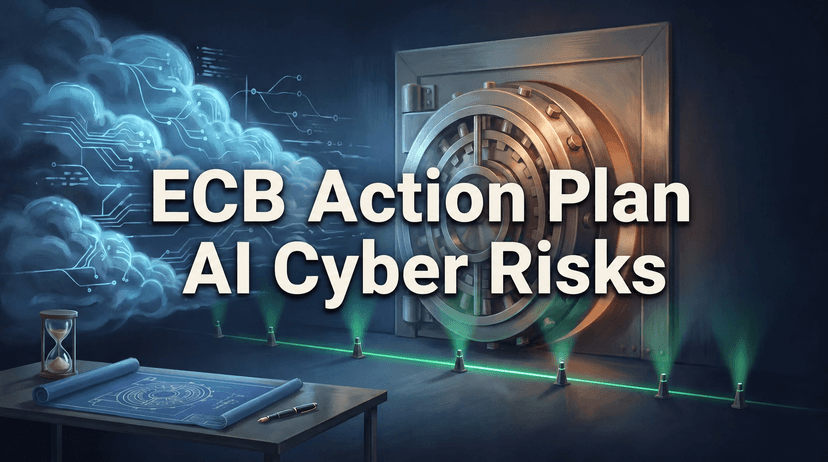
ECB requires action plan on AI-enabled cyber threats by 31 October 2026
ECB Banking Supervision requires all significant institutions to submit an action plan addressing AI-enabled cyber threats by 31 October 2026. What letter SSM-2026-0301 demands, and how the six focus areas map onto DORA.
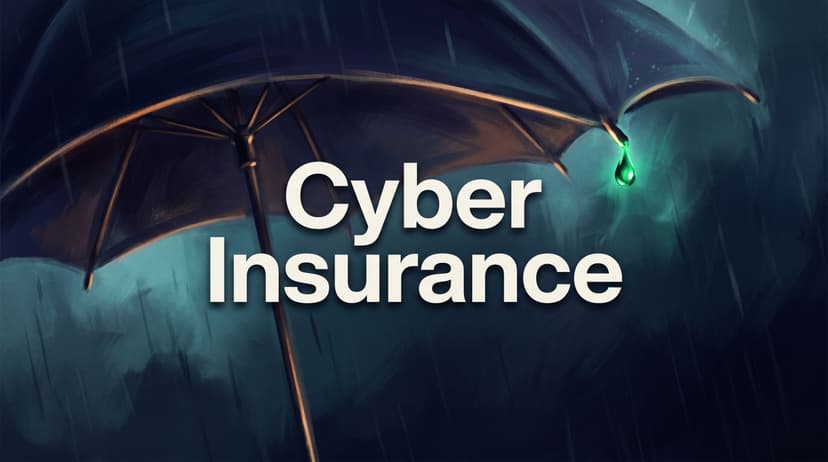
Cyber Insurance: Requirements, Costs, and Selection Guide for Businesses 2026
Cyber insurance covers financial losses from cyberattacks, data breaches, and IT outages. This guide explains what insurers require in 2026, coverage types, costs by company size, and how to choose the right policy — including how ISO 27001 certification reduces premiums.
Vulnerability Management: The Complete Lifecycle for Finding, Prioritizing, and Remediating Weaknesses
Over 30,000 CVEs are published annually. Effective vulnerability management prioritizes what matters most to your organization and remediates before attackers exploit. This guide covers the full lifecycle: discovery, scanning, risk-based prioritization, remediation, and compliance.
Security Awareness Training: Building Effective Programs and Measuring Impact
The human layer remains the weakest link in cybersecurity. This guide covers how to build an effective security awareness program, run phishing simulations, design role-based training, and measure whether your program actually reduces risk — with benchmarks and KPIs.
Penetration Testing: Methods, Process & Provider Selection Guide 2026
Penetration testing reveals vulnerabilities before attackers exploit them. This comprehensive guide covers black box, grey box, and white box methods, the 5-phase pentest process, provider selection criteria, DORA TLPT requirements, and cost benchmarks for every test type.
Business Continuity Software: Comparing Leading BCM Platforms 2026
Business continuity software automates BIA, plan management, exercise tracking, and incident response. This comparison reviews leading BCM platforms, selection criteria, DORA alignment, and which solution fits organizations at different maturity levels.
Success Stories
Discover how we support companies in their digital transformation
Digitalization in Steel Trading
Steel trading company from Germany
Digital Transformation in Steel Trading
Results
AI-Powered Manufacturing Optimization
Industrial group from Germany
Smart Manufacturing Solutions for Maximum Value Creation
Results
AI Automation in Production
Automation specialist from Germany
Intelligent Networking for Future-Proof Production Systems
Results
Generative AI in Manufacturing
Technology group from Germany
AI Process Optimization for Improved Production Efficiency
Results
Let's
Work Together!
Is your organization ready for the next step into the digital future? Contact us for a personal consultation.
Your strategic success starts here
Our clients trust our expertise in digital transformation, compliance, and risk management
Ready for the next step?
Schedule a strategic consultation with our experts now
30 Minutes • Non-binding • Immediately available
For optimal preparation of your strategy session:
Prefer direct contact?
Direct hotline for decision-makers
Strategic inquiries via email
Detailed Project Inquiry
For complex inquiries or if you want to provide specific information in advance