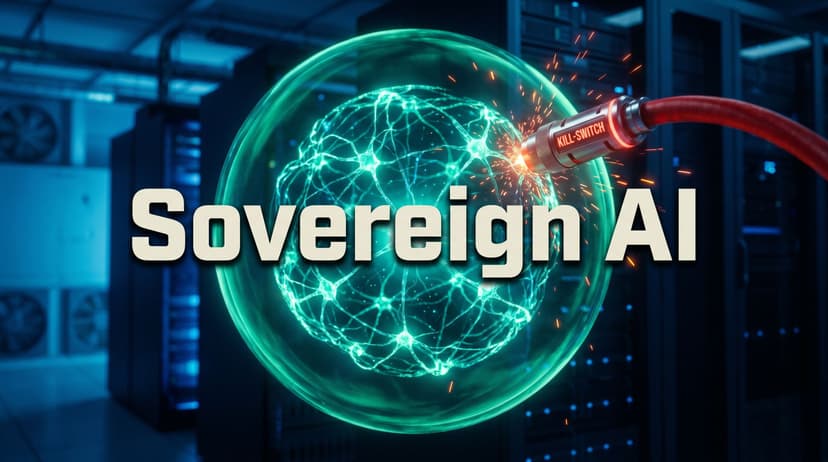
Comprehensive Security for Artificial Intelligence Systems
Securing AI Systems
Protect your AI systems with tailored security measures. ADVISORI secures your AI infrastructure against adversarial attacks, data poisoning, and model extraction — EU AI Act-compliant and GDPR-ready.
- ✓Comprehensive AI infrastructure security assessment
- ✓Model security and adversarial attack prevention
- ✓Training data protection and privacy controls
- ✓AI security compliance and governance framework
Your strategic success starts here
Our clients trust our expertise in digital transformation, compliance, and risk management
30 Minutes • Non-binding • Immediately available
For optimal preparation of your strategy session:
- Your strategic goals and objectives
- Desired business outcomes and ROI
- Steps already taken
Or contact us directly:
Certifications, Partners and more...










AI Security & Securing AI Systems
Our Strengths
- Specialized expertise in AI security and adversarial machine learning
- GDPR-first approach with privacy-preserving AI technologies
- Comprehensive AI governance and enterprise security integration
- Continuous threat intelligence and proactive defense strategies
⚠
Expert Tip
AI security is more than just data protection. Modern AI systems are vulnerable to specific attacks such as adversarial examples and model inversion. A comprehensive AI security strategy must consider these unique threats from the outset.
ADVISORI in Numbers
11+
Years of Experience
120+
Employees
520+
Projects
Together with you, we develop a comprehensive AI security strategy tailored to your specific AI systems and threat landscape.
Our Approach:
Comprehensive assessment of your AI infrastructure and threat landscape
Design and implementation of AI-specific security measures
Integration of privacy-preserving technologies and GDPR compliance
Establishment of AI governance frameworks and monitoring systems
Continuous monitoring, testing, and optimization of security measures
"Securing AI systems requires a deep understanding of both AI technologies and modern cyber threats. Our approach combines advanced security technologies with solid governance frameworks to provide our clients not only protection against current threats but also resilience against future AI-specific attack vectors."

Asan Stefanski
Head of Digital Transformation
Expertise & Experience:
11+ years of experience, Applied Computer Science degree, Strategic planning and management of AI projects, Cyber Security, Secure Software Development, AI
Our Services
We offer you tailored solutions for your digital transformation
AI Threat Assessment & Adversarial Defense
Comprehensive assessment of AI-specific threats and implementation of solid defense mechanisms against adversarial attacks.
- Comprehensive AI vulnerability assessment and threat modeling
- Adversarial attack simulation and solidness testing
- Implementation of adversarial training and defense mechanisms
- Model integrity monitoring and anomaly detection
Privacy-Preserving AI & AI Governance
GDPR-compliant implementation of privacy-preserving AI technologies and establishment of solid AI governance frameworks.
- Differential privacy and federated learning implementation
- GDPR-compliant AI data processing and storage
- AI governance frameworks with audit trails and compliance monitoring
- AI ethics integration and responsible AI practices
Looking for a complete overview of all our services?
View Complete Service OverviewOur Areas of Expertise in Digital Transformation
Discover our specialized areas of digital transformation
Digital Strategy
Development and implementation of AI-supported strategies for your company's digital transformation to secure sustainable competitive advantages.
▼
Data Management & Data Governance
Establish a robust data foundation as the basis for growth and efficiency through strategic data management and comprehensive data governance.
▼
Digital Maturity
Precisely determine your digital maturity level, identify potential in industry comparison, and derive targeted measures for your successful digital future.
▼
Innovation Management
Foster a sustainable innovation culture and systematically transform ideas into marketable digital products and services for your competitive advantage.
▼
Technology Consulting
Maximize the value of your technology investments through expert consulting in the selection, customization, and seamless implementation of optimal software solutions for your business processes.
▼
Data Analytics
Transform your data into strategic capital: From data preparation through Business Intelligence to Advanced Analytics and innovative data products – for measurable business success.
▼
Process Automation
Increase efficiency and reduce costs through intelligent automation and optimization of your business processes for maximum productivity.
▼
AI & Artificial Intelligence
Leverage the potential of AI safely and in regulatory compliance, from strategy through security to compliance.
▼
Frequently Asked Questions about Securing AI Systems
Why is securing AI systems more than just a technical necessity for the C-suite, and how does ADVISORI position AI security as a strategic competitive advantage?
For C-level executives, securing AI systems represents a fundamental building block of corporate resilience and strategic future viability. AI systems are not only valuable business assets but also potential attack vectors for novel cyber threats. A proactive AI security strategy protects against financial losses while also safeguarding the trust of customers, partners, and regulatory authorities. ADVISORI understands AI security as a strategic enabler for sustainable growth. Strategic Imperatives for Executive Leadership: Protection of critical business assets: AI models often contain proprietary algorithms and sensitive business data, the compromise of which can result in significant competitive disadvantages. Regulatory compliance and risk minimization: With the EU AI Act and tightened data protection regulations, AI security is becoming a compliance necessity with direct liability risks for management. Trust building and market positioning: Demonstrable AI security competence is increasingly becoming a differentiating factor and trust signal for customers and business partners. Future-proofing AI investments: Solid security measures protect existing AI investments and enable secure scaling and further development.
How do we quantify the ROI of an investment in ADVISORI's AI security solutions, and what direct impact does this have on enterprise value and risk profile?
Investing in comprehensive AI security solutions from ADVISORI is a strategic value creation lever that generates both direct cost savings and indirect value enhancements. The return on investment manifests in the avoidance of costly security incidents, the protection of AI investments, and the strengthening of market position through demonstrable security excellence.
💰 Direct Financial Impact and Cost Avoidance:
•
Prevention of AI-specific cyber incidents: Model extraction, adversarial attacks, or data poisoning can lead to significant financial damages that are avoided through proactive security measures.
•
Protection of IP and competitive intelligence: AI models often contain research and development investments worth millions, the theft or compromise of which can be existentially threatening.
•
Compliance cost avoidance: Proactive AI security reduces the risk of regulatory penalties and avoids costly remediation in the event of compliance violations.
•
Operational continuity: Solid AI security ensures the availability of business-critical AI systems and prevents productivity losses due to security incidents.
📈 Strategic Value Drivers and Market Positioning:
•
Enhanced due diligence value: In M&A transactions or investor reviews, demonstrable AI security is increasingly evaluated as a value factor and risk mitigator.
•
Premium market positioning: Companies with certified AI security can command premium pricing for their AI-based products and services.
•
Accelerated market entry: Solid security frameworks enable faster market introduction of new AI products without lengthy security reviews.
•
Insurance premium optimization: Demonstrable AI security measures can lead to more favorable cyber insurance premiums and better coverage terms.
The AI threat landscape is evolving exponentially – from adversarial machine learning to model inversion attacks. How does ADVISORI ensure that our AI security strategy is equipped to handle these dynamic risks?
In an era of rapidly evolving AI threats, effective AI security requires a proactive and adaptive approach that goes beyond traditional cybersecurity measures. ADVISORI relies on continuous threat intelligence, adaptive defense mechanisms, and forward-looking security architectures to protect your AI systems against known and unknown threat vectors.
🔄 Adaptive Threat Defense as a Core Principle:
•
Continuous AI threat intelligence: We actively monitor global AI security research, analyze new attack patterns, and integrate these insights into our defense strategies.
•
Proactive vulnerability assessment: Regular evaluation of your AI systems against the latest attack techniques, including adversarial examples, model extraction, and membership inference attacks.
•
Adaptive defense mechanisms: Implementation of self-learning security systems that automatically adapt to new threat patterns and continuously optimize their defense strategies.
•
Red team exercises: Conducting specialized AI security penetration tests that simulate realistic attack scenarios and uncover vulnerabilities.
🔍 ADVISORI's Future-Ready Security Framework:
•
Emerging threat anticipation: We analyze research trends and technological developments to anticipate future threat vectors and develop preventive measures.
•
Multi-layered defense architecture: Implementation of tiered security measures covering various attack vectors and providing protection even when individual layers are compromised.
•
Quantum-resistant preparations: Preparing your AI security infrastructure for the challenges of the quantum computing era and post-quantum cryptography.
•
Collaborative defense networks: Building partnerships with research institutions and security communities for early warning of new threats.
How does ADVISORI transform AI security from a cost factor into a strategic business enabler, and what concrete business opportunities does a solid AI security positioning create?
ADVISORI positions AI security not as a defensive necessity but as a strategic growth catalyst and market differentiator. Our approach transforms security investments into competitive advantages, enables new business models, and builds trust with customers and partners that translates directly into revenue growth and market expansion.
🚀 From Defense to Strategic Advantage:
•
Trust-based market differentiation: Demonstrable AI security is increasingly becoming a decisive selection criterion for customers, particularly in regulated industries and among enterprise clients.
•
Premium service positioning: Solid AI security enables the development and marketing of premium AI services with higher margins and longer-term customer relationships.
•
Accelerated partnership development: Strong security credentials facilitate strategic partnerships and joint ventures, as partners have confidence in the security of shared AI initiatives.
•
Regulatory advantage: Proactive compliance positioning provides advantages in tenders and enables early market entry in regulated areas.
💡 ADVISORI's Business Value Creation Framework:
•
Security-as-a-service monetization: Development of business models that utilize your AI security expertise as an independent revenue stream.
•
Ecosystem trust building: Establishing trust networks with customers, partners, and regulatory authorities that create long-term business relationships and market opportunities.
•
Innovation acceleration: Secure AI environments enable bolder innovation and faster product development, as security risks are minimized.
•
Global market access: International security standards and certifications open doors to global markets and multinational customers.
How does ADVISORI address the specific challenges of adversarial attacks, and which preventive measures are particularly relevant for C-level decision-makers?
Adversarial attacks represent one of the most sophisticated and dangerous threats to modern AI systems, as they exploit the fundamental weaknesses of machine learning algorithms. For C-level executives, understanding and defending against these attacks is of critical importance, as they can not only compromise technical systems but also manipulate business decisions and undermine trust. ADVISORI develops comprehensive defense strategies against these novel threat vectors. Adversarial Threat Landscape for Executive Leadership: Model manipulation and decision poisoning: Attackers can cause AI systems to make incorrect decisions without this being immediately apparent, which can lead to flawed business decisions. Intellectual property theft: Adversarial techniques can be used to extract or replicate proprietary models, resulting in significant competitive disadvantages. Reputational damage: Successful adversarial attacks can sustainably damage trust in AI-based products and services, leading to customer losses. Regulatory compliance risks: Compromised AI systems can lead to compliance violations, particularly in regulated industries with strict decision-making requirements.
What role does privacy-preserving AI play in ADVISORI's AI security strategy, and how do we balance innovation with GDPR compliance and data protection?
Privacy-preserving AI is not only a regulatory necessity but a strategic competitive advantage that enables companies to develop effective AI solutions without compromising data protection or compliance. ADVISORI understands privacy by design as a fundamental principle that enables rather than hinders innovation, and develops solutions that ensure both technical excellence and regulatory compliance.
🔐 Strategic Privacy-First Approach for the C-Suite:
•
Competitive advantage through privacy: Companies with demonstrably data-protection-compliant AI systems can differentiate themselves clearly from competitors and build trust with privacy-conscious customers.
•
Global market access: Privacy-preserving AI enables expansion into markets with strict data protection regulations without extensive compliance adjustments.
•
Risk mitigation and insurance benefits: Proactive privacy measures reduce liability risks and can lead to more favorable insurance terms.
•
Innovation acceleration: Secure data processing enables the use of sensitive data sources for AI training that would otherwise be inaccessible.
🚀 ADVISORI's Privacy-Preserving Innovation Framework:
•
Differential privacy implementation: Development of AI systems that offer mathematically provable data protection guarantees without compromising model quality.
•
Federated learning architectures: Enabling collaborative AI development without centralized data collection, opening up new business models and partnerships.
•
Homomorphic encryption integration: Implementation of encryption technologies that enable computations on encrypted data and ensure the highest security standards.
•
Synthetic data generation: Development of techniques for generating synthetic training data that ensures data privacy while enabling high-quality AI models.
How does ADVISORI establish solid AI governance frameworks, and what organizational structures are required to ensure sustainable AI security?
Effective AI governance is more than just technical controls – it requires a comprehensive organizational transformation that integrates AI security into the DNA of the company. ADVISORI develops tailored governance frameworks that not only ensure compliance but also promote innovation and create a culture of responsible AI use.
🏛 ️ Strategic Governance Architecture for the C-Suite:
•
Executive AI oversight: Establishing C-level responsibilities for AI security with clear accountability structures and decision-making authority.
•
Cross-functional AI committees: Building interdisciplinary teams that coordinate technical, legal, ethical, and business aspects of AI security.
•
Risk-based decision making: Implementation of frameworks that integrate AI security risks into strategic business decisions and provide quantifiable metrics.
•
Stakeholder engagement: Development of communication strategies that build and maintain trust with customers, partners, and regulatory authorities.
📋 ADVISORI's Comprehensive Governance Implementation:
•
Policy framework development: Creation of comprehensive AI security policies covering technical standards, procedural guidelines, and compliance requirements.
•
Audit and monitoring systems: Implementation of continuous monitoring systems that measure AI security performance and identify areas for improvement.
•
Training and awareness programs: Development of training programs that sensitize all organizational levels to AI security risks and convey best practices.
•
Incident response integration: Incorporation of AI-specific incident response procedures into existing cybersecurity and business continuity frameworks.
•
Vendor and third-party management: Establishing standards for the assessment and management of AI security risks with external partners and suppliers.
What metrics and KPIs does ADVISORI use to measure the effectiveness of AI security measures, and how can C-level executives evaluate the success of their investments?
Measuring AI security effectiveness requires specialized metrics that go beyond traditional cybersecurity KPIs and account for the unique aspects of AI systems. ADVISORI develops comprehensive measurement frameworks that quantify both technical performance and business impact, providing C-level executives with data-driven insights for strategic decisions.
📊 Strategic AI Security Metrics for Executive Leadership:
•
Model integrity index: Continuous measurement of the solidness and reliability of your AI models against various attack vectors and manipulation attempts.
•
Privacy compliance score: Quantification of the data protection performance of your AI systems with direct linkage to regulatory requirements and compliance status.
•
Threat detection effectiveness: Assessment of the ability of your security systems to detect and neutralize AI-specific threats.
•
Business impact assessment: Measurement of the business impact of AI security measures on productivity, customer trust, and market positioning.
💡 ADVISORI's Advanced Analytics Framework:
•
Real-time security dashboards: Development of executive dashboards that visualize critical AI security metrics in real time and identify trends.
•
Predictive risk analytics: Implementation of machine learning systems that predict future security risks and enable proactive measures.
•
ROI calculation models: Provision of quantitative models for assessing the return on investment of AI security initiatives with direct linkage to business outcomes.
•
Benchmark and competitive analysis: Comparative assessment of your AI security performance against industry standards and competitors for strategic positioning.
•
Continuous improvement tracking: Long-term tracking of improvements in AI security performance and their impact on business objectives and stakeholder trust.
How does ADVISORI address the challenges of model extraction and intellectual property theft in AI systems, and which protective measures are a priority for the C-suite?
Model extraction and intellectual property theft represent existential threats to companies that have made significant investments in proprietary AI technologies. These attacks can undo years of research and development and eliminate competitive advantages. ADVISORI develops multi-layered protection strategies that encompass both technical and legal aspects of IP protection, providing C-level executives with comprehensive security for their most valuable digital assets. Strategic IP Protection Imperatives for Executive Leadership: Asset valuation and risk assessment: Systematic assessment of the value of your AI models and the potential impact of IP theft on market position and enterprise value. Competitive intelligence defense: Protection against industrial espionage and unauthorized replication of your AI algorithms by competitors or state actors. Regulatory compliance and legal protection: Ensuring that IP protection measures comply with international data protection and trade laws. Investor and stakeholder confidence: Building trust with investors through demonstrable protective measures for critical IP assets. ADVISORI's Comprehensive IP Defense Framework: Model obfuscation and watermarking: Implementation of advanced techniques for obscuring model architectures and embedding digital watermarks for authentication.
What role does incident response play in AI security incidents, and how does ADVISORI prepare companies for the specific challenges of AI cyber incidents?
AI security incidents require specialized response strategies that differ fundamentally from traditional cybersecurity incidents. The complexity of AI systems, the subtlety of many AI attacks, and the potentially far-reaching business impacts require tailored incident response frameworks. ADVISORI develops comprehensive preparedness strategies that give C-level executives the confidence to respond quickly and effectively even to sophisticated AI attacks. AI Incident Response Challenges for the C-Suite: Detection complexity: AI attacks are often subtle and difficult to detect, as they do not obviously impair the normal functions of the system. Business impact assessment: Evaluating the impact of compromised AI systems on business decisions, customer trust, and regulatory compliance. Stakeholder communication: Development of communication strategies for customers, partners, regulatory authorities, and the media in the event of AI security incidents. Recovery and remediation: Restoring the integrity of AI models and preventing similar attacks in the future. ADVISORI's Specialized AI Incident Response Framework: Rapid detection and triage: Implementation of AI-specific monitoring systems that detect and prioritize suspicious activities in real time.
How does ADVISORI integrate AI security into existing enterprise security architectures, and what organizational changes are required for a successful integration?
Integrating AI security into existing enterprise security architectures requires a strategic approach that considers both technical and organizational aspects. ADVISORI understands that successful AI security integration not only implements new technologies but also redefines processes, roles, and responsibilities. Our approach ensures smooth integration without disrupting existing security operations.
🏗 ️ Strategic Integration Architecture for the C-Suite:
•
Comprehensive security ecosystem: Development of a unified security vision that integrates AI-specific threats into the overall cyber risk management framework.
•
Resource optimization: Maximizing the efficiency of existing security investments through intelligent integration of new AI security capabilities.
•
Skill development and training: Strategic advancement of existing security teams to address AI-specific challenges.
•
Vendor ecosystem management: Coordination of various security providers and technologies for a coherent AI security strategy.
🔧 ADVISORI's Smooth Integration Methodology:
•
Current state assessment: Comprehensive evaluation of existing security infrastructures, processes, and capabilities to identify integration opportunities.
•
Gap analysis and roadmap development: Development of detailed plans for the step-by-step integration of AI security components without disrupting ongoing operations.
•
Technology stack harmonization: Ensuring compatibility of new AI security tools with existing SIEM, SOAR, and other security platforms.
•
Process reengineering: Adaptation of existing security processes to accommodate AI-specific workflows and decision points.
•
Change management and training: Comprehensive programs for training and enabling existing teams for new AI security responsibilities.
•
Performance monitoring and optimization: Continuous monitoring of integration performance and optimization for maximum effectiveness.
What future trends in the AI security landscape does ADVISORI anticipate, and how do we prepare companies for emerging threats and technologies?
The AI security landscape is evolving exponentially, driven by advances in AI technology itself, new attack vectors, and shifting regulatory requirements. ADVISORI takes a proactive approach to anticipating future developments and prepares companies for a future in which AI security becomes even more critical to business success. Our forward-looking approach ensures that your investments are future-proof.
🔮 Emerging Threat Landscape for the C-Suite:
•
Quantum computing impact: Preparing for the effective effects of quantum computing on current encryption and security paradigms.
•
AI-supported cyber attacks: Anticipating sophisticated attacks that themselves utilize AI technologies to circumvent traditional defense mechanisms.
•
Regulatory evolution: Proactive adaptation to evolving international regulatory frameworks for AI and data protection.
•
Supply chain AI risks: Addressing new risks arising from AI integration in global supply chains and vendor ecosystems.
🚀 ADVISORI's Future-Ready Preparation Framework:
•
Technology horizon scanning: Continuous monitoring of research and development in AI security, quantum computing, and related fields.
•
Adaptive architecture design: Development of flexible security architectures that can rapidly adapt to new threats and technologies.
•
Strategic partnership networks: Building relationships with leading research institutions, technology providers, and regulatory authorities for early insights.
•
Scenario planning and war gaming: Conducting regular exercises to simulate future threat scenarios and develop response strategies.
•
Investment roadmap development: Creation of long-term investment plans that account for future technology developments and security requirements.
•
Talent pipeline management: Strategic development of capabilities and expertise for future AI security challenges.
How does ADVISORI address the challenges of data poisoning and training data manipulation in AI systems, and which preventive strategies are essential for the C-suite?
Data poisoning and training data manipulation represent particularly insidious attack vectors, as they can compromise the foundation of AI decision-making without this being immediately apparent. These attacks can lead to systematically flawed business decisions and sustainably undermine trust in AI-based systems. ADVISORI develops comprehensive protection strategies that ensure both the integrity of training data and the solidness of the resulting models.
🎯 Data Integrity Imperatives for Executive Leadership:
•
Supply chain data security: Ensuring the integrity of data sources throughout the entire data supply chain, from collection to processing.
•
Decision quality assurance: Ensuring that AI-based business decisions are based on trustworthy and unmanipulated data foundations.
•
Regulatory compliance and auditability: Demonstrating data integrity for regulatory requirements and internal audit processes.
•
Competitive intelligence protection: Protection against targeted manipulation attempts by competitors or other actors.
🛡 ️ ADVISORI's Comprehensive Data Protection Framework:
•
Data provenance and lineage tracking: Implementation of comprehensive systems for tracking the origin and processing history of all training data.
•
Anomaly detection in training data: Development of specialized algorithms for detecting suspicious patterns or anomalies in training datasets.
•
Multi-source data validation: Establishment of cross-validation procedures that compare data from different sources and identify inconsistencies.
•
Secure data pipelines: Design and implementation of secure data processing pipelines with end-to-end encryption and integrity checks.
•
Continuous model monitoring: Monitoring of model performance for early detection of degradation or unusual behavior.
•
Adversarial training integration: Incorporation of adversarial training techniques to strengthen model solidness against manipulated inputs.
What role does zero-trust architecture play in ADVISORI's AI security strategy, and how do we implement granular access control for AI systems?
Zero-trust architecture is fundamental to modern AI security, as traditional perimeter-based security models cannot adequately address the complex and distributed nature of AI systems. ADVISORI implements comprehensive zero-trust frameworks that verify and authorize every access to AI resources, regardless of source or location. This approach is particularly critical for C-level executives, as it ensures maximum control and transparency over AI assets.
🔐 Zero-Trust Imperatives for the C-Suite:
•
Granular access control: Precise control over who can access which AI models, data, and functions, with a detailed audit trail.
•
Insider threat mitigation: Protection against internal threats from employees or contractors with privileged access to AI systems.
•
Compliance and governance: Meeting regulatory requirements through demonstrable access control and data processing.
•
Multi-cloud and hybrid environment security: Uniform security standards across various cloud environments and on-premises systems.
🏗 ️ ADVISORI's Zero-Trust Implementation Framework:
•
Identity-centric security model: Development of comprehensive identity and access management systems covering both human users and automated systems.
•
Micro-segmentation for AI workloads: Implementation of granular network segmentation that isolates AI workloads and prevents lateral movement.
•
Continuous authentication and authorization: Establishment of dynamic authentication and authorization processes that adapt to context and risk.
•
Behavioral analytics integration: Use of machine learning to detect anomalous access patterns and suspicious activities.
•
Policy-as-code implementation: Automation of security policies through code-based policy definitions for consistent enforcement.
•
Real-time risk assessment: Continuous evaluation of access risks based on user behavior, system context, and current threats.
How does ADVISORI develop AI-specific compliance frameworks, and what strategies are required to keep pace with the evolving regulatory landscape?
Developing AI-specific compliance frameworks requires a proactive and adaptive approach that both meets current regulatory requirements and anticipates future developments. ADVISORI understands that compliance is not merely a legal necessity but also a strategic competitive advantage that builds trust and opens new market opportunities. Our framework approach ensures that C-level executives are always informed about the latest developments and can position their organizations accordingly. Strategic Compliance Architecture for the C-Suite: Regulatory intelligence and monitoring: Continuous monitoring of the global regulatory landscape for AI, including the EU AI Act, GDPR updates, and industry-specific requirements. Risk-based compliance approach: Development of risk-based compliance strategies that focus resources on the most critical areas. Stakeholder engagement: Building relationships with regulatory authorities, industry associations, and other stakeholders for early insights into regulatory developments. Competitive compliance advantage: Leveraging superior compliance positioning as a market differentiator and trust builder. ADVISORI's Adaptive Compliance Implementation: Dynamic policy management: Development of flexible policy frameworks that can quickly adapt to new regulatory requirements. Automated compliance monitoring: Implementation of systems for automatically monitoring compliance performance and identifying deviations.
What strategies does ADVISORI use for the secure scaling of AI systems, and how do we ensure security by design in growing AI infrastructures?
The secure scaling of AI systems requires a fundamental security-by-design approach that integrates security considerations into architecture and development processes from the outset. ADVISORI understands that retroactive security measures for AI systems are often insufficient and costly. Our approach ensures that security scales with the growth of your AI infrastructure without compromising performance or innovation. Flexible Security Architecture for the C-Suite: Future-proof security design: Development of security architectures that can scale with the growth of your AI systems without requiring fundamental redesigns. Performance and security balance: Optimization of the balance between security measures and AI system performance for maximum efficiency. Cost-effective security scaling: Implementation of cost-efficient security solutions that scale economically with the growth of your AI infrastructure. Global deployment readiness: Preparation for secure scaling across different geographic regions and regulatory environments. ADVISORI's Security-by-Design Methodology: Secure architecture patterns: Development of reusable security architecture patterns that ensure consistent security standards across all AI projects. Automated security integration: Implementation of DevSecOps practices that automatically integrate security controls into the AI development and deployment process.
How does ADVISORI address the challenges of federated learning security, and what specific risks do distributed AI systems present for the C-suite?
Federated learning represents a paradigmatic shift in AI development that introduces new security challenges extending beyond traditional centralized systems. For C-level executives, understanding these risks is critical, as federated learning is increasingly being used for collaborative AI projects and privacy-preserving AI. ADVISORI develops specialized security frameworks that address the unique challenges of distributed AI systems while maximizing the benefits of this technology. Federated Learning Security Imperatives for Executive Leadership: Multi-party trust management: Establishing trust relationships between different organizations without disclosing sensitive data or trade secrets. Intellectual property protection: Protecting proprietary algorithms and model architectures in collaborative learning environments. Data sovereignty and compliance: Ensuring that data does not leave its respective jurisdictions and that local data protection regulations are adhered to. Quality assurance and model integrity: Ensuring the quality and integrity of the jointly trained model despite distributed data sources. ADVISORI's Federated Security Framework: Secure aggregation protocols: Implementation of cryptographic methods that enable model updates to be aggregated without disclosing individual contributions.
What role does explainable AI play in ADVISORI's AI security strategy, and how do we ensure transparency without compromising security?
Explainable AI is a fundamental building block of modern AI security, as it enables transparency and traceability of AI decisions without creating security risks. ADVISORI understands that for C-level executives, the balance between transparency and security is critical, particularly in regulated industries and for business-critical applications. Our approach ensures that explainability is implemented as a security feature rather than a vulnerability.
🔍 Explainable AI Security Imperatives for the C-Suite:
•
Regulatory compliance and auditability: Meeting transparency requirements of regulatory frameworks without disclosing sensitive system details.
•
Trust building and stakeholder confidence: Building trust with customers, partners, and regulatory authorities through traceable AI decisions.
•
Risk management and liability: Reducing liability risks through documentable and traceable AI decision-making processes.
•
Competitive intelligence protection: Protecting proprietary algorithms and business logic despite transparency requirements.
⚖ ️ ADVISORI's Secure Explainability Framework:
•
Selective transparency mechanisms: Development of systems that provide relevant explanations without disclosing sensitive model details.
•
Role-based explanation access: Implementation of granular access control for different levels of explanation based on user roles and permissions.
•
Adversarial-resistant explanations: Design of explanation systems that are resistant to manipulation and reverse engineering.
•
Privacy-preserving explanations: Integration of privacy-preserving techniques into explanation mechanisms to protect sensitive data.
•
Audit trail integration: Linking explanations with comprehensive audit trails for compliance and forensics.
•
Contextual security adaptation: Adjustment of explanation depth and detail based on security context and threat landscape.
How does ADVISORI develop cyber resilience for AI systems, and which recovery strategies are essential for the C-suite in the event of AI compromises?
Cyber resilience for AI systems goes beyond traditional backup and recovery strategies and requires specialized approaches that account for the unique characteristics of AI systems. ADVISORI develops comprehensive resilience frameworks that not only enable rapid recovery after attacks but also ensure continuous improvement of security posture. For C-level executives, this is critical, as AI compromises can have far-reaching business impacts.
🔄 AI Resilience Imperatives for Executive Leadership:
•
Business continuity assurance: Ensuring business continuity even in the event of partial compromise of AI systems.
•
Rapid recovery capabilities: Minimizing downtime and quickly restoring critical AI functions.
•
Learning from incidents: Systematic analysis of security incidents for continuous improvement of resilience.
•
Stakeholder communication: Effective communication with customers, partners, and regulatory authorities during and after AI security incidents.
🛡 ️ ADVISORI's Comprehensive Resilience Strategy:
•
Multi-layered backup strategies: Implementation of specialized backup procedures for AI models, training data, and configurations with varying recovery time objectives.
•
Model versioning and rollback: Establishment of solid version control systems that enable rapid rollbacks to known secure model versions.
•
Graceful degradation mechanisms: Design of systems that can continue operating with reduced functionality in the event of partial compromise.
•
Automated recovery orchestration: Development of automated recovery processes that minimize human intervention and reduce error risks.
•
Cross-system dependencies mapping: Comprehensive mapping of dependencies between AI systems and other business processes for coordinated recovery.
•
Continuous resilience testing: Regular conduct of resilience tests and disaster recovery exercises specifically for AI systems.
What strategic partnerships and ecosystem approaches does ADVISORI pursue for comprehensive AI security, and how do C-level executives benefit from collaborative security models?
Modern AI security requires an ecosystem approach that extends beyond the boundaries of individual organizations and utilizes collaborative security models. ADVISORI understands that the complexity and dynamism of the AI threat landscape requires strategic partnerships and knowledge sharing. For C-level executives, these collaborative approaches provide access to extended capabilities, shared threat intelligence, and cost-effective security solutions.
🤝 Strategic Partnership Imperatives for the C-Suite:
•
Extended security capabilities: Access to specialized AI security expertise and technologies through strategic partnerships.
•
Shared threat intelligence: Participation in collaborative threat intelligence networks for early warning of new threats.
•
Cost-effective security solutions: Reduction of security investments through shared resources and collaborative development.
•
Regulatory influence and standards: Co-shaping of industry standards and regulatory frameworks through active ecosystem participation.
🌐 ADVISORI's Collaborative Security Ecosystem:
•
Research institution partnerships: Collaboration with leading universities and research institutions for access to advanced AI security research.
•
Industry consortium participation: Active participation in industry consortia for standards development and best practice sharing.
•
Vendor ecosystem integration: Strategic partnerships with technology providers for integrated and interoperable security solutions.
•
Government and regulatory engagement: Building relationships with regulatory authorities and standards organizations for policy influence.
•
Customer community building: Development of customer communities for sharing experiences and collaborative problem-solving.
•
Global security networks: Participation in international cybersecurity networks for global threat intelligence and response coordination.
Success Stories
Discover how we support companies in their digital transformation
Digitalization in Steel Trading
Klöckner & Co
Digital Transformation in Steel Trading
Case Study
Results
Over 2 billion euros in annual revenue through digital channels
Goal to achieve 60% of revenue online by 2022
Improved customer satisfaction through automated processes
AI-Powered Manufacturing Optimization
Siemens
Smart Manufacturing Solutions for Maximum Value Creation
Case Study
Results
Significant increase in production performance
Reduction of downtime and production costs
Improved sustainability through more efficient resource utilization
AI Automation in Production
Festo
Intelligent Networking for Future-Proof Production Systems
Case Study
Results
Improved production speed and flexibility
Reduced manufacturing costs through more efficient resource utilization
Increased customer satisfaction through personalized products
Generative AI in Manufacturing
Bosch
AI Process Optimization for Improved Production Efficiency
Case Study

Results
Reduction of AI application implementation time to just a few weeks
Improvement in product quality through early defect detection
Increased manufacturing efficiency through reduced downtime
Let's
Work Together!
Is your organization ready for the next step into the digital future? Contact us for a personal consultation.
Your strategic success starts here
Our clients trust our expertise in digital transformation, compliance, and risk management
Ready for the next step?
Schedule a strategic consultation with our experts now
30 Minutes • Non-binding • Immediately available
For optimal preparation of your strategy session:
Your strategic goals and challenges
Desired business outcomes and ROI expectations
Current compliance and risk situation
Stakeholders and decision-makers in the project
Prefer direct contact?
Direct hotline for decision-makers
Strategic inquiries via email
Detailed Project Inquiry
For complex inquiries or if you want to provide specific information in advance